Alex Murdaugh's Legal Team Seeks Overturned Convictions in Supreme Court Hearing
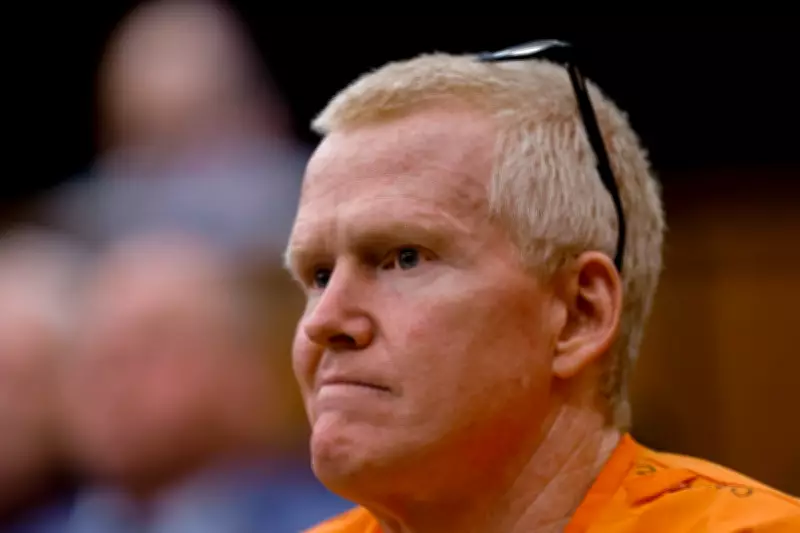
Nearly three years after Alex Murdaugh received life sentences for the murders of his wife Maggie and son Paul, his defense attorneys presented arguments before the South Carolina Supreme Court on Wednesday, urging justices to throw out his convictions. The legal team contends that former Colleton County Clerk of Court Rebecca "Becky" Hill improperly influenced jurors during the 2023 trial, thereby depriving Murdaugh of his constitutional right to a fair trial.
Allegations of Jury Tampering and Improper Conduct
Murdaugh's attorneys, including Dick Harpootlian, Jim Griffin, and Phil Barber, asserted that Hill made comments about Murdaugh's demeanor and testimony that tainted the jury pool before deliberations began. They argued these actions stripped their client of the presumption of innocence guaranteed by the Sixth Amendment. "If only the people who may be innocent get a fair trial, then our Constitution isn't working," Harpootlian declared during oral arguments before the court's five justices.
The defense emphasized that Hill's alleged misconduct was motivated by her desire to promote a book she was writing about the high-profile case. Hill resigned in 2024 amid the controversy and later pleaded guilty in December 2025 to perjury and obstruction of justice in a separate case involving leaked sealed evidence. She also admitted to two counts of misconduct in office for taking bonuses and using her public position to promote her trial-related book.

Prosecution's Counterarguments and Judicial Observations
Prosecutor Creighton Waters acknowledged that Hill's actions were "improper" but argued they were fleeting and insignificant over the six-week trial. Waters maintained that the evidence against Murdaugh was overwhelming and that the clerk's comments did not justify reversing the guilty verdict. "They were not appropriate. They were not," Waters conceded. "But they do not justify reversal."
Justice John Kittredge described Hill as a "rogue clerk" whose conduct complicated the case, noting that "everyone must recognize her comments were improper." While acknowledging the impropriety, Kittredge suggested it might not reach the threshold for reversal, stating, "Perhaps not improper to the point of reversal, but it was improper."
Additional Defense Claims and Prosecution Rebuttals
The defense team renewed claims that trial judge Clifton Newman allowed prejudicial evidence regarding Murdaugh's financial crimes that had no direct connection to the killings, potentially biasing jurors. They highlighted the absence of physical evidence linking Murdaugh directly to the murders, including the lack of blood on his clothes despite the close-range nature of the shootings with weapons that were never recovered.
Prosecutors countered that Murdaugh's financial collapse, mounting debts, and deceptive statements to investigators provided compelling motive. They pointed to cellphone video evidence placing Murdaugh at the crime scene minutes before the murders occurred, reinforcing their argument for his guilt.
Potential Outcomes and Broader Implications
The South Carolina Supreme Court will deliberate privately, with a written opinion expected to take weeks or months. The court could either uphold Murdaugh's convictions or vacate the verdicts and order a new trial. Even if his murder convictions were overturned, Murdaugh would remain incarcerated due to a separate 40-year federal sentence for financial crimes.
Harpootlian emphasized that the appeal transcends mere prison time, stating, "He insists that he did not kill his wife and child, and he wants the world to know that. And the way that you get that is a new trial." The case continues to captivate public attention as it navigates complex legal questions about judicial integrity and constitutional protections.