Migrant Faces Lengthy Jail Term for MI5 Bomb Hoax After Deportation Notice
A hotel-based migrant who planted a hoax explosive device outside the MI5 headquarters in central London, deliberately attempting to cause widespread chaos, is now confronting a substantial prison sentence following his conviction on bomb hoax charges. Brazilian national Julian Valente Pereira, aged 32, staged his protest at the secret services base located at Thames House just one day after receiving notification of his impending deportation from the United Kingdom.
CCTV Evidence Reveals Deliberate Actions
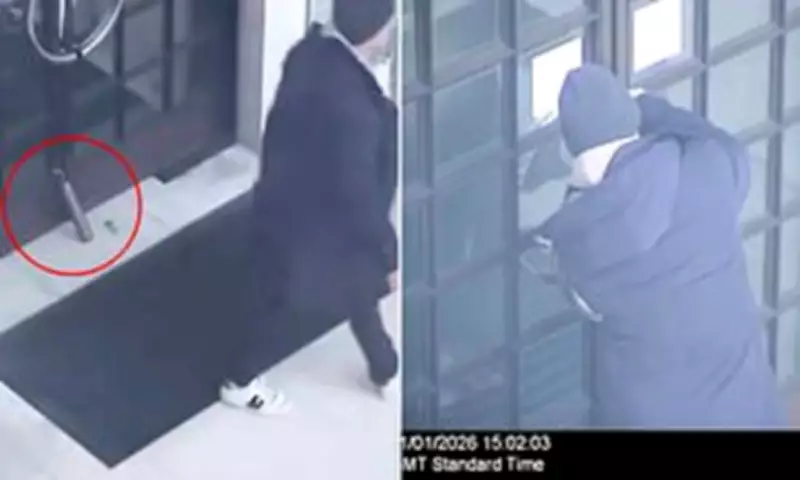
Closed-circuit television footage captured Pereira stuffing approximately thirty pages of documentation concerning his immigration case through the doors of the building. He then retrieved what appeared to be a stick of dynamite from his bag. Initially, he discarded the object onto the pavement, allowing the CCTV operator to zoom in and reveal what looked like a fuse protruding from the top of the brown cylindrical item.
Pereira is subsequently seen moving the object and propping it up directly against the MI5 headquarters doors, with a green cigarette lighter positioned conspicuously nearby. The device was later determined to be constructed from rolled-up A4 paper, brown masking tape, and string, meticulously assembled to resemble genuine explosives.

Court Proceedings and Judicial Remarks
At Westminster Magistrates Court on Wednesday, Chief Magistrate Paul Goldspring was scheduled to sentence Pereira. However, the judge concluded that the case was too severe to be handled within the magistrates court, where sentencing powers are restricted to maximum twelve-month jail terms. He emphasized that Pereira's actions had necessitated the diversion of police resources away from London's New Year's Day parade, following the activation of a terrorism alert.
Chief Magistrate Goldspring stated: 'There was real gravitas to the defendant's actions given the genuine prospect for harm. The reality is, it was New Year's Day, and officers had to divert resources. This is bound to have a significant impact on policing generally.' He added: 'The reasons for the date chosen and the building chosen make it difficult to see how this falls within my sentencing powers.'
The judge told Pereira: 'You made me doubt myself, which is rare. If the reason the court has highlighted, and which I agree with, seems to me that deterrence is the purpose of this sentencing.' Consequently, Pereira was committed for sentencing at the Old Bailey, with Goldspring noting: 'If I were sitting in a Crown court, I would be looking at a sentencing of about eighteen months. Culpability is the only thing in his favour due to his mental health.'
Prosecution Details and Defendant's Background
During an earlier hearing, prosecutor Nia King outlined that Pereira was observed by security personnel throwing a cylindrical brown object with a string attached and possessing a lighter. He then forced documents against a door marked 'HMCTS', with the first page detailing methods of psychological torture. In police interviews, Pereira admitted to harbouring 'grievances with the Home Office', stating he 'hates them completely' in reference to the asylum system and subsequent treatment.
King argued that Pereira acted on these grievances by leaving a fake bomb outside a critical building containing numerous individuals. The prosecutor emphasized that the hoax required emergency services, road closures, and the attendance of several police units, creating substantial disruption. She expressed concerns that Pereira might continue a campaign against authorities, potentially leading to more ambitious and dangerous actions that could place others at high risk of harm.
Defence counsel Jack Ward described Pereira as an asylum seeker from Brazil who has resided in the UK since 2018. Ward asserted that Pereira was 'adamant' he did not believe anyone would perceive the device as genuine. The defendant has been diagnosed with schizophrenia, for which he is medicated, though he is not receiving this medication while in custody. Additionally, he is treated for PTSD, anxiety, and depression. Pereira maintained full-time employment at Hatton Gardens, working Monday to Friday for over a year and a half, and had a fixed address provided by the Home Office.

Immigration History and Legal Context
Pereira, who was accommodated in an asylum hotel in Uxbridge, west London, denied carrying out the bomb hoax. The court heard that he voluntarily presented himself to police as an overstayer in October 2020 but later sought asylum after being instructed to leave the UK. He was placed in asylum seeker accommodation in June 2021, had his asylum application refused in 2023, and his appeal against that decision was rejected by a judge on December 31, 2025. Subsequently, his paid-for accommodation was withdrawn on January 9.
The case underscores the severe legal consequences of bomb hoaxes, particularly when targeting high-security installations like MI5, and highlights the complex interplay between immigration disputes, mental health considerations, and public safety protocols in the United Kingdom.