Mayfair's Glittering Facade Conceals London's Most Dangerous Streets
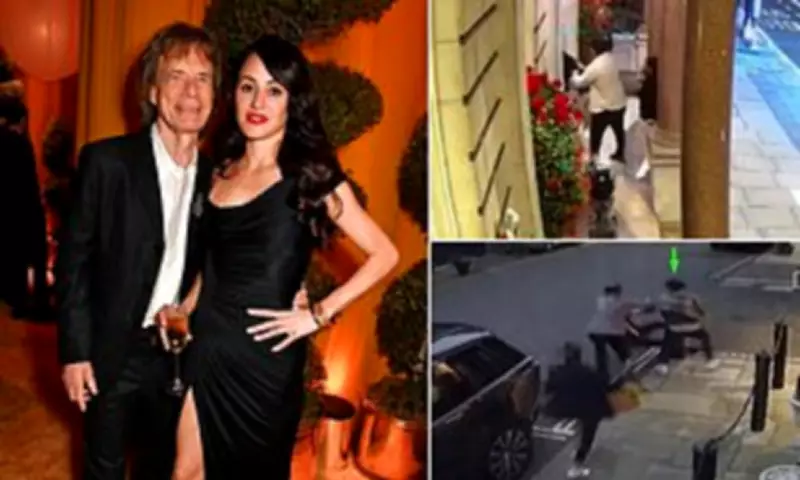
When Melanie Hamrick, the celebrated ballerina and fiancée of rock legend Sir Mick Jagger, ventured out for an evening in London's most prestigious district earlier this month, she had no inkling of the danger awaiting her. The affluent Mayfair neighbourhood, celebrated globally for its luxury boutiques, Michelin-starred restaurants, and exclusive nightlife, has developed a sinister reputation that belies its opulent appearance.
A Shocking Attack on a High-Profile Victim
'This is incredibly hard to share, but I was physically attacked tonight,' the 38-year-old former dancer and mother posted on social media following the traumatic incident. 'Two people grabbed me from behind... I'm shaken, sad and heartbroken that people can treat each other this way.' Her experience, while deeply personal, reflects a disturbing pattern emerging in this historic quarter.
Statistical Reality: Thirty Times More Dangerous
Investigative research reveals Mayfair now ranks among London's most blighted areas for street crime, with statistical analysis indicating residents and visitors face a staggering thirty-fold increased risk of being mugged compared to the capital's average streets. The latest police data shows approximately 115 robberies per 1,000 residents in the local area, dramatically contrasting with London's overall robbery rate of about 3.7 per 1,000 people during the December 2024 to November 2025 period.

Home Invasions Target the Wealthy
Even residential properties offer little sanctuary. Earlier this month, millionaire former Nottingham Forest owner Fawaz Al-Hasawi reportedly suffered stab wounds while confronting masked intruders who breached his £10 million Mayfair residence. This incident underscores how criminals now target both public spaces and private dwellings in their pursuit of valuable possessions.
Historical Prestige Versus Modern Reality
Mayfair's distinguished history as the birthplace of Queen Elizabeth II and former home to luminaries including Winston Churchill and Jimi Hendrix contrasts sharply with its current predicament. While the area's elegant Georgian townhouses once epitomised aristocratic refinement, since the 1970s it has increasingly become known for vibrant nightlife that attracts a new generation of affluent visitors, many from overseas, who inadvertently draw criminal attention by displaying conspicuous luxury items.
The 'Rolex-Ripper' Phenomenon
High-value watch thefts have become particularly prevalent, with criminals specifically targeting individuals wearing expensive timepieces. Earlier this month, Hollywood fashion designer Catalin Botezatu was robbed of his ultra-rare £2 million Richard Mille watch, leading to charges against a 33-year-old man. In October last year, US events company executive J. Riccardo Benavides had his watch snatched by thieves as he exited a taxi outside the Cavalry & Guards Club.
'London police say these watch thefts are happening all the time now in Mayfair. So please, be extra cautious...' Benavides warned on social media following his ordeal. The problem has become so severe that some businesses have removed Rolex and Cartier watches from their display windows overnight, while wealthy visitors increasingly employ private security during their visits to the area.
Violent Tactics and Low Conviction Rates
Criminals employ increasingly aggressive methods, with some victims reporting attackers deliberately stabbing elbows to sever tendons and prevent resistance. Property developer Bo Khan described a 'shocking' daylight robbery in 2021 where three men cut his arm with a knife while stealing his £115,000 Breguet Tourbillon watch. 'It was done with military precision,' he recalled of the attack witnessed by his horrified wife.
Despite such brazen crimes, justice remains elusive. Just over 1 percent of phone thefts result in charges or convictions in London, compared to 11 percent for robberies. London maintains its status as Europe's phone theft capital, with approximately 80,000 devices stolen annually—equivalent to one every six minutes.

Local Residents Voice Concerns
'It's become a total circus here in recent years,' lamented Katerina Bates, a 39-year-old full-time mother and local resident. 'You can't move through the streets on the weekend without pushing past escorts and drunk customers. The whole place is like a nightclub.'
A local chef observed changing visitor behaviour: 'You get the super wealthy types from Dubai and the United Arab Emirates. They come with private security now, they won't risk it.' Another shop worker expressed frustration: 'We can't take our eye off the ball for a minute around here. There's more people looking to take advantage than there are legitimate customers.'
Broader West End Crime Wave
The problem extends beyond Mayfair's boundaries. Thefts and robberies, particularly targeting mobile phones, have tripled over a recent four-year period across London's West End, with tens of thousands of reported cases. In February last year alone, 2,097 thefts were recorded in the West End, encompassing exclusive areas including Fitzrovia, Oxford Street, Regent Street, and Bond Street.
Security Experts Offer Practical Advice
James Bore, a chartered security professional at Bores Group, advises pedestrians to maintain vigilance: 'Don't have your phone walking around, don't stare at it. Do not appear like an easy target because you are distracted. If you don't seem like an easy target, they will go after someone who is.' He emphasises situational awareness: 'Look out for unusual behaviour. If someone is going to rip your Rolex off, it's because they have watched you and have seen you have something worth stealing.'
As Westminster City Council considers its response to this escalating crisis, Mayfair's transformation from aristocratic haven to crime hotspot serves as a stark reminder that wealth and prestige offer no protection against determined criminal elements operating in London's most exclusive neighbourhoods.