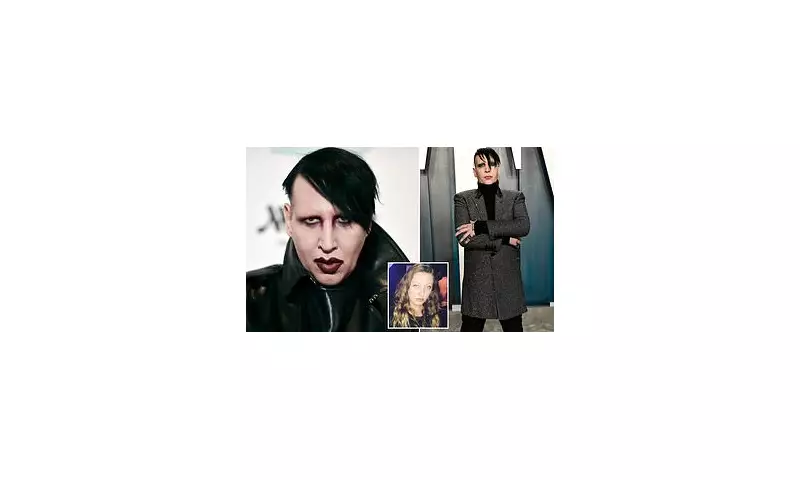
Shock rocker Marilyn Manson has secured a significant legal victory after a judge in Los Angeles threw out a sexual battery lawsuit filed by his former assistant, just one month before the case was scheduled to go to trial.
The Core Allegations and Legal Timeline
Ashley Walters, who worked for the musician, whose real name is Brian Warner, between August 2010 and October 2011, initiated the legal action in May 2021. She claimed she endured what she described as 'horrific' sexual, physical, and psychological abuse during her employment. Walters stated that she had 'repressed' these memories until 2020, when meetings with other women, including Manson's ex-fiancée Evan Rachel Wood, prompted her to seek therapy and, she says, fully comprehend the alleged abuse.
Manson has consistently and vehemently denied all allegations. His legal team, led by attorney Howard King, has repeatedly argued that the case was filed too late, violating California's standard two-year statute of limitations for such claims.

Judge's Ruling on the Statute of Limitations
At a hearing on Tuesday, Los Angeles County Judge Steve Cochran dismissed the lawsuit for a second time. The case had initially been dismissed in May 2022, then revived on appeal in December 2023, only to be dismissed again this week.
Judge Cochran ruled that the complaint, filed approximately a decade after the alleged events, fell outside the permissible timeframe. He explicitly stated he could not apply the 'delayed discovery' rule, a legal doctrine that can sometimes pause the statute of limitations clock until a plaintiff recognises their injury.
'We have a situation where the complaint was not filed until about 10 years after the operative events. I'm not able to find that the delayed discovery rule is applicable,' Judge Cochran said, according to Rolling Stone. 'I don't have the authority to rule that the delayed discovery doctrine would apply under the circumstances that exist in this case.'
Reactions from Both Legal Camps
The contrasting responses from the legal teams highlight the ongoing contentious nature of the case. Manson's lawyer, Howard King, celebrated the decision, telling Rolling Stone, 'It's gratifying, after all these years, that a judge can just look at the facts and see that once again, Brian Warner was wrongfully accused.'
He added, 'It's nice for him to get some justice, though it was at great personal cost. Now he can move on.'
Conversely, Walters' attorney, Kate McFarlane, expressed strong disappointment and suggested a potential appeal. 'We think this is the wrong decision,' McFarlane stated. 'The delayed discovery rule is specifically to address situations where victims of sexual abuse deserve the ability to seek justice when their abuser has used tactics to prevent them from coming forward.'
She argued that the law has not kept pace with psychological understanding, saying, 'This is something we see time and time again, and it seems the law hasn't caught up to the science and what's right for victims. But I don't believe this is the end of the road.'
Details of the Alleged Abuse
In her lawsuit, Walters accused Manson of exploiting his 'position of power, celebrity and connections' to victimise her. The alleged incidents included:
- An event at a 2010 photo shoot where Manson allegedly pinned her to a bed, bit her ear, and forced her hand into his underwear.
- Throwing dishes, making suicide threats, and pushing her into a wall during drunken rages.
- Forcing her to stand for 12-hour shifts to take photographs and pressuring her to take cocaine to stay awake.
- Whipping her and others and throwing hatchets in anger.
- An incident at a 2010 awards show where he allegedly pushed her onto an actor's lap and said the actor could 'have her.'
Walters also claimed she witnessed Manson throw a prop skull at Evan Rachel Wood with enough force to leave a welt. Manson has denied all these specific allegations.
The dismissal represents a major legal win for Manson, who faces other separate lawsuits and allegations. The ruling hinges not on the merits of the accusations but on the strict application of the statute of limitations, leaving the substantive allegations legally unresolved in this particular case.