Shabana Mahmood's Transformative Policing Agenda
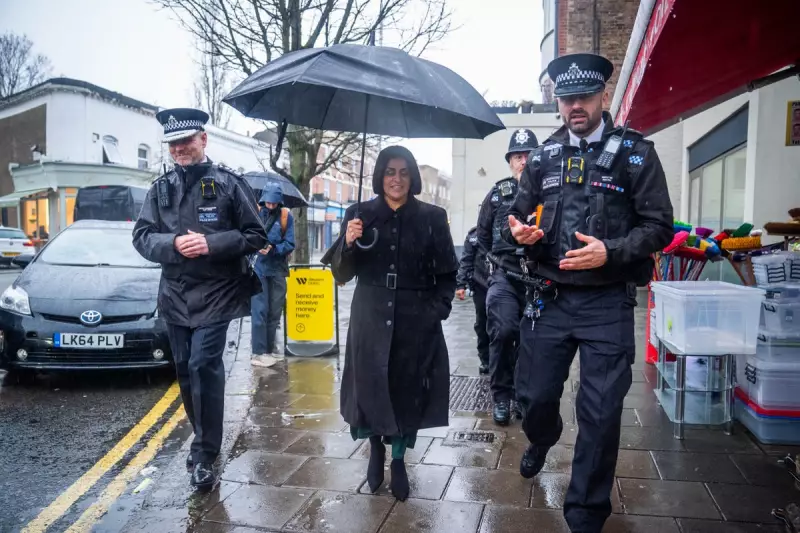
Home Secretary Shabana Mahmood has emerged as one of the government's standout ministerial performers, demonstrating clear communication skills and sensitivity to public opinion within a cabinet often criticised for lacking these qualities. As Labour's polling numbers have declined, Mahmood has adopted an increasingly combative stance while securing rapid promotion through the ranks. She has positioned herself as a determined reformer at the Home Office, having already initiated significant changes to the immigration system that addresses substantial public concern.
The White Paper: A Sixty-Year Milestone
Nowhere is Mahmood's ambition more evident than in her comprehensive policing reforms unveiled in Monday's white paper presented to the House of Commons. Even before publication, she made an encouraging start by abandoning the impractical policing of "non-crime hate incidents" – an approach that had created confusion, invited ridicule, and undermined officer authority when dealing with genuinely serious cases such as inciting racial hatred through social media platforms.
The home secretary has articulated a clear vision for policing priorities, stating that officers should focus on "catching criminals, cutting crime, and making sure people in our neighbourhoods feel safe." She declared, "I want them out of the business of essentially policing social media – that's not where they need to be." This represents a fundamental shift toward street-level policing rather than monitoring online discourse.

Technological Transformation and Structural Reform
Mahmood's proposals include a genuine embrace of technological advancement, with plans to significantly expand the use of artificial intelligence and live facial recognition technology as part of sweeping reforms designed to address what she describes as Britain's "broken" policing system. The abolition of elected police and crime commissioners represents another sensible move, given their frequent lack of expertise, necessary powers, and democratic legitimacy for effective oversight.
The white paper outlines the most substantial policing reforms Britain has seen in six decades, though Mahmood will need to exercise considerable care to ensure local accountability while avoiding undue pressure from local councillors in future arrangements. The document deserves serious consideration, yet public scepticism remains justified and appropriate.
The Challenge of Structural Reorganisation
Historical evidence provides no proven cases where police area reorganisation has delivered noticeable crime reduction. Police chiefs frequently complain about the inefficiencies of having 43 separate forces across England and Wales, highlighting duplication of functions, illogical responsibility lines, and systemic waste. There is certainly a compelling argument for expanding national force functions beyond the existing National Crime Agency, particularly when confronting national and international challenges like organised crime and terrorism that operate at unprecedented scale and sophistication – circumstances that arguably necessitate a "British FBI" approach.
However, the benefits of amalgamating mostly county forces into larger regional structures appear less convincing. Economies of scale in procurement and information technology could potentially be achieved through enhanced cooperation between existing bodies rather than wholesale restructuring. Some areas, such as motorway patrols, already benefit from more flexible collaborative arrangements.
Larger organisational structures typically introduce additional bureaucratic layers and remain equally prone to internal rivalries, if not more so. Size does not inherently guarantee efficiency, as demonstrated by Police Scotland's mixed results following its creation from eight regional forces approximately thirteen years ago.

Preserving Local Policing and Accountability
Most crime categorised as "everyday" remains fundamentally local, and the public rightly expresses concern about potential further reductions in police stations within their towns and cities. The damage inflicted on neighbourhood policing through lost local intelligence during the coalition government's cuts of 20,000 posts in the 2010s has never been fully repaired. Finding the optimal balance between localism, efficiency, and accountability represents complex terrain, and Mahmood demonstrates wisdom by subjecting her proposals to thorough scrutiny while allowing extended timelines for implementation stretching well into the 2030s.
A Constitutional Boundary: Ministerial Power Over Police Leadership
Mahmood ventures onto more dangerous, potentially unconstitutional ground with her proposal granting home secretaries power to dismiss chief constables and senior officers deemed to have "failed the public." No home secretary from any political party should possess such authority outside clear cases of medical incapacity or criminal conduct at leadership levels. Recent history provides cautionary examples, with former Home Secretary Suella Braverman – now defected to Reform UK – having spent excessive time publicly criticising the Metropolitan Police Commissioner over protest management approaches during Gaza-related demonstrations.
Braverman recklessly employed the term "two-tier policing" to undermine officers performing their duties, demonstrating bullying tendencies, yet she lacked authority to remove the Met Commissioner – precisely as constitutional arrangements should function. The recent case involving Craig Guildford, former West Midlands chief constable, illustrates appropriate processes when police leadership demonstrably fails public trust. Following findings that he exaggerated evidence to justify banning Maccabi Tel Aviv fans from a Europa League match against Aston Villa, his departure became necessary.
Such decisions require careful statutory processes balancing national and local accountability with proper legal appeal mechanisms. Responsibility for dismissing senior officers should remain diffused rather than resting on a single politician's judgment. This represents a reform boundary even Mahmood should reconsider, preserving essential constitutional protections while pursuing necessary policing improvements across British communities.