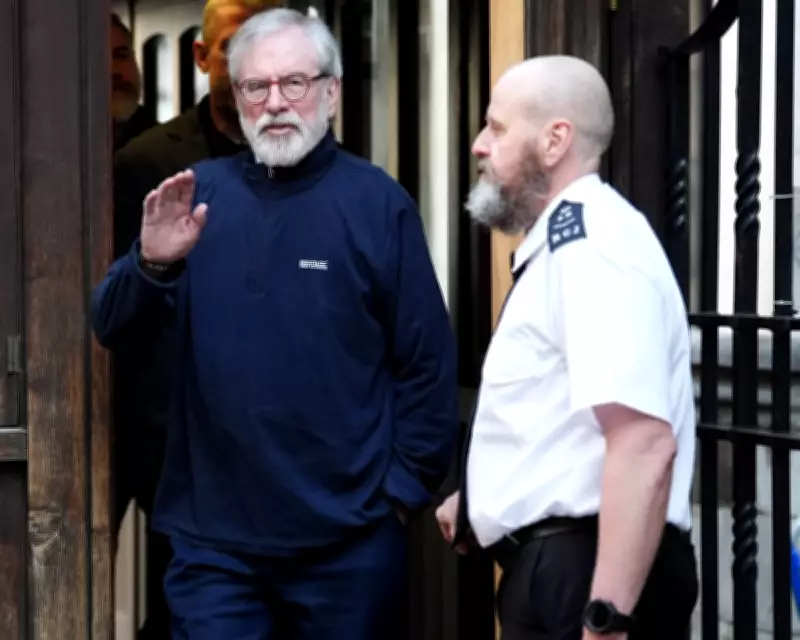
In a dramatic turn of events at the Royal Courts of Justice, a civil lawsuit against former Sinn Féin leader Gerry Adams has been discontinued on the final day of the trial. The case, brought by three individuals injured in IRA bombings, was withdrawn unexpectedly, bringing an end to a contentious legal battle that had spanned nine days.
Victims Withdraw Claims Against Adams
John Clark, Jonathan Ganesh, and Barry Laycock, who suffered injuries in the 1973 Old Bailey bombing, the 1996 London Docklands bombing, and the 1996 Manchester bombing respectively, had been seeking symbolic damages of £1 each. They alleged that Adams was a member of the IRA and sat on its army council, holding him liable for the attacks. However, Adams has consistently denied any involvement with the IRA or the bombings.
Sudden Discontinuation in Court
On Friday, the ninth and final day of the trial, the claimants' lawyer, Anne Studd KC, informed the high court that the claim would be discontinued. She cited developments overnight, though specifics were not disclosed in court. The judge, Mr Justice Swift, accepted the withdrawal, stating he was happy to make an order as agreed by the parties.

Adams, who was not present in court on Friday, welcomed the decision. He expressed respect for the victims by attending the trial but asserted that the case should never have been brought. In a statement, he defended himself against what he called smears and false accusations, reiterating his support for the republican cause and the Good Friday agreement.
Abuse of Process Arguments
The withdrawal followed arguments around whether the case constituted an abuse of process. Earlier in the week, Judge Swift had invited submissions on this issue. Adams' lawyer, Edward Craven KC, argued in written submissions that the claim was driven by the claimants' solicitors, McCue Jury, aiming to force a public-inquiry-style examination of Adams' alleged IRA ties over decades.
Craven highlighted that the trial featured little evidence directly related to the three bombings, instead presenting a broad array of allegations. Studd countered that this was necessary to build a comprehensive case, describing it as a jigsaw puzzle. The trial included testimony from 13 witnesses, such as former military and police officials, a journalist, and a convicted IRA bomber.
Implications and Reactions
The discontinuation leaves unresolved the central allegations against Adams, but it underscores the complexities of pursuing historical claims in civil courts. Adams called for a renewed focus on the Good Friday agreement, emphasizing peace and reconciliation in Northern Ireland. The case has sparked debate over the role of civil litigation in addressing legacy issues from the Troubles.
As the legal proceedings conclude, the withdrawal marks a significant moment in the ongoing discourse surrounding accountability and justice for victims of the conflict.