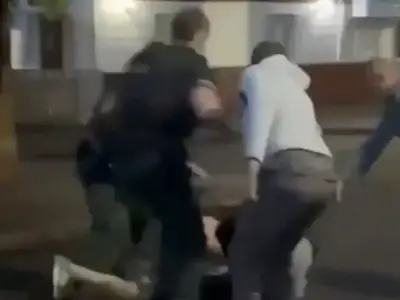
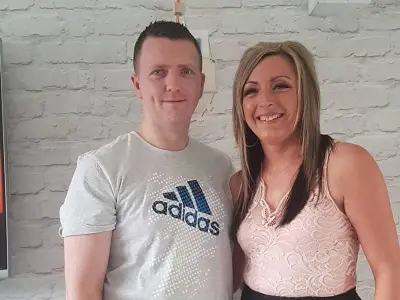
Dramatic bodycam footage has been released showing the moment a future triple killer congratulated police officers for overpowering and detaining him following a violent outburst. Valdo Calocane, who later killed three people in Nottingham, can be heard telling Police Constable Barnaby Pritchard: "You did good, yeah?" in the aftermath of the chaotic incident in September 2021.
Violent Confrontation During Mental Health Sectioning
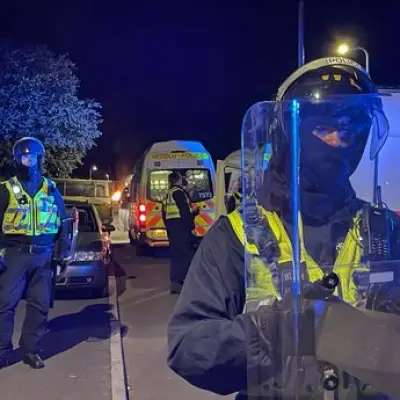
PC Barnaby Pritchard was called to the scene with three female colleagues to section mentally ill Calocane under the Mental Health Act when he was headbutted by the suspect. An ongoing inquiry is examining the systemic failings that allowed Calocane, who had a history of violence and had been sectioned multiple times, to remain free and ultimately kill two university students and a school caretaker during a rampage in Nottingham in 2023 that left three others seriously injured.
Calm Before the Storm
PC Pritchard told the inquiry that Calocane answered the door and initially appeared calm when Nottinghamshire Police were called to his home to section him. The inquiry heard that Calocane implied he would use violence against male officers but not female officers, stating: "No-one's going in an ambulance. I don't have a history of mistreating women, gentlemen if you want to take me out… I prefer you do."

Bodyworn footage showed Calocane removing his glasses before appearing to fly into a rage "out of the blue," shouting and later growling violently. Police twice discharged their Tasers and incapacitant spray in attempts to overpower the suspect.
"One of the Worst" Assaults
PC Pritchard described the incident in detail to the London inquiry: "He was initially very calm, he spoke quietly. I think as well he was very unemotional with any responses. He spoke very little. Then, he began punching me, repeatedly."
The officer continued: "As a collective we managed to restrain him against an item of furniture inside the room. A colleague tried to apply handcuffs. He tried headbutting me - he did headbutt me, twice, whilst I was trying to restrain him against the item of furniture. We managed to push him towards the bed in the back of the room. A Taser had been deployed … and we managed to detain him. Before that occurred he swung towards me in handcuffs as a weapon."
Bizarre Praise From the Suspect
Footage showed Calocane, prone on the bed after being restrained, telling PC Pritchard: "You did good, yeah? You didn't go down." The constable told the inquiry: "I believe it was possibly some male bravado, he expected the force of his blows to put me to the floor."
PC Pritchard revealed he had been assaulted 15 to 20 times during his 17-year career, describing this incident as one of the worst. He expressed concern that courts don't take assaults on police officers seriously enough.
Systemic Failures Revealed
The inquiry heard that the decision to charge Calocane for the 2021 assault wasn't made until May of the following year. He was due to attend court in September, a full year after the assault, but was never prosecuted. A warrant was issued for his arrest but was never acted upon, according to previous testimony.
Another officer called to the scene said she believed the warrant to section Calocane was considered "low risk" because there was nothing suggesting he was violent, despite previous arrests for breaking into neighbours' flats. The inquiry has already heard "data protection" cited as a reason for not sharing information about suspects between agencies.
Deadly Consequences
Calocane went on to kill 19-year-olds Barnaby Webber and Grace O'Malley-Kumar, along with 65-year-old school caretaker Ian Coates during a stabbing spree in Nottingham in June 2023. He was handed an indefinite hospital order after admitting manslaughter on the grounds of diminished responsibility.
The independent inquiry continues to examine the missed opportunities and systemic failures that allowed a violent individual with known mental health issues to remain free and commit these horrific crimes. The bodycam footage provides chilling evidence of the violent tendencies that were documented but not adequately addressed by the systems designed to protect the public.