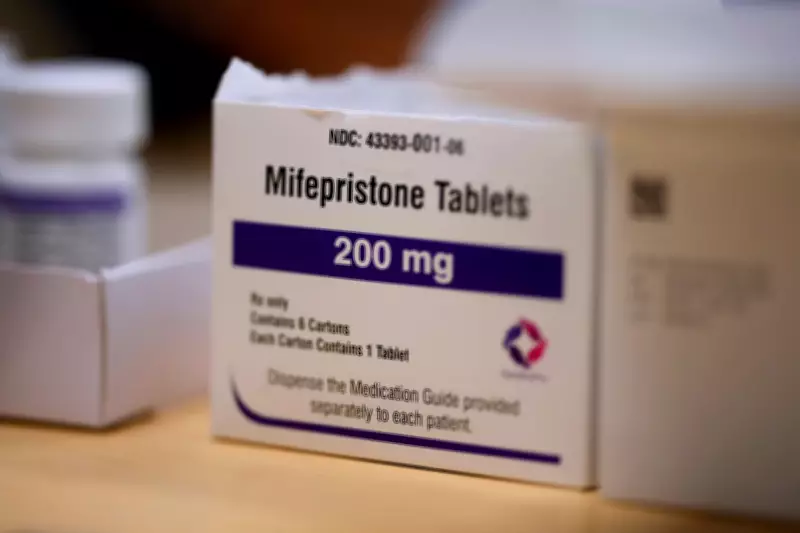
Federal Judge Temporarily Upholds Mail-Order Access to Abortion Pill Mifepristone
In a significant legal development, a federal judge has declined to halt the mailing of the abortion drug mifepristone across the United States, at least for the immediate future. This decision represents a setback for Louisiana's efforts to restrict access to abortion pills in states where the procedure is banned.
Judge's Ruling and Conditions
U.S. District Judge David Joseph, based in Lafayette, Louisiana, ruled against Louisiana Attorney General Liz Murrill, who sought to pause Food and Drug Administration regulations permitting mail dispensing of mifepristone. Judge Joseph, appointed by former President Donald Trump, granted a government request to put the case on hold temporarily. However, he emphasized that this pause is not indefinite and warned that he might later side with Louisiana.
In his opinion, Judge Joseph stated he would await the outcome of an ongoing FDA study of the drug. He mandated that the agency provide an update on its investigation within six months. "Should the agency fail to complete its review and make any necessary revisions to the rules within a reasonable time frame, the Court's analysis – and the weight accorded to these factors – will inevitably change," he wrote. Additionally, he indicated that the plaintiffs are "likely to succeed on the merits" of their case.

Background and Legal Context
Mifepristone, typically used in combination with misoprostol, has become central to legal battles over abortion access since the 2022 U.S. Supreme Court decision overturning Roe v. Wade. This ruling allowed states to impose abortion bans, with Louisiana among 13 states prohibiting it at all pregnancy stages. Attorney General Murrill argues that mail-order prescriptions undermine Louisiana's ban, a stance echoed by Republican officials in other districts.
In 2024, the Supreme Court refused to block mail prescriptions for mifepristone in a separate case brought by anti-abortion doctors, who were deemed to lack legal standing. Meanwhile, liberal states have enacted laws protecting providers who prescribe abortion pills via telehealth and mail them into ban states.
Impact and Broader Implications
Studies highlight the growing role of telehealth in abortion access. By the end of 2024, one-fourth of abortions were conducted via telehealth, a fivefold increase in two years. Another study found that in 2025, women in ban states were more likely to obtain pills through telehealth than by traveling elsewhere.
Murrill is pursuing criminal cases against two doctors in California and New York accused of sending pills to Louisiana patients, though extradition has been refused. A Louisiana woman, who claims her boyfriend coerced her into taking mifepristone from a California doctor, joined the lawsuit as a plaintiff. Arguments about coercion and intimate partner abuse feature prominently, with plaintiffs asserting that in-person requirements could prevent such issues, while some anti-domestic abuse advocates counter that telehealth offers a lifeline for survivors.
Recent Developments and Controversies
Last year, the Trump administration approved an additional generic version of mifepristone, angering anti-abortion groups. In a related case, a Hawaii judge ruled that the FDA violated the law by imposing restrictions on the drug, which is also used for miscarriage management.
This ruling underscores the ongoing national debate over reproductive rights, with telehealth emerging as a critical battleground. The FDA's forthcoming review will likely influence future legal and policy decisions regarding abortion access in the United States.