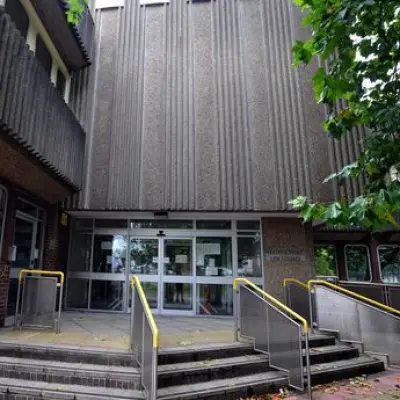
Newly uncovered plans reveal that ISIS brides considered a threat to national security will be housed within a freshly renovated wing at the Dillwynia Women's Correctional Facility in Windsor, located in Sydney's western suburbs. This development coincides with prison guards disclosing they have undergone specialised training focused on managing 'extremist females in custody.'
Specialised Training for High-Risk Inmates
The training program, titled 'Women in Violent Extremism,' has been recently implemented for correctional officers in New South Wales. It covers de-radicalisation strategies and practical methods for working with inmates classified as 'category five' prisoners. These individuals are typically assessed as posing a special risk to national security, often due to involvement in or incitement of terrorism-related activities.
According to reports, the program includes online modules and was introduced abruptly, raising questions among staff. A source within NSW Corrections stated, 'There's online training now available about how to deal with extremist females in custody, and it's very much happened all of a sudden. The question is, why would there be the need to be going through this and having to do this now? It was never mentioned before.'

Security Measures and Financial Implications
Category five prisoners must be confined at all times within special facilities featuring secure physical barriers, such as towers or electronic surveillance equipment. The renovated wing at Dillwynia is designed to accommodate up to 50 beds for such high-risk inmates.
One Nation leader Pauline Hanson has expressed concerns, noting that several NSW Corrections officers contacted her office about the program. She highlighted the potential cost to taxpayers, estimating that housing these women as category five inmates could amount to approximately $1,800 per day, or $650,000 annually, per prisoner. Hanson questioned whether federal or state taxpayers would bear this financial burden, especially if life sentences are imposed, potentially costing tens of millions of dollars.
Repatriation Efforts and Political Responses
Efforts to repatriate a group of 11 women and 23 children linked to Islamic State from Syria to Australia are currently on hold due to the escalating conflict in the Middle East. However, NSW Premier Chris Minns has confirmed that about one-third of these families are planning to return to New South Wales.
In Victoria, Premier Jacinta Allan has not yet disclosed how many ISIS brides might resettle in the state, though it is anticipated that the majority of the 11 families could choose to do so. Questions have been raised about whether Victoria's Department of Justice and Community Safety will implement similar specialised training for its correctional officers.
Legal and Security Measures
One of the Australian women in the group has already been subjected to a temporary exclusion order, active for two years, following advice from security agencies. It remains unclear whether this woman, who has not been identified, has any children from whom she might be separated as a result of the order.
Last month, Home Affairs Minister Tony Burke confirmed that none of the other women or children have met the legal thresholds required for temporary exclusion orders. When questioned by media outlets, Corrective Services NSW did not deny the possibility of using Windsor Prison to house ISIS brides or reports of recent staff training for managing extremist female inmates.
A spokesperson for Corrective Services NSW emphasised, 'Community safety is the top priority for Corrective Services NSW. Corrective Services NSW takes the threat of radicalisation seriously. CSNSW determines security classifications and placements for inmates to maintain the safety and security of our prisons. All correctional officers undergo compulsory training to prevent the risk of radicalisation in the prison system.'