IRA Bomb Survivor Demands Justice 30 Years After Docklands Attack
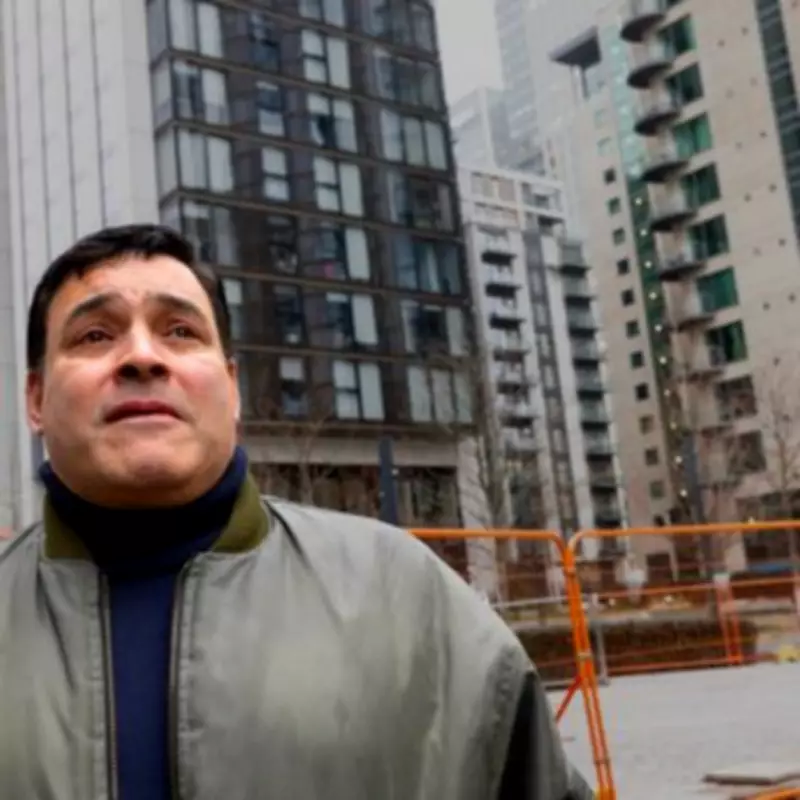
Three decades have passed since a massive IRA bomb devastated London's Docklands, but for survivor Jonathan Ganesh, the trauma feels as raw as yesterday. Speaking exclusively at the exact location where the 3,000-pound lorry bomb detonated on February 9, 1996, Ganesh recounted the horrific events that claimed two lives and left him with lasting physical and psychological scars.
A Night of Terror Remembered
Jonathan Ganesh was just 23 years old, working as a part-time security guard, when he unwittingly walked past the bomb-laden vehicle shortly before it exploded. He recalls seeing "blue-ish" hazard lights flashing but thought nothing of it. Within seconds, the device—wrapped with 10 pounds of Libyan Semtex for added destructive power—detonated with a force heard as far away as central London.
"I could see a flash of light. When you are very close to a bomb you don't really hear the noise. It was like thunder going upwards," Ganesh described. "A tremendous power coming towards you picked me up. I really believed at the time: 'I'm dead. I'm going to die now.' It only lasted for a second but seemed like a lifetime."

He was seriously injured and pulled from the rubble by rescuers, while his two closest friends, John Jeffries and Inam Bashir, were killed inside a newsagents kiosk at the scene.
Ongoing Suffering and Unanswered Questions
The knock-on effects of the terrorist attack continue to be felt deeply. In recent years, two individuals affected by the blast have taken their own lives, while others struggle with poverty and mental health issues. Ganesh remains at the forefront of a campaign for justice, pledging never to give up.
Next month, he will face former Sinn Féin leader Gerry Adams in a London courtroom, seeking to establish whether Adams was ever a member of the IRA. "Thirty years on and there are still questions unanswered. I still get nightmares, although they don't happen so often now," Ganesh revealed.
He expressed frustration over a redacted report by William Shawcross, stating, "After all these years the establishment, the government, are still covering things up. You have to ask why? Almost one third of a century on and we are still being denied the truth."
Memorials and Defiance
The only commemoration of the attack is a small plaque at South Quay DLR station, which unfortunately does not name the two victims. Ganesh often polishes it in memory of his friends. A memorial service will be held on Monday, the exact anniversary date, attended by the deputy mayor of London, Joanne McCartney.
Inam Bashir's brother, Ihsen, still owns the shop unit where his brother died, now operating as the Baguette Express. "We've kept the shop—30 years on we still have it. It was my brother's dream and we love the area," he said. "We're keeping it to honour their memory and as a stand against terrorism. We will not let the terrorists win."
Legal Aftermath and Ongoing Battles
IRA member James McArdle, a 29-year-old farm labourer who drove the truck from Northern Ireland to London, was convicted of the bombing in 1998. However, he was released just two years later under the Good Friday Agreement, a point of contention for survivors like Ganesh.
The blast caused widespread devastation, rocking the Daily Mirror newsroom in Canary Wharf and destroying dozens of buildings in one of the world's wealthiest areas. As dawn broke the next morning, the full scale of the destruction became painfully clear.
Ganesh's fight for justice underscores a broader struggle for closure and accountability, as victims and their families continue to seek answers and recognition three decades after the attack.