A major public inquiry has issued a scathing indictment of systemic failures in understanding and preventing sexual violence against women, revealing that authorities cannot answer fundamental questions about the scale of stranger rapes in England and Wales.
Data Gaps Hinder Prevention Efforts
The latest report from the Angiolini Inquiry, established after the murder of Sarah Everard, found that data on sexually motivated crimes in public spaces is "difficult to obtain, patchy and incomplete." Lady Elish Angiolini, who leads the inquiry, stated that this represents a "critical failure" which fundamentally undermines efforts to assess and improve preventative measures.
"No-one was able to confidently tell me how many women nationally report being the victim of sexually motivated crimes in public spaces," Lady Angiolini told journalists. She highlighted the stark example that there is no reliable record of how many women were raped by strangers in public spaces in England and Wales last year, as opposed to attacks by known individuals in private settings.

Perpetrators 'Slipping Through the Cracks'
The report warns that too many offenders are evading detection in an "overworked and underfunded" system, where police, prison, and probation resources are severely stretched. It criticises the current approach, stating that prevention schemes are too often "just words" and that the focus must shift from advising women on their behaviour to stopping perpetrators.
Among its key recommendations, the inquiry advocates for the use of artificial intelligence (AI) to help identify predatory men by analysing data from police operations to spot patterns in offending. These individuals could then be subject to targeted interventions and "activity management" to prevent future crimes.
Legacy of Sarah Everard and Systemic Flaws
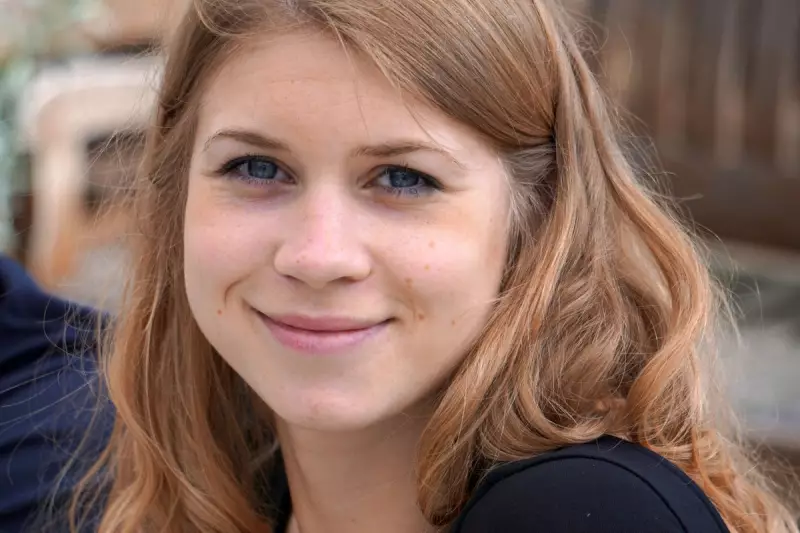
The inquiry was launched following the horrific murder of 33-year-old Sarah Everard in March 2021 by serving Metropolitan Police officer Wayne Couzens. The report notes that despite violence against women and girls being classed as a national threat, effective nationwide action on prevention is lacking.
It also reveals that there is still no automatic ban on individuals with convictions or cautions for sexual offences from joining the police. "The police need to draw a clear bright line that shows that those with convictions or cautions for sexual offences have no place in policing," Lady Angiolini asserted.
This follows the first phase of the inquiry, which concluded that Couzens—who had a history of alleged indecent exposure—should never have been a police officer. Ms Everard's family have said they believe she died specifically because her killer was a police officer, noting she "would never have got into a stranger's car." Couzens is serving a whole-life prison term.
Calls for Action and Upcoming Reports
Responding to the findings, Home Secretary Shabana Mahmood said it was "utterly unacceptable" that women do not feel safe and pledged the government would consider the recommendations carefully. She reiterated a commitment to halve violence against women and girls within a decade.
The inquiry also backed calls from the family of murdered Zara Aleena for a Good Samaritan law, which would require witnesses to act when they see someone in danger.
A second report from the inquiry is due next year, examining risks of repeated failures in areas like vetting and police culture. A third phase will focus on the crimes of another Met officer, David Carrick, a serial rapist who was given 36 life sentences in 2023.