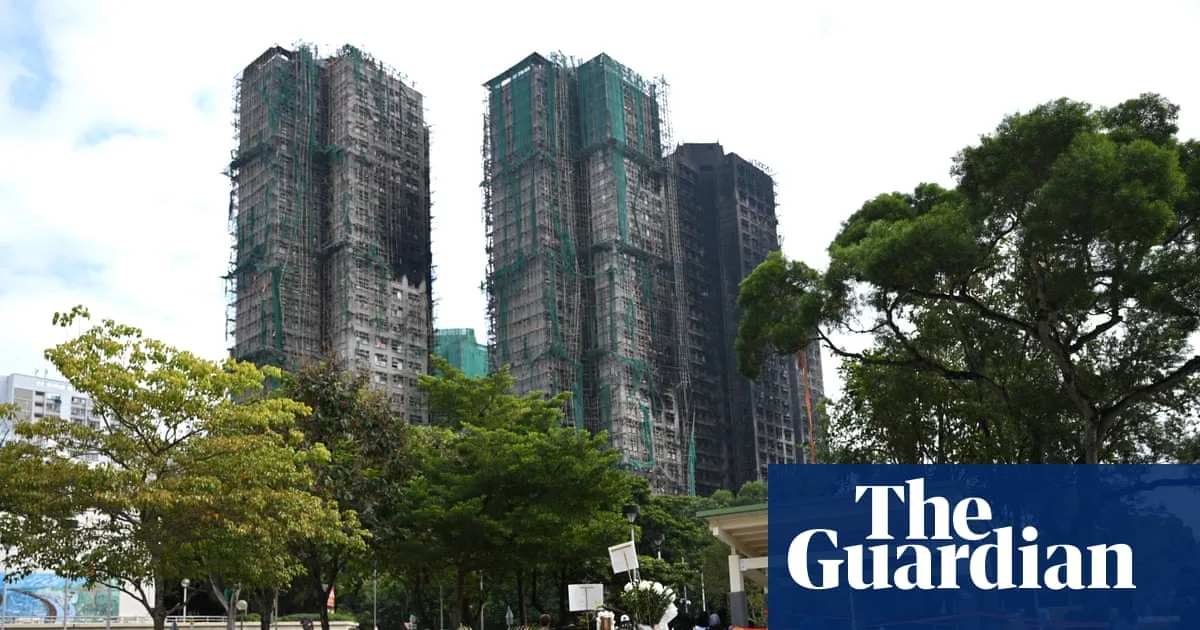
Hong Kong authorities have filed manslaughter charges against seven individuals and two companies in connection with a massive fire at a public housing estate that killed 168 people last year. The blaze, which engulfed seven of eight high-rise apartment blocks at the Wang Fuk Court estate in November, is considered one of the world's deadliest residential building fires in decades.
According to charge sheets seen by AFP, the directors of the construction contractor and the consultant firm involved in the estate's renovation, along with an inspector, face manslaughter charges. Additionally, seven individuals who played various roles in the renovation have been charged with fraud, money laundering, and tax evasion. The defendants appeared in court on Wednesday and indicated they understood the charges.
The court heard that those accused of manslaughter 'unlawfully' killed 168 people, including residents and a firefighter. A list of victims' names was read out in the hearing, marking the first time such information has been made public. Public hearings during the investigation revealed that almost all life-saving fire safety measures failed on the day of the blaze due to human errors.

Hong Kong police stated that 35 people have been arrested in connection with the fire, working with the city's anti-graft watchdog, the Independent Commission Against Corruption (ICAC). ICAC principal investigator Hazel Law said, 'We suspect that this unfortunate incident was caused by individuals acting in their own self-interest … with complete disregard for the safety of residents' lives and property.' ICAC found that some defendants conspired to defraud authorities by filing false reports about the estate's projects.
The investigation focused on substandard construction safety netting and cigarette butts as contributing factors to the fire's rapid spread. Fire alarm systems for seven of eight blocks had been deactivated, which 'greatly shortened the time for residents to evacuate,' according to leading counsel Victor Dawes. Required fire-retardant nets were not used in many places, and windows were covered by foam boards, which may have facilitated the fire's spread into flats. The Fire Investigation Task Force concluded that an ignited cigarette caused combustible material to catch fire, sparking the blaze.