Greek Train Crash Trial Commences Over Deadly 2023 Collision
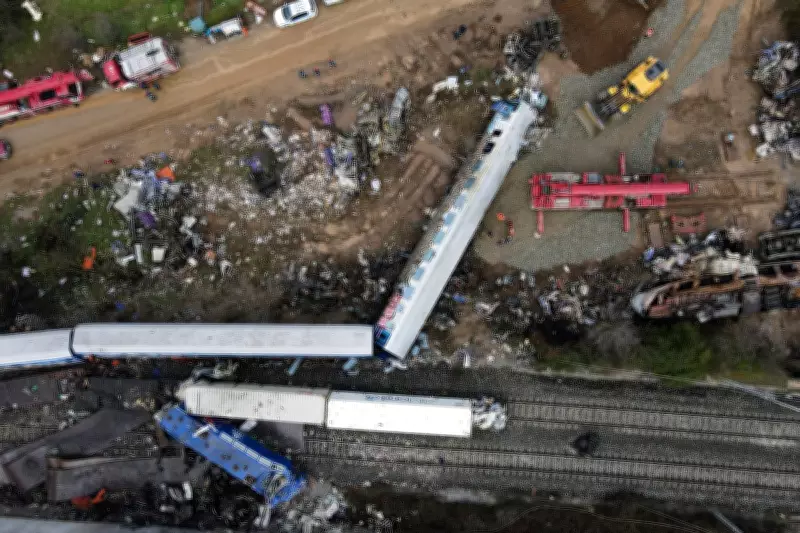
A major criminal trial began in Greece on Monday, focusing on the catastrophic train collision that claimed 57 lives in February 2023. The disaster, which horrified the nation, involved a passenger train being placed on the wrong track, leading to a direct impact with an oncoming freight train near Tempe in northern Greece.
Victims and Defendants in the Spotlight
Many of those killed were college students, and the crash has left a lasting scar on Greek society. The trial involves 36 defendants, primarily rail and transport officials, who face serious charges related to endangering public transport. These include station masters on duty that night, their supervisors, former rail officials, senior transport ministry staff, and former executives from Hellenic Train, the Italian-owned operator.
Victims' families, some of whom have become nationally recognized figures in their quest for accountability, attended the opening. They held photographs of loved ones, with relatives like Pavlos Aslanidis, who lost his 27-year-old son Dimitris, expressing a mix of grief and demand for justice. "Real justice would be to get our kids back. But what we are asking for now is the exemplary punishment of those responsible," Aslanidis stated, noting the frustration that three years later, no one has been imprisoned.

Systemic Failures and Safety Neglect
The collision occurred due to a passenger train being directed onto the incorrect track, a basic error on Greece's rudimentary rail network. Investigators have highlighted that this mistake was exacerbated by non-functioning signal systems, along with failures in staffing, oversight, and maintenance. These issues persisted despite years of delays in implementing crucial safety upgrades, revealing long-neglected infrastructure problems.
The crash triggered a fireball upon impact, trapping passengers in mangled rail cars and resulting in Greece's deadliest rail accident on record. The site, located about 376 kilometres north of Athens near Larissa city, has become a symbol of the tragedy.
Logistical and Emotional Challenges of the Trial
To accommodate the scale of the proceedings, which involve hundreds of witnesses, a converted campus is being used as the trial venue. The trial is expected to last two years, with riot police forming a cordon around the court as several hundred demonstrators gathered outside. Relatives, many dressed in black, faced logistical hurdles, such as insufficient seating, with Eleni Vasara, who lost her 23-year-old daughter Agapi, expressing bitterness over the lack of space for all family members.
"It's not right that all the relatives cannot attend. They have a right to have their day in court," Vasara said. "But no matter what they do, there will be justice."
Broader Political and Legal Implications
The disaster remains a deeply emotive and politically charged issue in Greece, sparking multiple public protests and strikes. Critics have accused the conservative government of attempting to shift all responsibility onto rail officials, rather than addressing broader systemic failures. A makeshift memorial outside parliament in Athens, where victims' names are written in red paint surrounded by candles and flowers, serves as a poignant reminder of the loss.
In addition to this criminal trial, several separate legal cases are in progress, including a parliament-sanctioned probe into political accountability. This underscores the ongoing quest for comprehensive justice and reform in the wake of a tragedy that has exposed critical vulnerabilities in Greece's transport infrastructure.