Glasgow Fire Incident Sparks Concerns Over Fire Service Capacity in Scotland
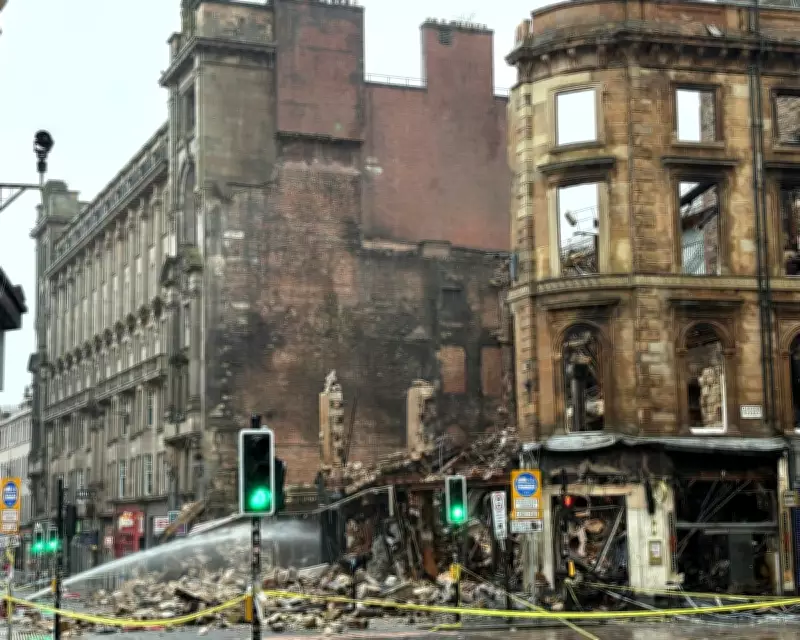
Firefighters in Glasgow continued to hose down the charred remains of a Victorian office block on Union Street, following a significant blaze that erupted on Sunday. This incident has ignited serious concerns about the capacity of Scotland's fire service to handle large-scale fires, particularly as it was revealed that Glasgow's sole remaining fire engine equipped with a high-reach ladder was unavailable during the emergency.
Response Challenges and Resource Shortages
The Scottish Fire and Rescue Service confirmed that while standard fire engines from stations in Calton, Cowcaddens, and Maryhill arrived at the scene within minutes of the first 999 call, the nearest available high-reach appliance had to be dispatched from Coatbridge. This location is approximately 18 kilometers away, translating to a 26-minute drive under light traffic conditions. High-reach vehicles, which feature a mobile ladder with a 32-meter reach compared to the fixed 13.5-meter ladders on standard engines, are crucial for applying large volumes of water from height and enhancing rescue capabilities.
Following cuts in 2023 that reduced the number of high-reach fire engines across Scotland from 26 to 16, only one is now stationed near Glasgow city centre in Maryhill, with another in the nearby town of Johnstone. On Sunday, the service was stretched thin, with two other significant fires reported in the east end of Glasgow and Dumfries, alongside a hazardous materials incident in Edinburgh, potentially diverting resources before the Union Street fire was reported.

Political and Union Reactions
Scottish Labour leader Anas Sarwar challenged First Minister John Swinney during First Minister's Questions, calling for an immediate investigation into the potential impact of reduced fire service capacity on the response. "We don't know right now what difference the reduction in fire service capacity would have made on Sunday," Sarwar stated. "We need an immediate investigation into any potential impact this may have had on the response so that lessons can be urgently learned."
Colin Brown, executive council member of the Fire Brigades Union Scotland, highlighted broader issues, noting that Scotland's average response time has increased by about a minute and a half since 2016. "The reality is that, as an incident commander, if you make the decision you need additional resources then you need them urgently and you're going to be counting the seconds until they arrive," Brown explained. He also pointed out that while the first minister visited the fire scene, discussions were ongoing about proposed public sector pay and workforce cuts that could further reduce fire service headcount by 2.5%.
Broader Implications and Calls for Action
Sarwar emphasized the cumulative effects of years of cuts, stating, "We know there are now fewer firefighters, less firefighting equipment, longer response times and stations closed. Our fire and rescue service has already faced years of cuts. The tragedy on Sunday must be a wake-up call and a reason to pause." The Scottish Fire and Rescue Service has been approached for further comment on these developments.
This incident underscores the critical need for adequate resources in emergency services, as communities across Scotland grapple with the implications of reduced firefighting capabilities in the face of increasing demands and potential hazards.