High Court Judge Rules in Favour of Cremation in Heartbreaking Family Dispute
A Christian father has lost a legal battle with his ex-wife over whether their teenage son should be buried or cremated, following a tragic suicide last December. The case, described by the presiding judge as "heartbreaking," concluded at London's High Court with a ruling in favour of the mother's wish for cremation.
Fundamental Religious Disagreement Over Final Resting Place
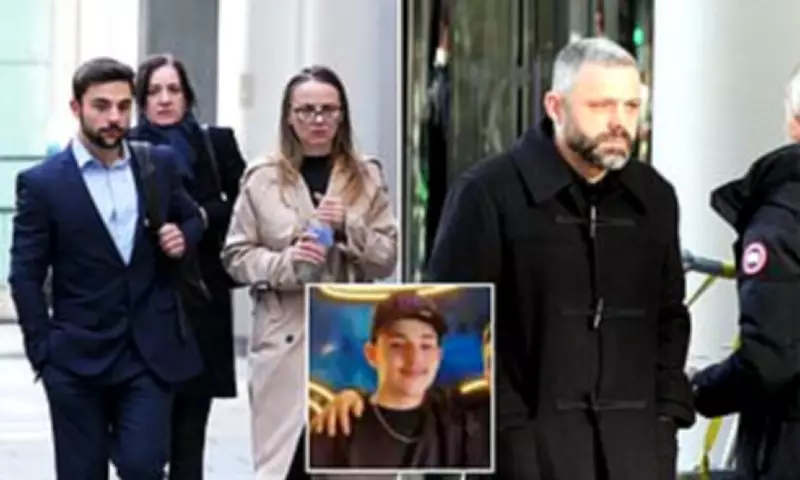
Seventeen-year-old Gabrielle Barbus, a budding photographer and keen footballer from Hornchurch in east London, took his own life on December 30, 2025, after struggling with mental health issues. His body has remained with the coroner while his parents engaged in a fundamental disagreement about his final disposition.
His father, Stefan Barbus, a Roman Orthodox Christian, argued passionately for traditional burial, believing that his son's soul would be in peril and that he might miss out on resurrection at the final judgment if cremated. "The reason why it is so important, the burial, is that he was baptised Christian orthodox," Mr. Barbus told the court. "A burial respects the sanctity of the human body and soul and it is my belief that we will all one day be resurrected. That is why cremation is not acceptable as it destroys the body and is irreversible."

Mother's Vision: Returning Son to Nature He Loved
Gabrielle's mother, Georgia Opritescu, who separated from Mr. Barbus in 2010 and divorced in 2013, held no such religious beliefs and insisted that her son didn't either. She wanted his body to be cremated and his ashes scattered in the Devon countryside that he loved during family holidays, to "return him to nature."
"His father believes, but Gabrielle did not grow up in a religious household," Ms. Opritescu testified. "My son Gabrielle and the life he lived would not want to be confined by the ground. It would upset me. I want him to be returned to the nature he loved, not confined."
Judge's Decision: Weighing Evidence of Gabrielle's Likely Wishes
Judge Jonathan Klein, presiding over the case, ruled that Gabrielle's body should be cremated and the ashes scattered according to the wishes of his mother and older brother Antonio. The judge determined that the available evidence pointed toward Gabrielle's own preference being for cremation.
"This is my decision following the hearing of a heartbreaking claim," Judge Klein stated. "Tragically, Gabrielle took his own life on 30 December 2025. He was 17 years old. Mr. Barbus and Ms. Opritescu cannot agree on the arrangements for laying Gabrielle's body to rest. That is what I must decide."
The judge noted that Gabrielle had been closer to his mother and brother than his father, and that they were likely correct in their belief that "interment of the ashes is inconsistent with his personality." He also referenced evidence that Gabrielle had indicated during conversations at ages 11 and as a teenager that "cremation was a healthier way of dealing with saying goodbye to a loved one."
Father's Religious Convictions Versus Son's Likely Preferences
In his ruling, Judge Klein acknowledged Mr. Barbus's deep religious convictions but found that they did not reflect Gabrielle's own beliefs. "It seems to me that Mr. Barbus' proposal...in truth reflects his own religious convictions, not those of Gabrielle," the judge stated. "I don't believe that a Christian faith was of more than peripheral importance to Gabrielle. There is evidence that while he respected the religious convictions of others, he was not observant."
The judge also considered the preferences of Gabrielle's older brother Antonio, who supported his mother's position. "I want Gabrielle to be free - for his remains to be part of the whole world, the natural world that he loved," Antonio told the court.
Aftermath of the Ruling and Family Grief
Following the ruling, Judge Klein expressed hope that Mr. Barbus might find some comfort knowing where his son's ashes would be scattered. "It may be that the ashes are scattered in a particular place in Devon that was special to Gabrielle," the judge said. "If that is the case, I can only hope that Mr. Barbus can have a measure of comfort if he knows where that happens and can visit that place to mourn."

Mr. Barbus had indicated that he would not attend a scattering ceremony, finding it too distressing. The judge made no order regarding the costs of the case.
Remembering Gabrielle: A Talented Young Life Lost
In an online memorial, Gabrielle's brother Antonio paid tribute to his younger sibling, describing him as "a bright soul" with "a gentle smile that warmed people." He highlighted Gabrielle's talent for photography, his skill as a football goalkeeper, and his creative pursuits in writing rhymes and singing.
"Gabrielle had a gift for photography; he noticed the tiny details others missed and saw the world with a perspective that was uniquely his," Antonio wrote. "When he wasn't behind a lens, he was often found on the football pitch as a goalie - a natural protector who thrived under the pressure of the game."
The family's tragedy has highlighted broader issues around mental health and suicide prevention. "Suicide is preventable, but only if we create a world where people feel safe enough to say they aren't okay," Antonio noted in his memorial message.