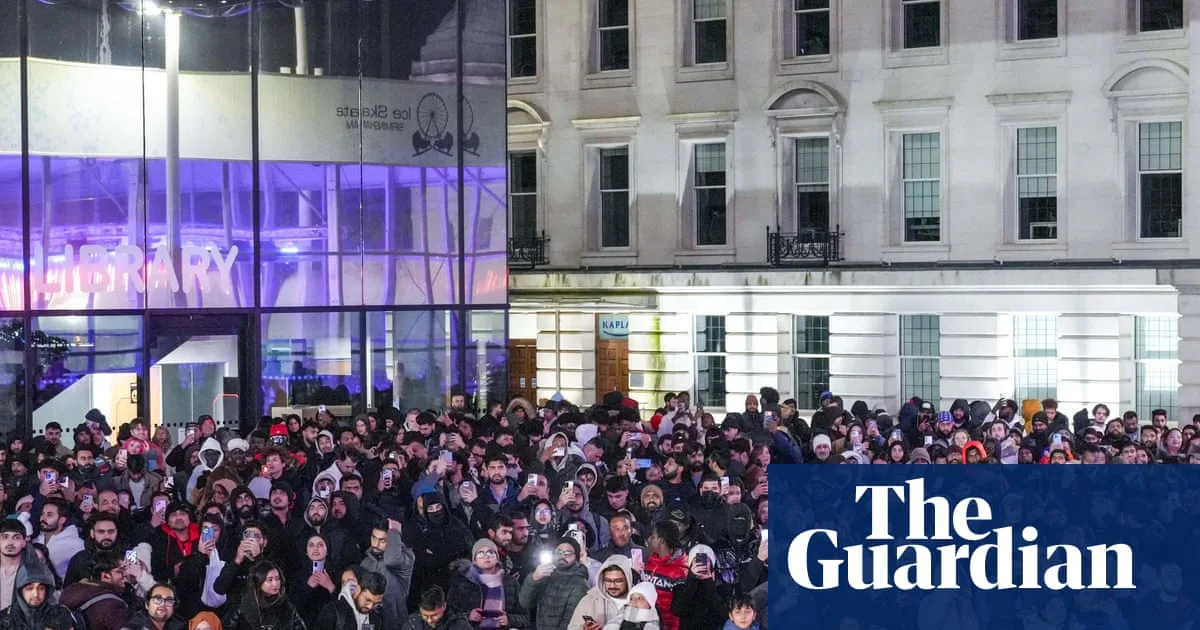
Hundreds of people gathered in Birmingham's Centenary Square to welcome 2026, only to discover they had been tricked by false claims of a fireworks display. It is the second consecutive year that revellers have fallen victim to the hoax.
An online advertisement had promised a 'dazzling' show with music, but no display materialised. Last year, thousands were similarly duped. West Midlands Police had warned earlier this week that there were no official city-organised New Year's Eve events, blaming 'false claims' spread online.
'Unfortunately, these false claims often lead to confusion and disappointment,' the force said in a statement. They added that such misinformation creates 'real safety issues' and puts pressure on public transport and emergency services.

Similar hoaxes have occurred elsewhere, including an AI-generated image that lured tourists to a non-existent Christmas market outside Buckingham Palace last month.
Meanwhile, official celebrations across the UK went ahead, with London staging its largest ever fireworks display featuring 12,000 pyrotechnics watched by 100,000 people, and Edinburgh's Hogmanay street party drawing tens of thousands.