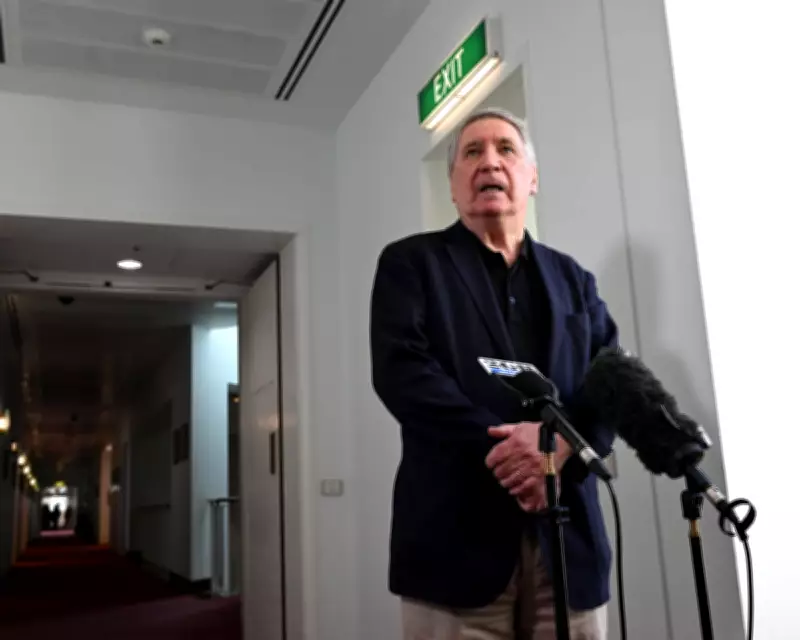
Former Australian spy chief Dennis Richardson has dramatically resigned from the royal commission into antisemitism and social cohesion, declaring that urgent recommendations regarding intelligence failures linked to the Bondi terrorist attack "cannot wait until December." Richardson, a former director-general of Asio and ambassador to the US, stepped down following disagreements over the inquiry's timeline, emphasising the critical need for immediate government action to address public safety concerns.
Resignation Over Timeline Disputes and High Pay
Richardson revealed that he quit the commission because he felt "surplus to requirements" and believed his work could not justify the substantial daily fee of $5,500 he was receiving. He explained to the ABC's Radio National that there was insufficient initial discussion about operational details, leading to his conclusion that his role had become limited. "I didn't necessarily see my last job of this kind being more of a highly paid researcher," Richardson stated, while praising the commission's head, former high court judge Virginia Bell, and noting their strong working relationship despite the divergence in views.
Urgent Call for Public Safety Measures
In a compelling interview on the Insiders on Background podcast, Richardson stressed that the government's foremost responsibility is community safety. He argued that any findings from the royal commission related to intelligence and law enforcement inherently impact public security and must be delivered to authorities without delay. "You cannot leave matters that go to public safety till the end of the year, particularly when you have a small section of the community living in such fear," Richardson asserted, referencing the Jewish community affected by the Bondi attack.

The inquiry was established after the December Bondi massacre, where two gunmen killed 15 people at a beachside Hanukah event. Bell had indicated last month that delays in obtaining and assessing material might prevent evidence on security arrangements and intelligence agency work from being heard before an interim report due in April. However, Richardson contended that this timeline is inadequate, as hearings on these critical issues are only scheduled to begin around the same time as the interim report's deadline.
Families' Fears and Background of the Inquiry
Some families of the Bondi victims expressed concerns that Richardson's resignation could undermine the commission's effectiveness. Jenny Rotyur, niece of victim Boris Tetleroyd, voiced worries that "everything would fall apart" without an expert on security agencies to scrutinise potential intelligence failures. "We need the truth to be found, and without an expert on security agencies, I'm finding it hard to believe they're going to be able to do that," she said.
Originally, Richardson was tasked with conducting an independent review of potential intelligence failures, but political and community pressure led the Albanese government to establish a full royal commission, incorporating his review. The commission faces challenges, including rules around sensitive information that Bell warned are "impeding" the interim report into the Bondi terror attack.
Richardson's departure highlights ongoing tensions between the need for thorough investigation and the urgency of implementing safety measures to prevent future tragedies, underscoring the complex balance in post-crisis policymaking.