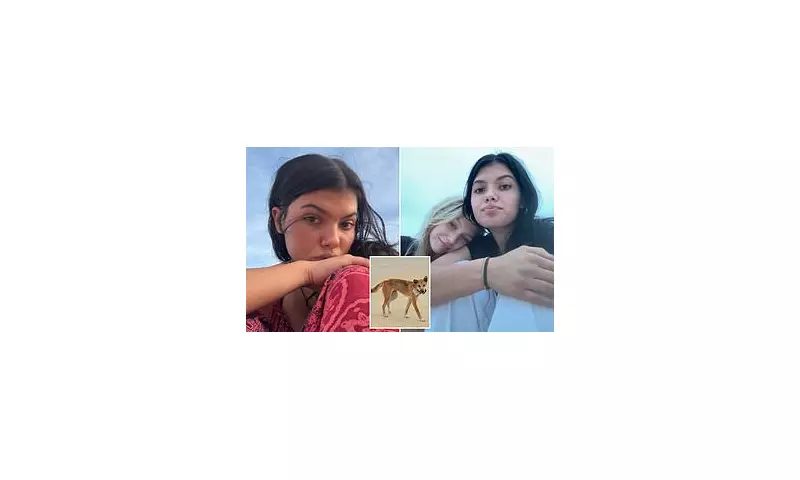
Autopsy Reveals Dingo Bites on Canadian Teen Found Dead on K'gari Island
The preliminary autopsy of a Canadian teenager discovered deceased on K'gari Island has confirmed she sustained bites from dingoes prior to her death, as Queensland authorities persist in their investigation to ascertain the precise circumstances. The body of Piper James, aged 19, was located on the shoreline of the island, formerly known as Fraser Island, early on Monday morning, encircled by a pack of approximately ten dingoes.
Discovery and Initial Findings
Two men travelling in a four-wheel drive vehicle found the unresponsive teenager at 6am near the historic Maheno Wreck site, noting multiple defensive injuries on her body. The initial autopsy report, released by the Coroners Court of Queensland, indicates physical evidence consistent with drowning. However, it also identified 'pre-mortem' dingo bite marks, suggesting Ms James may have attempted to flee the native dogs by entering the surf.
The coroner emphasised there was no evidence implicating any other person in her death. Extensive post-mortem bite marks were also documented on the body. A spokesperson for the Coroners Court clarified to The Courier Mail that 'pre-mortem dingo bite marks are not likely to have caused immediate death.'

Ongoing Investigation and Family Response
The coroner is now awaiting further pathology results to help determine the exact cause of death, a process anticipated to take several weeks. This preliminary report allows Ms James' body to be released to her family while additional tests are conducted.
Piper's father, Todd James, and his wife Angela are preparing to travel to Australia and have been invited to K'gari to participate in an Indigenous smoking ceremony honouring their daughter. Mr James provided a social media update regarding the autopsy, stating, 'Autopsy completed but further tests required to determine if the fluid found in her lungs was inhaled or not. These tests should be able to tell us whether or not it was a drowning.'
He added that Piper's body will be repatriated to her hometown of Campbell River in British Columbia next week, where a celebration of her life will be organised. 'We are so very grateful for the overwhelming amount of support that Angela and I are receiving. It can be so very dark at moments,' he expressed.
Background and Community Impact
Ms James, originally from Campbell River, had been travelling across Australia with her best friend Taylor for six weeks, visiting destinations including Sydney, Cairns, and the Whitsundays before arriving on K'gari Island. Her body was discovered washed up on Seventy Five Mile Beach merely an hour after she informed friends she was heading for an early-morning swim around 5am.
Taylor's mother, Marjorie Stricker, conveyed that the tragedy has devastated both families. 'When the girls first left for Australia, we told them to always call, that there were no problems we couldn't face together, and that safety was the most important thing,' she recounted. 'This isn't how this was meant to play out. What has happened cannot be undone. It cannot be fixed.'
Ms Stricker highlighted the deep friendship between the two young women, who had dreamed of visiting Australia since childhood. In response to the incident, the James family established a GoFundMe page to assist with repatriation costs, which had raised nearly $8,000 by Saturday afternoon. The page states, 'But we can honour Piper… her free spirit, her kindness, and her way of moving through the world.'
Safety Measures and Environmental Concerns
Following the tragedy, rangers have intensified patrols across K'gari Island. Authorities had previously issued warnings about 'heightened dingo activity' in the area where Ms James died, following reports of wild dogs ripping tents, approaching campers, and stealing food and personal belongings. This warning remains active throughout the summer holiday period until January 31st.
Queensland Premier David Crisafulli has dismissed proposals to restrict visitor numbers to K'gari, the world's largest sand island. However, the Butchulla Aboriginal Corporation and various environmental groups continue to advocate for a cap on tourist numbers, citing growing safety concerns and potential damage to the fragile ecosystem of this World Heritage site.

Dingoes, known as Wongari in the traditional language of the Butchulla people, hold significant cultural importance for the Indigenous community. The incident has reignited debates about balancing tourism, conservation, and public safety on the iconic island.