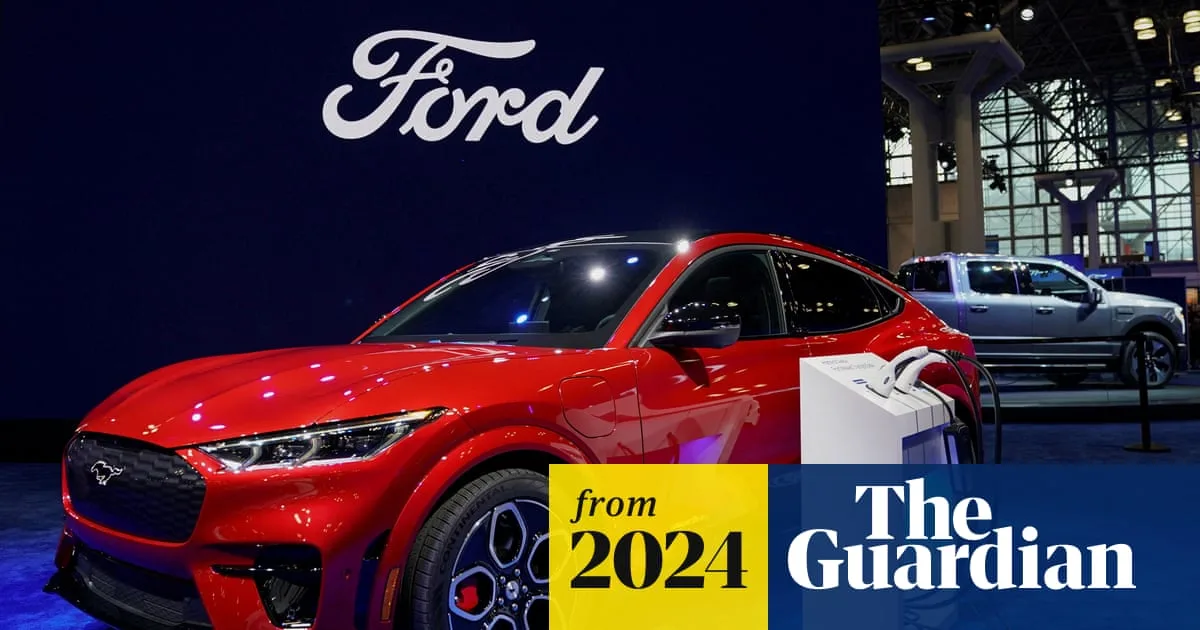
Federal investigators have revealed that Ford's partially automated driving system, Blue Cruise, was in use during a fatal crash in Texas in February. The National Transportation Safety Board (NTSB) released a preliminary report on Thursday indicating that data from the 2022 Ford Mustang Mach E showed the system was active when the vehicle struck a stopped car on Interstate 10 in San Antonio.
The crash occurred around 9:50 pm on 24 February, when the Mach E hit the rear of a 1999 Honda CR-V that was stationary in the middle lane. The 56-year-old driver of the Honda died at the scene. A witness who avoided the CR-V told investigators that neither its tail lights nor hazard lights were working at the time.
This incident is one of two recent fatal crashes involving Ford Mustang Mach Es under investigation by the NTSB and the National Highway Traffic Safety Administration (NHTSA). In both cases, the vehicles hit stationary cars on freeways at night, and neither the driver nor the system prevented the collision. Ford states on its website that its driving systems do not replace human drivers, who must remain ready to take control.

The second crash occurred on 3 March on Interstate 95 in Philadelphia, killing two people. The Mach E struck a stationary Hyundai Elantra, which had previously collided with a Toyota Prius. The driver of the Prius, who was outside his vehicle, was hit and thrown into oncoming traffic. A 23-year-old woman driving the Mach E faces possible charges of homicide by motor vehicle while driving under the influence.
Ford's Blue Cruise system allows hands-free driving on highways, handling steering, braking, and acceleration, but it is not fully autonomous. The company says it monitors drivers to ensure they pay attention. The NTSB intends to issue safety recommendations to prevent similar crashes, highlighting ongoing concerns about advanced driver assistance systems.