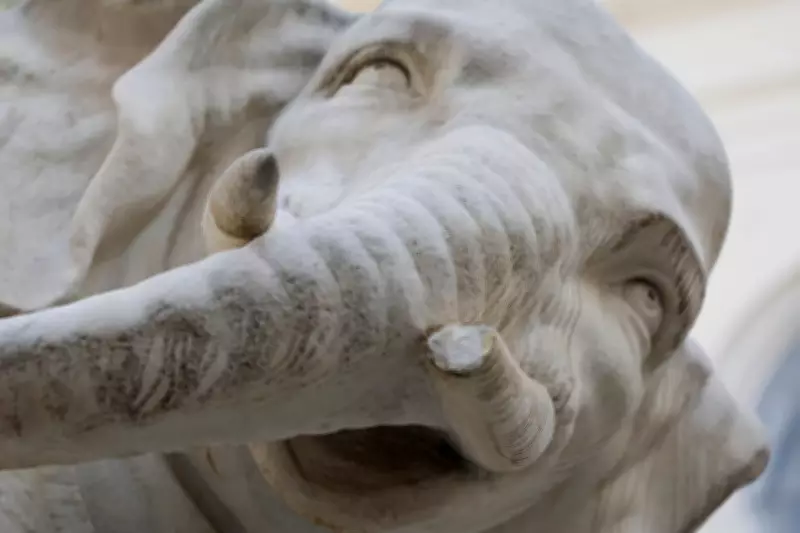
Italian authorities have launched a formal investigation into the repeated vandalism of one of Rome's most cherished historical monuments. The iconic elephant sculpture designed by Baroque master Gian Lorenzo Bernini has once again lost the tip of its left tusk, marking the second such incident in a decade.
Police Investigation Underway
Police discovered an 11-centimeter (4-inch) marble fragment near the statue over the weekend and confirmed on Wednesday that this piece was not original to Bernini's 17th-century creation. Forensic analysis determined the fragment was added during restoration work in 1977, making this damage particularly significant as it represents the second time this specific restoration element has been compromised.
Security Footage Review
Law enforcement officials are currently reviewing security camera footage from the Piazza della Minerva area in an attempt to identify potential perpetrators. The same tusk tip had previously broken off during an act of vandalism in 2016, according to Rome's city hall records, raising concerns about the monument's ongoing vulnerability.

Historical Significance and Design
The stocky elephant sculpture, located just steps from Rome's ancient Pantheon, serves as a popular tourist attraction and holds substantial historical importance. Pope Alexander VII originally commissioned Bernini, Rome's most celebrated Baroque sculptor, to design the monument after Dominican friars discovered a small Egyptian obelisk in the grounds of their nearby convent adjacent to the Basilica of Santa Maria Sopra Minerva.
The resulting design features the elephant supporting the ancient obelisk on its back, creating a striking visual contrast between the Baroque animal form and the Egyptian artifact. However, the sculpture's creation was not without controversy between the artist and his patrons.
Architectural Dispute and Nickname
According to historical records from Rome's city hall, Bernini and the Dominican friars disagreed fundamentally about the structural design. The sculptor believed the elephant's four legs could adequately support the obelisk's weight, while the friars insisted on adding a stone support beneath the animal's belly for enhanced stability.
The friars ultimately prevailed in this artistic debate, resulting in the elephant's distinctive stocky appearance with unusually short legs. This design choice earned the sculpture the affectionate nickname "Minerva's Piglet" among Romans, as the central support structure and proportions gave the elephant a porcine rather than pachyderm appearance.
Legendary Revenge and Cultural Importance
A popular local legend suggests Bernini took subtle revenge against the friars for overriding his artistic vision. According to the tale, the sculptor deliberately positioned the elephant with its rear facing the Dominican convent, complete with a lifted tail pointed in their direction—a cheeky architectural protest that has become part of Rome's rich cultural folklore.
The repeated vandalism incidents highlight ongoing challenges in protecting historical monuments in high-traffic tourist areas. As police continue their investigation, cultural heritage experts are likely to examine additional protective measures for this Baroque masterpiece that has watched over Rome's Piazza della Minerva for centuries.