Unsolved 1986 Murder of Black & Decker Executive in Lyon: Family's 40-Year Quest
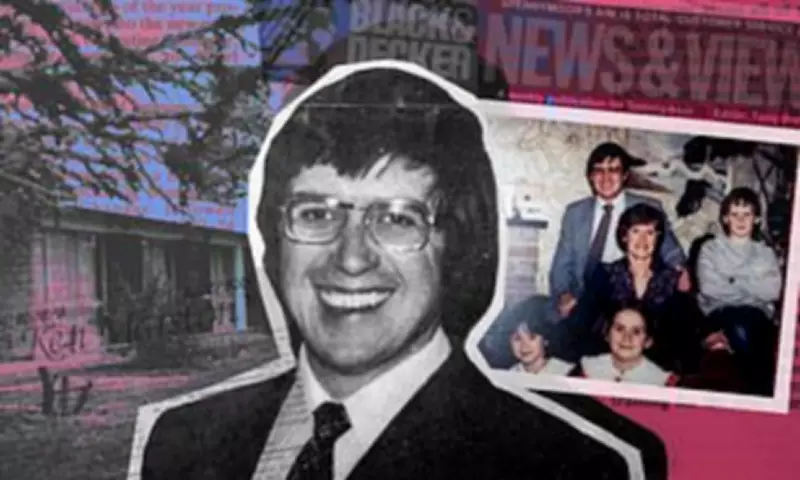
Seeking a motive for the assassination of Kenneth Marston, a respected and admired English executive, investigators explored every conceivable theory. From far-Left terrorism to large-scale corporate corruption, and even a secret love affair, no stone was left unturned. However, on Friday, April 25, 1986, there was no indication of the horrific scene that Jo Marston was about to witness. Having relocated from County Durham to Lyon two years prior, the Marston family were living the expatriate dream.
The Rise of a Corporate Star
In that era, the multinational power-tools company Black & Decker was synonymous with do-it-yourself projects, with handymen globally using its innovative equipment. Mr Marston, aged 42, had joined the US-owned firm as a shop-floor engineer and rapidly ascended through the ranks. After a successful tenure as head of a plant in North-East England, he was assigned in 1984 to revitalise its perplexingly underperforming French operation.
Two years into his posting, which came with a salary equivalent to £500,000 today, the move appeared to be a resounding success. Well-liked and respected by colleagues, he had settled his family in a stylish, single-storey villa in an affluent Lyon suburb, complete with a newly built pool. His wife, Mary, 46, who shared his working-class Birmingham roots, found her neighbours unexpectedly welcoming despite struggling with French.

Their older children, Neil, 16, and Andrea, 13, were weekday boarders at a British school in Paris, while Jo had integrated into a local primary school and was already bilingual. Weekends and holidays often involved skiing in the nearby Alps, they had rented a yacht on the Mediterranean, and that Friday they were scheduled to fly to Barcelona for a spring break. Life was good, Jo recalls. There were no plans to return to the UK.
A Morning Shattered by Violence
Everything changed at 8:11 am, as noted by a neighbour who checked his watch after two loud cracks from a sawn-off boar-hunting rifle echoed across the street. Mr Marston had intended to drop Jo at school on his way to work, a 15-minute drive to Dardilly. Dressed in a crimson jumper and jeans, she was following him as he approached the front door.
She remembers retreating down the hallway as he opened it and encountered a stranger, leaving the door slightly ajar as they conversed. Moments later, she heard a big bang followed by her mother's piercing cries. Mary had been observing the scene from a side window while unfurling the blind.
Mum was screaming, so I started screaming, too, says Jo, now 50 and working in marketing for a ski company based in the Midlands. I didn't know what she was screaming about, but I thought if she was screaming, I must be scared. So I hid behind the curtains, thinking we were in danger. When I came out, Dad was lying in a pool of blood at the bottom of the front steps.
The gunman had shot Mr Marston twice in the chest, leaving him to die as he sped off in a car parked near the side gate. Hearing the shots, neighbour Jacqueline Martin rushed to the villa, discovering a heart-rending scene. Mr Marston's body was lying across the doorstep and beside him was his little girl, she recalled. I was very surprised by her behaviour – very calm – and she said to me, in impeccable French: 'I want to stay here so I can tell the police that I saw someone running away, in black, wearing a balaclava helmet'.
Jo's apparent composure may have been a reaction to shock. However, she drew on it commendably in the following hours and days when, astonishingly by today's standards, French police used the ten-year-old girl as their interpreter. There was no counselling back then, she says. I was back at school within a week.
Four Decades of Unanswered Questions
After 40 years, Kenneth Marston's murder remains unsolved. Until now, Jo and her sister Andrea, 53, a London-based HR director, have never spoken publicly about it. They granted an interview in the faint hope of jogging the memory or conscience of someone who might identify the hitman and his paymasters.

Under France's statute of limitations, the case was closed after 20 years and cannot be reopened, even if the killer confessed. Their mother, who moved to Gloucestershire after the older children completed their Paris education, lived on a £21,000 annual pension and fought for the truth until her death six years ago at age 80. Dad was the love of her life, and she never gave up, though she was diagnosed with early-onset Parkinson's disease a few months after the murder, says Jo, noting doctors believed grief may have hastened the illness.
While the ruthless murder briefly made headlines in Britain, France, and the US, it was soon overshadowed by the Chernobyl nuclear disaster the next day. Jo and Andrea describe the Lyon investigators as frustratingly and strangely uninterested, with their mother stonewalled when she sought updates. That seems to be true of a lot of French investigations, says Jo. If you look at the number of unsolved foreign cases, it's unbelievable. It wasn't just the language or cultural barrier. It was the whole system.
Theories and Dead Ends
Initially, police suspected Arab or French far-Left terrorists, given the US conflict with Libya at the time. An anonymous caller with a Middle Eastern accent claimed responsibility for the murder and a subsequent bombing in Lyon, but this was dismissed as a hoax. The militant far-Left cell Action Directe also fell under suspicion, but no concrete evidence emerged.
As time passed, the terrorism theory unravelled. Investigators noted terrorists had never used boar-hunting rifles, and there was no evidence supporting the caller's claims. Georges Fenech, an ambitious young investigating judge in Lyon, took over the case and explored other avenues, including the possibility of a secret affair. After examining records, he concluded Mr Marston was scrupulously honest and very attached to his family.
Corporate Corruption Allegations
As other theories faded, Mr Fenech delved into Mr Marston's business affairs, forming the view that the murder was orchestrated by enemies within Black & Decker. A police dossier from 1991 revealed a large-scale fraud at the company, with thousands of goods stolen from the production line and sold on the black market. Notorious underworld figures implicated senior staff in the scam, with one gangster stating, Mr Marston was assassinated because he discovered the ones who were responsible for the trafficking for many years.
Further evidence came from Mr Marston's secretary, Maryvonne Corsin, who reported suspicious events, including the destruction of confidential documents and the disappearance of his diary after his death. She also claimed the wife of a senior former executive knew the names of those responsible, though this was denied in a police interview.
Mr Fenech launched a second investigation into corruption at Black & Decker, resulting in three senior staff being charged with abuse of company assets. However, he could not link them to the murder. The Marston daughters believe the answers lie within the company, citing an email from its former chief executive declining funding for a private detective. It was just, please go away and stop rocking the boat, says Andrea. We feel something was being hidden relating to the murder.
Unresolved Mysteries
Many questions remain unanswered. Why was Mr Marston missing for 85 minutes the day before his death? What was the purpose of the special meeting he called on the day he was shot? Was he planning to expose the thieves? In 1993, Mary Marston persuaded Black & Decker to offer a reward for information, leading to a TV appeal that generated no crucial leads.
Five years later, a convicted murderer claimed he could identify the killers, but his demands for the reward money were not met. Today, Mr Fenech remains convinced the murder stemmed from corporate corruption. This case was a huge failure, he says. I still think about it and how much suffering it must have caused his family.
Despite the trauma, the family has not been destroyed. Jo and Andrea are successful career women and mothers, with their brother also faring well. However, they continue to seek the truth. Life goes on but it comes back in fits and starts, Jo says. Memories resurface unexpectedly, transporting her back to that doorstep, the little girl in the crimson jumper waiting by her father's body.