Holocaust Memorial Day: A rabbi's call for light amid darkness
To characterise 2025 as merely a bleak year for Jewish communities worldwide would be a significant understatement. The past twelve months have witnessed a deeply disturbing escalation in violence and hatred directed at innocent people simply for practising their ancient faith.
As we commemorate Holocaust Memorial Day, marking the liberation of Auschwitz in 1945, we face a crucial challenge: to respond to contemporary evil with determined goodness, to seek illumination where shadows lengthen, and to uphold faith when confronted by what can feel like impenetrable darkness.
Manchester under threat: A personal account of terror
Just last month, two individuals were convicted of plotting a firearm attack designed to inflict "untold harm" upon Manchester's Jewish community. This is the city of my birth, and the location where, merely four months earlier, a grievous terrorist assault unfolded within my own synagogue at Heaton Park in north Manchester.

For seventeen years, I have served as rabbi at this place of worship and community. During that horrific attack, we lost two cherished members of our congregation: 66-year-old Melvin Cravitz and 53-year-old Adrian Daulby, both close personal friends.
Furthermore, on the first night of Chanukah last year, a horrific massacre occurred at Bondi Beach, where terrorists murdered fifteen people during a communal festival celebration. Among the victims was 41-year-old Rabbi Eli Schlanger, the great-nephew of my predecessor at Heaton Park, Reverend Leslie Olsberg. This tragedy underscores the profoundly interconnected nature of the global Jewish community.
The poisonous spread of contemporary antisemitism
Since the Hamas terror attack in Israel on 7 October 2023, antisemitism has spread like a toxic contagion across numerous facets of British public life. Its presence has been noted within institutions ranging from the NHS and university campuses to cultural events like Glastonbury and even the Eurovision Song Contest.
The scale of this challenge is immense, exacerbated by hate-filled marches that move unchecked through our cities, rendering some areas virtually inaccessible for Jewish citizens. Many had feared that a terrorist strike against Jewish people in Britain was inevitable, a prediction tragically realised at Heaton Park.
I never imagined that, in modern British history, Jews would be murdered in the UK simply for attending their place of worship. The transformation of hateful rhetoric into cold-blooded murder represents a profound moral descent.
The Heaton Park attack: A day of holiness violated
The notion of vulnerability was far from my mind on the morning of October 2nd. It was Yom Kippur, the holiest day in the Jewish calendar, devoted to fasting, prayer, and seeking forgiveness. I arrived at the synagogue at 9am, prepared to embrace this solemn observance.
As Yom Kippur spans 25 hours, only around forty people were present for the beginning of the service—a fact that, in retrospect, feels miraculous. Had the attacker struck a few hours later, when hundreds would have been present, the carnage could have been far worse.
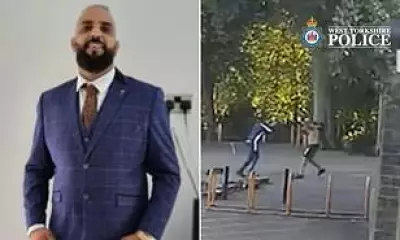
In events that remain difficult to comprehend, the attacker drove his car into the synagogue gates, ruthlessly mowing down our security guard, Bernard, before leaping out to fatally stab Melvin repeatedly.
Heroism amid horror: The best of humanity revealed
What followed, while horrific, also revealed extraordinary courage and the very best of human spirit—echoing the inspirational acts witnessed at Bondi Beach.
At the sound of a warning shout, Adrian leapt from his seat to secure the doors behind us, preventing entry from the rear. Outside, Alan Levy, a volunteer security officer and chairman of our trustees, sprinted to lock the outer doors, managing to get inside just in time.
Meanwhile, another valiant volunteer, Andrew Franks, displayed astonishing bravery confronting the attacker, sustaining multiple stab wounds. Thankfully, he is now out of hospital, though facing a long and arduous recovery.
The attacker then ran to the front of the synagogue, hurling his weight against the doors while screaming anti-Israel slogans and "Allahu Akbar"—a grim clarification that Jews were being targeted for events thousands of miles away.

A group of about eight of us tried to hold our ground as he hurled objects and struck at the glass with his knife. Within seven minutes, police arrived. Firearms officers issued warnings before opening fire when he refused to surrender.
Tragically, a stray bullet pierced the synagogue doors, striking Yoni Finlay before, as we later learned, fatally hitting Adrian as we barricaded the entrance.
Sanctifying the holy day: A decision to continue
After the wounded were taken to hospital and we were moved to safety, I asked my fellow congregants if we should continue our Yom Kippur prayers. They readily agreed. We were determined to sanctify this holy day, to prevent its defilement by horror, to actively seek the light.
Learning the full extent of the attack hours later was devastating. Melvin and Adrian were pillars of our community, always ready to lend a hand. Hundreds attended their funerals.
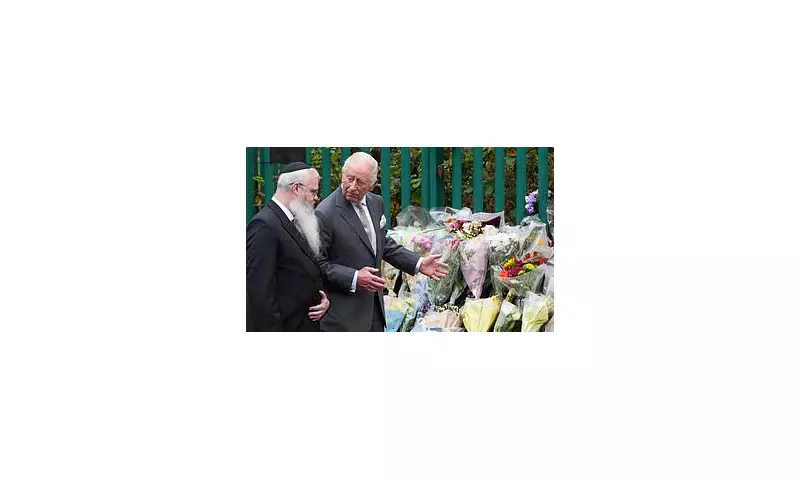
Returning to Heaton Park four days after the attack was harrowing. The unbearably poignant sight of Adrian's prayer book, lying open on the page where his supplications were interrupted, remains etched in memory.
Rekindling the light: Community resilience and hope
Yet the counterpoint to this grief has been a powerful determination to rekindle Heaton Park's light. A week later, with repairs completed, we reopened for festival prayers. At a special Friday night service, over a thousand people flocked into our synagogue—religious and non-religious, from all parts of the community.
They gathered not in rage, but to sing, dance, and pray as a beautiful choir's voices soared heavenward. This was a snapshot of what we can all choose to embrace: how light, holiness, and hope will always eclipse darkness.
Beyond our walls, an outpouring of support continues to offer hope. Time and again, ordinary people with no direct connection to Judaism express their outrage at the violence. "We are with you" rings as a genuine refrain, reflecting a shared determination to rise above evil.
A government call and a personal philosophy
I urgently call upon the Government to recognise that antisemitism is a problem for all of society, not just its Jewish citizens. Combating this hatred requires a collective, national effort.
What we can all do in times of challenge is understand that we might grieve, but we can also grow. It is possible to hold two opposing truths simultaneously: profound sorrow alongside resilient hope.
As we mark Holocaust Memorial Day, let us join together and face the future with hope. It is not difficult if we simply choose to follow the light. This is the enduring message from a community that has faced darkness yet refuses to be defined by it.
Daniel Walker is Rabbi of the Heaton Park Hebrew Congregation. As told to Angela Epstein.