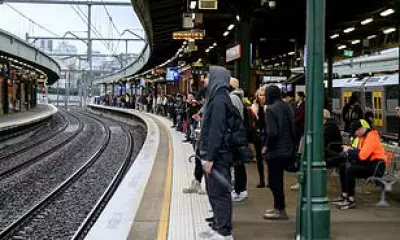
Today marks Holocaust Memorial Day, a solemn occasion to remember the six million Jews murdered by the Nazis and their collaborators during the Holocaust. Many who escaped the genocide fled with little more than the clothes on their backs, yet some managed to hold onto precious personal items that now serve as powerful symbols of survival and hope.
The Mirror's #PeopleMove Project
The Mirror's #PeopleMove Instagram initiative has created a vital platform for refugees and displaced individuals to share their experiences. It highlights the significance of beloved objects that have been cherished through unimaginable adversity. Here, three survivors of Nazi persecution reveal their stories, explaining the deep emotional value of the possessions they have kept and treasured for decades.
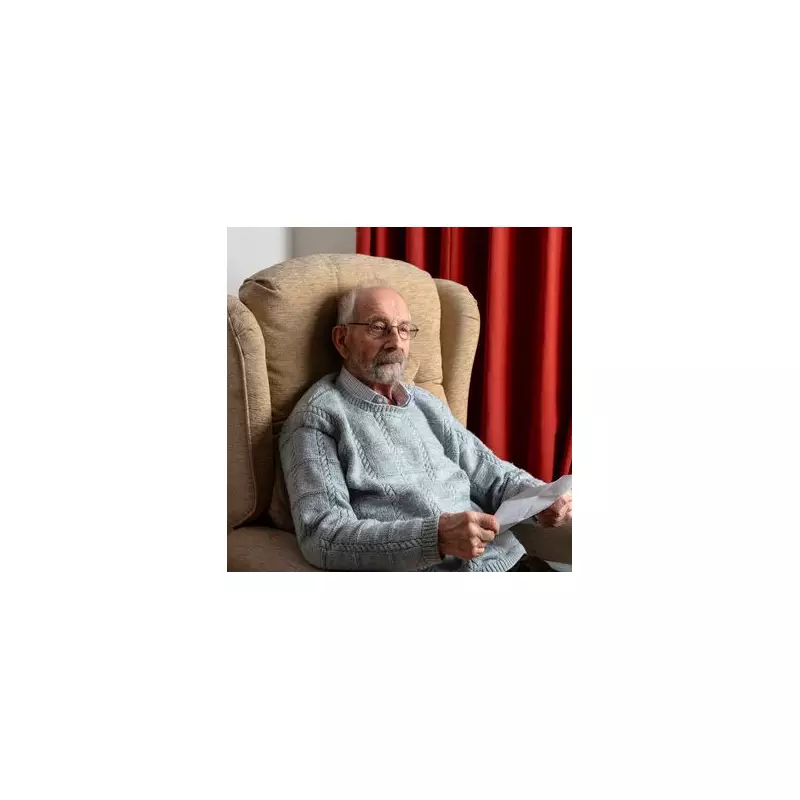
John Fieldsend BEM, 94 - Czechoslovakia - A Farewell Letter
"This is the farewell letter from my parents, passed to me by the Red Cross after the war ended, along with three photo albums. It listed the names of those who had disappeared, and my parents knew they were about to be taken. This letter was the last contact I ever had from them. In 1943, they were deported to a death camp in Poland, believed to be Auschwitz.

I was born in 1931 in Czechoslovakia, but my family moved to Dresden, Germany. We lived in a new flat with my parents and brother Arthur, and I had many playmates. Initially, life was very good. However, in 1935, everything changed suddenly when some lads turned on my father and me during play, shouting 'dirty Jews' and attacking us physically. As a secular, well-integrated Jewish family, this came as a profound shock.
We were forced to stop attending school, and signs appeared in towns stating 'Jews are unwelcome guests' or 'Jews will not be served in this shop'. In one incident, I cut my head open and needed stitches, but a doctor refused to treat me because I was Jewish, leaving me with a permanent scar.
In 1938, my parents fled with Arthur and me to Czechoslovakia under cover of darkness. We stayed safe until UK Prime Minister Neville Chamberlain allowed the German army to enter. In 1939, my parents arranged for Arthur and me to join the Kindertransport. We arrived at Liverpool Station and were placed with a kind Christian family in Sheffield, though Arthur went to a different household.
Throughout my childhood, I attended 14 different schools. I later went to university, graduated twice, and worked as an Anglican vicar. I married, have three children, seven grandchildren, and three great-grandchildren. It is crucial to keep these stories alive, as antisemitism remains a persistent issue today."
John Hajdu MBE, 88 - Budapest - A Childhood Teddy
"This is Teddy, the only item I have from my childhood, which has survived through the Nazis, the Russians, and our final escape when Soviet troops occupied Hungary.
I was born in April 1937 in Budapest, Hungary, and we lived a reasonably happy life initially. In 1943, my father was taken to a labour camp, where conditions were harsh. On June 15, 1944, we had to leave our home and move into a designated yellow star block of flats, with restricted hours for leaving and queuing for food.
At 6am on October 13, 1944, my mother was taken away to work in Kophaza village and then forced to march to Mauthausen concentration camp in Austria. My aunt and I hid in a non-Jewish neighbour's flat before moving to the ghetto, where each flat housed 15 people, surviving on basic rations without water or electricity.
We were freed on January 17, 1945, and reunited with my father and uncle in Romania, where my father had started a new relationship. I attended school and began recovering from the trauma. Miraculously, my mother later reappeared, and we started a new life in Budapest.
I enrolled in the Railway Technical College in 1951 and worked as a labourer after graduating. However, violent protests against the Communist government led to Soviet occupation, prompting our escape. On November 20, 1965, we left with few clothes, a little food, and Teddy, walking 40 kilometres into Austria after travelling by train.

My mother was taken to Vienna, and I went to a refugee camp near Innsbruck. We arrived in the UK on February 6, 1957, where I had a career in hotels and catering. I married my wife Maureen in 1972, and we have two children and three grandchildren. The UK Government treated us amazingly well, making us feel very welcome."
Peter Summerfield BEM, 92 - Germany - A Treasured Teddy Bear
"This is Teddy, who is 88 years old and the only possession I have from my life in Germany. All our belongings were stolen twice, but they couldn't take Teddy because I was holding him tightly.
My twin brother and I were born in Berlin in June 1933 in a Jewish hospital, the same year Hitler came to power. When my mother took us to the park, we had to sit on yellow benches designated for Jews, while non-Jews used green ones. One day, we witnessed the synagogue burning, with people celebrating as if it were Guy Fawkes night, kicking ornaments and documents while looking at us with contempt.
We were friends with the local caretaker's children until they were told they could no longer play with us because we were Jewish, a concept none of us understood. Their father, who wished he could counter these instructions, saved our lives by giving us money to escape.
In 1939, we obtained visas for Pennsylvania, America, and my father packed our belongings in a shipping crate. Unfortunately, the crate was sent to Hamburg and auctioned off. We bought boat tickets to travel to the USA via the UK for August 30, but left earlier on the advice of my foster grandmother.
We took the last train out of Berlin four days before the war began, arriving in London on August 27, 1939, and decided to stay. However, our belongings were stolen again when the train stopped at the border between Germany and Holland, and we were left standing on cold concrete, hungry and thirsty, with me clutching Teddy.
We arrived in the UK as penniless refugees and slept in Tottenham Court Road Underground station for eight months during the Blitz. My brother and I worked hard, both earning scholarships to Oxford University. I became a solicitor, married my wife—also a refugee from Breslau—for 35 years, and we have five children, 12 grandchildren, and several great-grandchildren. My twin brother passed away last year; we did everything together."
To explore more stories from the #PeopleMove project, visit the dedicated Instagram page for further insights into the resilience of refugees and displaced people.