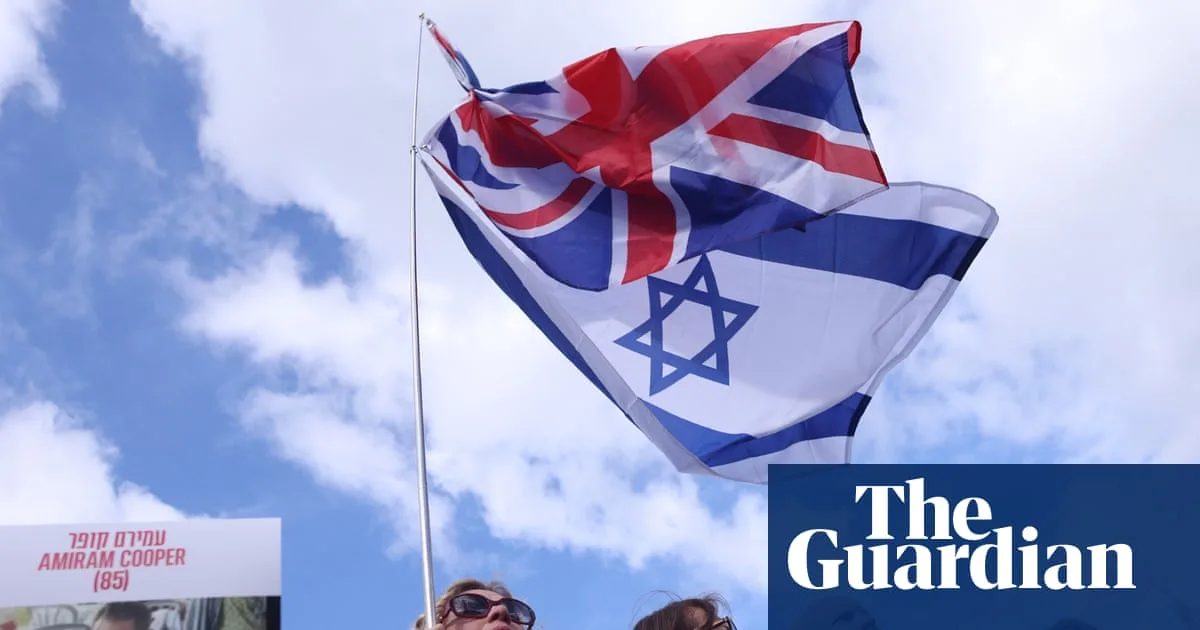
Thousands of people gathered in Trafalgar Square on Sunday to commemorate the second anniversary of the 7 October attacks and the killing of two people at a Manchester synagogue on Yom Kippur. The vigil, organised by the Board of Deputies of British Jews, drew a largely silent crowd flanked by screens displaying images of those killed in the 2023 assault.
Among those attending was 68-year-old Jonathan Fitter, who said he felt safe in the UK and described England as a very tolerant country. Fitter, who has not personally experienced antisemitism, said he regularly speaks at Speakers’ Corner in Hyde Park and distinguished between anti-Zionism and antisemitism, adding that most people he meets hold the former view.
Keith Black, chair of the Jewish Leadership Council, told the audience that the Manchester attacks showed “how deadly this virulent antisemitism has become”. He said streets had been filled with protesters shouting “Jew hatred” and that Jewish students had faced relentless abuse on campus. Prime Minister Keir Starmer had called on Saturday’s protests not to go ahead following the synagogue attack, but organisers argued cancellation would conflate Israel’s actions with Jewish people worldwide.
Chief Rabbi Sir Ephraim Mirvis recited the Kaddish during the ceremony, with 23 candles lit in memory of those affected by 7 October. He told the crowd: “Today, we recall the precious lives who were mercilessly taken from our midst on 7 October. Today, we remember all subsequent atrocities since that original day.” Other speakers included Shaun Lemel, a survivor of the Nova music festival attack, and Sharone Lifschitz, whose parents were taken hostage. They called for an end to the war and for the release of the remaining 48 hostages in Gaza, about 20 of whom are believed to be alive.
The event took place amid growing concerns over rising antisemitism in the UK, with recent research indicating a sharp decline in feelings of safety within the Jewish community. Louise and Daniel Coleman, who attended to show support, said they were angry and in a “state of disbelief” after the Manchester attack, which they blamed on the government. Daniel said: “Antisemitism has been here for a long period of time. It’s been bubbling under the surface, now it’s openly acceptable to be antisemitic, and that can’t be tolerated.”