Australia Day Confrontation Fuels National Debate on Hate Speech Legislation
A heated national conversation about apparent double standards in the enforcement of Australia's recently introduced hate speech laws has erupted following the circulation of a disturbing video from Sydney's Hyde Park. The footage, captured on Australia Day, shows a tense exchange between a group of women celebrating and an Indigenous protester, with comments made during the altercation now at the centre of a fierce political and social debate.
Picnic Celebration Turns Sour Amidst Protest Crossroads
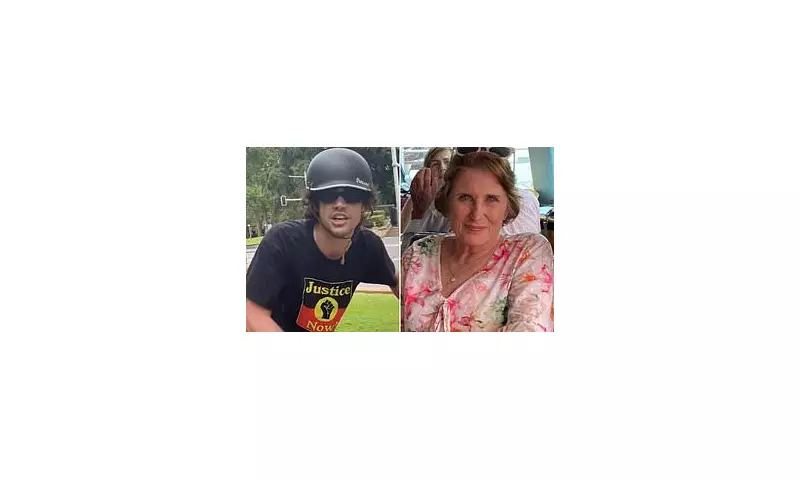
The incident unfolded on Monday when 71-year-old Rosemary Marshall attended an Australia Day picnic in the city's central business district alongside friends. The group, some dressed in colonial-era costumes, were photographed posing with a statue of Captain Cook while waving Australian flags. Their peaceful gathering was interrupted, however, when an Invasion Day protest collided with a separate anti-immigration rally nearby, leading to a direct confrontation.
Disturbing footage from the encounter shows a man wearing an Aboriginal flag shirt with the words 'Justice Now!' approaching the women. In the video, he directs profanity at the group before making a highly inflammatory statement: 'I hope the white genocide does happen.' He continues his tirade, saying, 'F*** your flag, f*** this genocidal country,' and references high rates of Aboriginal deaths in custody.

One of the women in the group retorted, 'How dare you pull our flag up? Who do you think you are to come and pull our flag up? P*** off.' The man replied in kind before the confrontation subsided. Ms Marshall later shared the video on social media platform X, where it quickly went viral, amassing significant attention and commentary.
Viral Clip Draws High-Profile Reactions and Legal Questions
The clip garnered reactions from notable figures, including platform owner Elon Musk, who reshared it with the caption: 'You can poison someone's mind so thoroughly that they want genocide for their race.' Musk was replying to Australian right-wing activist Drew Pavlou, who had questioned whether the protester would face charges under the nation's new hate speech laws.
This query touches the core of the burgeoning controversy. Ms Marshall expressed her frustration to News.com.au, stating she was 'p***sed off' the man wasn't prosecuted. 'It's one rule for them and another for us,' she remarked, defending her group's intentions as merely celebratory. 'We literally had a roast chicken, I bought cheese and biscuits and strawberries. I wore poppies,' she explained, describing a simple picnic with flags on bamboo poles.
New South Wales Police confirmed they had no formal record of the event, as Ms Marshall chose not to report the individual, whom she described as a 'little brat'. However, the lack of police action has not quelled public scrutiny.
Contrasting Case Highlights Perceived Enforcement Inconsistencies
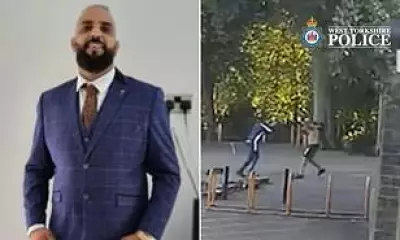
The debate intensified when radio host Ben Fordham highlighted a contrasting case on his 2GB programme. He questioned why the protester in the Hyde Park video wasn't charged while 31-year-old Brandan Koschel was arrested on the same day. Koschel allegedly told attendees at the anti-immigration 'March for Australia' rally that Jewish people were the 'greatest enemy'. He was charged with publicly inciting hatred on grounds of race causing fear and remanded in custody until his next court appearance.
This juxtaposition has led many to question the consistency and application of hate speech legislation. Fordham pointedly asked: 'So under the new laws, someone could get in trouble if they accuse others of genocide. Well, if that's the case, are they looking for the Invasion Day protester who said this to a group of women on Monday?'
Political Context and Legislative Scrutiny
The controversy unfolds against a backdrop of recent legislative changes. It is important to note that Koschel was arrested under hate speech laws introduced by the New South Wales government last year, not the newer federal laws proposed by the Labor Party following the Bondi Beach terror attack in December. These distinctions in jurisdiction are crucial, yet often blurred in public discourse.

Commonwealth Attorney-General Michelle Rowland was questioned about Labor's proposed laws just last week. When asked if a group accusing Israel of genocide or apartheid could be banned as a 'hate group' if it intimidated Jewish Australians, Rowland responded: 'If those criteria are satisfied, then that is the case. If there is that fear, and there is a reasonable person test in here as well, so if that is satisfied, then that would come within the scope of these provisions.'
This statement has been cited by commentators arguing that the protester's wish for a 'white genocide' should similarly be examined under such provisions. The Daily Mail has contacted Rowland's office for further comment on the specific Hyde Park incident, but no response has been published at this time.
Broader Implications for Social Cohesion and Legal Frameworks
This incident transcends a single heated exchange; it strikes at the heart of ongoing national conversations about history, identity, and the limits of free speech. The video has become a flashpoint, with people online vigorously debating why the Indigenous man wasn't charged, while others defend the context of historical grievance and protest.
Another snippet of video from the encounter shows one of the women calling the man 'violent', to which he retorted, 'Violent against what? Violent against flags? Inanimate objects?' The woman then asserted that 'the land was not stolen', highlighting the deep historical divisions that surface each Australia Day.
The episode raises critical questions for policymakers and law enforcement: How are hate speech laws to be applied uniformly? What constitutes a genuine threat versus offensive political speech within the context of historical protest? And how can the legal system navigate these emotionally charged cultural fault lines without appearing to apply a double standard? As the video continues to circulate, it ensures these difficult questions will remain at the forefront of Australia's public discourse for the foreseeable future.