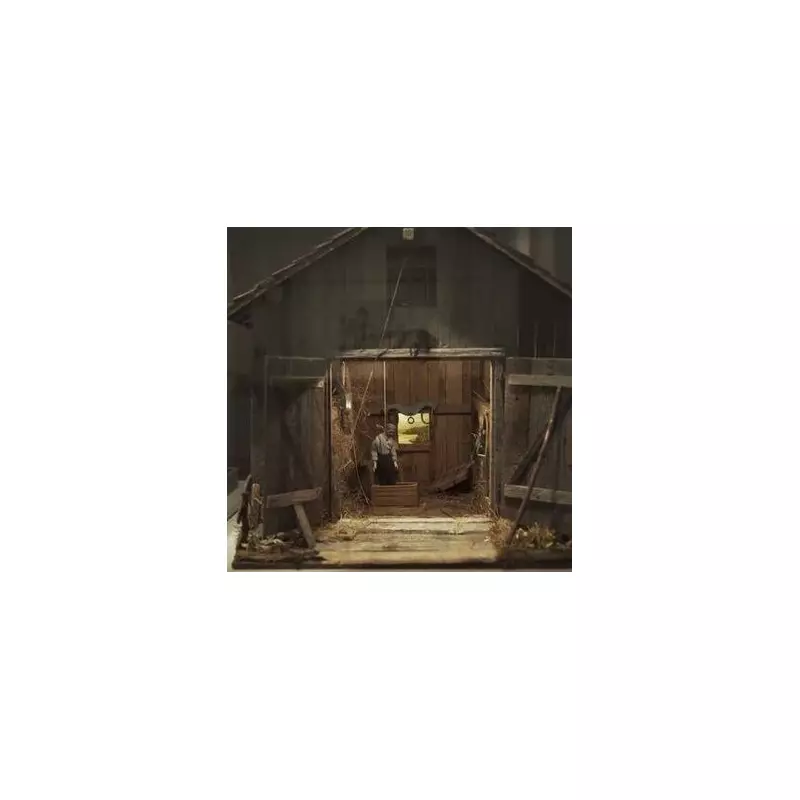
In a remarkable fusion of morbid artistry and scientific rigour, a series of miniature 'houses of horror' containing 18 intricately crafted death scenes were built with one chilling purpose: to train detectives. These dioramas, known as the Nutshell Studies of Unexplained Death, were created in 1945 and remain a vital tool for investigators nearly eight decades later.
The Mother of Forensic Science
The mastermind behind this macabre collection was Frances Glessner Lee, a pioneering figure now hailed as 'the mother of forensic science'. Denied a formal university education despite her intellect, Lee's passion for forensic pathology was ignited by her brother's friend, a specialist in death investigation. After receiving a substantial inheritance in her early fifties, following a divorce, she dedicated her life and fortune to her lifelong dream.
Lee used her wealth to establish the first Department of Legal Medicine in the United States at Harvard University in 1945. At a time when forensic science was in its infancy, she sought to elevate detective work from guesswork to a precise scientific discipline. Her unique solution was to create 20 meticulously detailed dollhouse dioramas, each based on real autopsies and crime scenes she had attended.

Eerie Realism in Miniature
The scenes, built to a strict 1:12 scale, are monuments to grim detail. Lee transformed children's dollhouses into frozen moments of violence and unexplained death. The tiny victims, modelled on real people she had observed, show signs of bruising, post-mortem bloating, and precise blood spatter patterns on floors and walls.
Each diorama tells a cryptic story for trainees to decipher. One scene hints at suicide with a pair of carefully placed shoes, while another features a victim with minuscule bite marks. Investigators were given just 90 minutes and a torch to examine a scene and gather all possible evidence during her intensive training seminars.
A Lasting Legacy in Law Enforcement
Lee named her project the Nutshell Studies of Unexplained Death, reflecting the core principle of finding the truth 'in a nutshell'. She hosted week-long seminars for detectives and lawmakers, culminating in lavish banquets at the Ritz Carlton. Each diorama cost a staggering $4,500 to produce, funded entirely from her inheritance.
After her death in 1966 at age 83, the collection was permanently loaned to the Maryland Medical Examiner's Office in Baltimore. There, they continue their educational mission, used by the Harvard Associates in Police Science at the Frances Glessner Lee Homicide School. The dioramas remain untouched since her time, preserved as both historical artefacts and active training tools for America's law enforcement, proving that sometimes, the biggest truths are found in the smallest details.