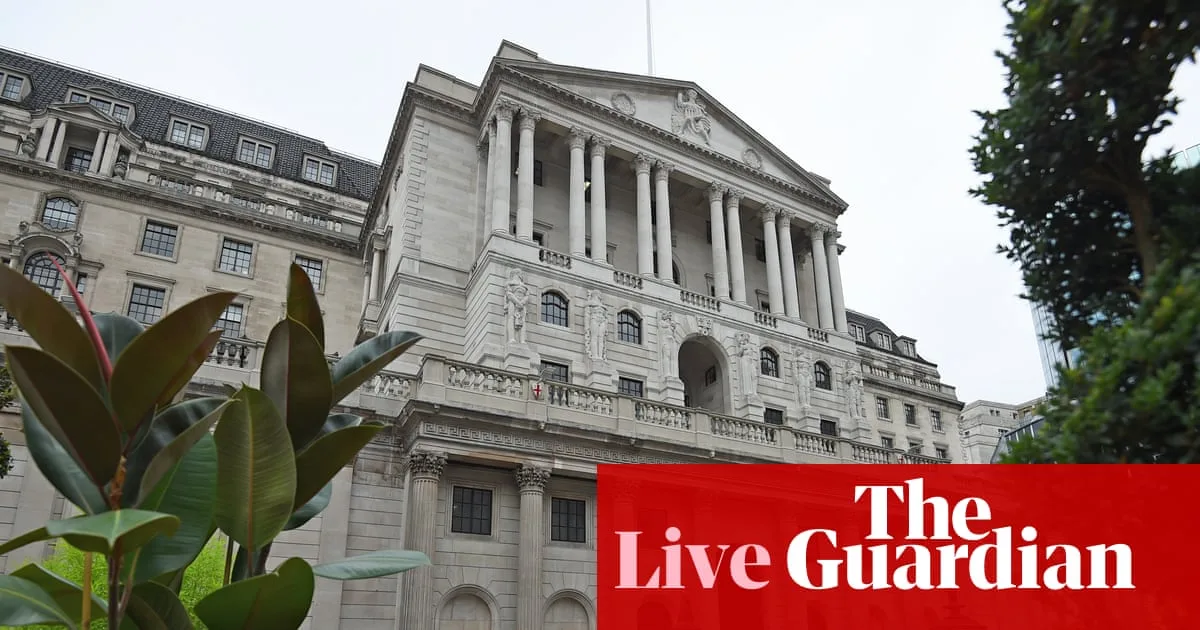
The Bank of England has left UK interest rates unchanged at 3.75%, but warned that the escalating Middle East crisis could force it to raise borrowing costs in the coming months. The central bank said the conflict, which has driven up global energy prices, represents a 'new shock to the economy' that will push inflation higher in the near term.
Energy prices surged on Thursday, with UK and European gas prices jumping 15% after Iran's strikes damaged facilities responsible for 17% of QatarEnergy's LNG export capacity. Brent crude briefly rose 10% before settling at $110 a barrel, up 3.3%. The FTSE 100 fell nearly 3% at one point, closing down 2.35% at 10,063 points, its biggest daily drop in over two weeks.
The Bank now believes the conflict could drive UK inflation above 3%, and fears 'second round' effects such as wage increases and higher shop prices. City money markets are pricing in two rate rises this year, which would lift rates to 4.25% by December. However, Governor Andrew Bailey cautioned against such forecasts, saying: 'I would caution against reaching any strong conclusions about us raising interest rates... The right place to be is on hold.'

Bailey added that the longer the war continues, the larger the effects on the UK economy, and stressed the importance of reopening energy supply lines. The European Central Bank, Swiss National Bank, and Swedish Riksbank also left rates unchanged on Thursday.
The conflict has also impacted other sectors: European airline chiefs warned of higher air fares, and the World Trade Organisation cut its trade growth forecast, warning that high oil prices could 'crimp' the AI boom. In the UK, housebuilder Barratt fell 8.4% on expectations of higher rates, while the government announced it would double tariffs on Chinese and other foreign steel to protect domestic plants.