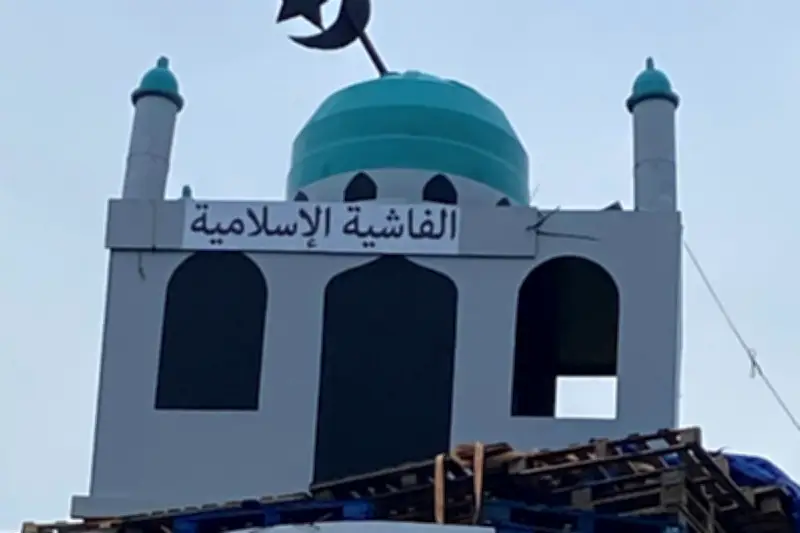
Police have described the placing of a replica of a mosque on top of a loyalist bonfire pyre in Co Tyrone as a “hate-motivated criminal offence”. The model, visible on top of the pyre in Moygashel on Thursday, has been widely condemned by political parties.
Police Investigation and Arrest
Providing an update on Thursday evening, a Police Service of Northern Ireland (PSNI) statement said: “The display on the Moygashel bonfire is being treated as a hate-motivated criminal offence and we continue to assess the situation. A 56-year-old man arrested earlier today remains in police custody.” The police have faced calls to take action against the bonfire display.
Political Condemnation
Northern Ireland Secretary Hilary Benn has described it as a “sickening and cowardly act of intimidation”. In a social media post, Mr Benn said: “The placement of a replica mosque on the Moygashel bonfire is a sickening and cowardly act of intimidation. This is not about tradition, and in no way does it represent the vast majority of people in Northern Ireland. We must stand united and completely reject such hatred.”
The Moygashel Bonfire Association has described the bonfire as an act of “political protest” against “uncontrolled illegal mass immigration”. Signs saying “Secure our borders” and “End the threat of radical Islam” have also been placed on the pyre, which is made up of pallets and is due to be set alight on Friday night.
Amnesty International Response
Amnesty International described it as a “vile display” and a “blatant attempt to stir up anti-Muslim hatred and intimidate local families”. Patrick Corrigan, Amnesty International’s Northern Ireland director, said: “This vile display is a blatant attempt to stir up anti-Muslim hatred and intimidate local families. It must be met with a decisive response by the police. The placing of an effigy of a mosque on top of a bonfire amounts to incitement to hatred directed at real people who live, work and raise families in Northern Ireland. It is a crime under Northern Ireland law to distribute materials that are intended or likely to stir up racial or religious hatred or arouse fear. The police must investigate this as a potential crime, identify and hold to account those responsible, and ensure this material is swiftly removed before it can be used to incite further hatred and violence.”
Previous Controversy at Same Site
The same bonfire site has attracted controversy in previous years. Last year there was condemnation after effigies of migrants in a boat were burned on the Moygashel fire.
Political Party Reactions
The DUP said effigies should not be placed on bonfires. A party spokesperson said: “The DUP supports the right of people to express lawful political opinions, even where those opinions are controversial or unpopular. Where the law is broken, it should be enforced. Where views are expressed lawfully, they should not be censored simply because some find them offensive. The 11th of July bonfires are a historic and cultural tradition stretching back to the fires lit to welcome the arrival of King William III. These should be positive cultural celebrations. We support those within our community that wish to celebrate their culture by continuing with that tradition in a peaceful way. The placing of flags, effigies or other items on bonfires is not part of that tradition and should not take place.”
Ulster Unionist Party Leader, Jon Burrows has called for the “immediate removal of the offensive display”. He said: “Bonfires are an important cultural tradition for many within the unionist community, and there will be many peaceful and respectful bonfires across Northern Ireland over the coming days. However, that tradition is undermined when bonfires are used to intimidate, provoke or demean others. There can be no place for placing any place of worship on a bonfire and setting it alight. It is simply wrong. Sadly, images of this bonfire will once again travel around the world, damaging Northern Ireland’s reputation and playing into the hands of critics of unionist and loyalist culture.”
Bonfire Association Statement
In a statement on social media, the Moygashel Bonfire Association said it had “noted the predicable fury in respect of the act of political protest at our bonfire site this year”. The statement said: “This year we have focused on an issue of significant public interest. Our display may well shock, offend or outrage others, but nonetheless it is an exercise in our rights under Article 10 of the ECHR and we note with some irony that it is the ECHR which has so often paved the way for mass illegal immigration and a failure to deport foreign criminals who have come here unlawfully, that also now protects our right to protest in robust terms against that. If there was no uncontrolled illegal mass immigration, we would have no need to protest on this issue.” It added: “Our display expressly does NOT target any individual. We make that very clear. Our opposition is not to people, but rather to ideology and Government policy. Once this is appreciated, then it is very clear this is no more and no less than an act of protest, which is lawful protected expression.”
Sinn Féin and Alliance Party Reactions
Fermanagh and South Tyrone Sinn Féin MLA Colm Gildernew described the display on the bonfire as “deplorable”. He said: “The signage and effigy on the Moygashel bonfire is a clear hate crime. This is fuelled by hate and those that seek to bring division to our communities. There is no place in our society for racism, and it is the responsibility of all political representatives and community leaders to stand against it. The PSNI must investigate this as a matter of urgency to remove this disgraceful display.”
Alliance Party councillor Eddie Roofe described the bonfire as “hateful and deeply offensive”. He said: “The placing of this model on top of the bonfire is utterly abhorrent. Those responsible seek only to instil fear and spread hatred towards a specific group of people who call Northern Ireland their home, and it must be removed immediately.”
Context of Eleventh Night Bonfires
Eleventh night bonfires will be lit across Northern Ireland on Friday, Saturday and Sunday evenings ahead of the Orange Order’s July 12 parades on Monday. While most of the bonfires pass off without incident, several have become the focus of contention due to the placing of flags, effigies and election posters on the structures before they are ignited.