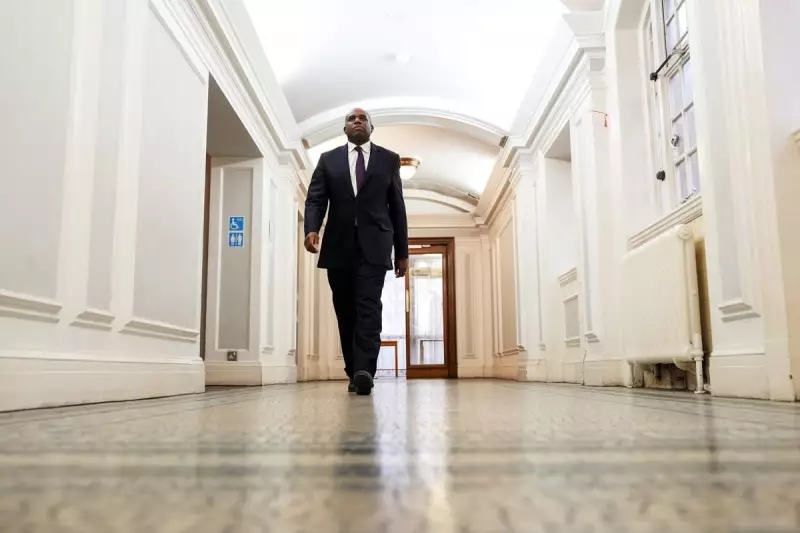
The Justice Secretary, David Lammy, is set to announce a radical overhaul of the criminal justice system on Tuesday, declaring a 'courts emergency' and pledging to give victims the 'swift justice they deserve'.
The Deputy Prime Minister will lay out a series of reforms aimed at tackling a record-high backlog of crown court cases, which now stands at more than 78,000, with some trials scheduled as far away as 2030.
The Scale of the Crisis
Ministers have issued a stark warning that without intervention, the backlog could balloon to 100,000 cases by 2028. This chronic delay is causing a growing number of victims to abandon their pursuit of justice altogether, undermining public confidence in the system.

Mr Lammy stated: 'Today I am calling time on the courts emergency that has left victims of the most serious crimes waiting years for justice and pushed the justice system to the brink of collapse. For many victims, justice delayed is often justice denied.'
He emphasised the human cost, noting that some victims give up, while others lose faith that reporting a crime will lead to perpetrators being held accountable.
Key Reforms and Controversial Proposals
The centrepiece of the announcement will be the Government's formal response to recommendations made by Sir Brian Leveson in July. The former senior judge proposed a significant shift in how cases are heard to clear the crown court backlog.
His key suggestions include:
- Reserving jury trials primarily for the most serious 'indictable-only' offences, such as murder, rape, and manslaughter.
- Diverting a greater number of 'either-way' offences to magistrates' courts or a new intermediate court presided over by a judge and two lay magistrates.
- Introducing judge-only trials for serious and complex fraud cases, or other intricate matters as determined by a judge.
In an interview, Mr Lammy insisted he was not 'scrapping' jury trials but argued the move was about 'saving the jury system'. He suggested that some defendants exploit delays by pleading guilty at the last minute in 'either-way' cases.
Opposition and Sector Response
The proposals to curb jury trials have already sparked significant opposition. The Criminal Bar Association and the Bar Council have argued there is no principled or practical need to curtail this right.
Shadow justice secretary Robert Jenrick accused Mr Lammy of abandoning his previous principles, stating: 'Instead of depriving British citizens of ancient liberties, David Lammy should get his own department in order.'
The Law Society of England and Wales labelled reports of further restrictions an 'extreme measure', noting a lack of 'real evidence' it would reduce the backlog. Tom Franklin of the Magistrates' Association called for more detail, stressing that magistrates' courts also need proper resourcing.
Support for Victims and System Funding
Alongside procedural reforms, a major funding package will be unveiled. The Ministry of Justice will allocate £550 million over the next three years to victim support services.
This funding is intended to provide crucial aid such as counselling and court advice for survivors and witnesses. The late victims' commissioner, Baroness Helen Newlove, had repeatedly highlighted the critical role of such support in keeping victims engaged with the process.
Incoming victims' commissioner Claire Waxman welcomed the funding as a 'necessary step' but cautioned it was 'not a silver bullet' for the wider crisis facing support services.
Other measures include committing to more sitting days in crown courts and a match-funding scheme to encourage more young people to become criminal barristers. The government's 'fast and fair justice plan' will be scrutinised in detail as full details are released on Tuesday.