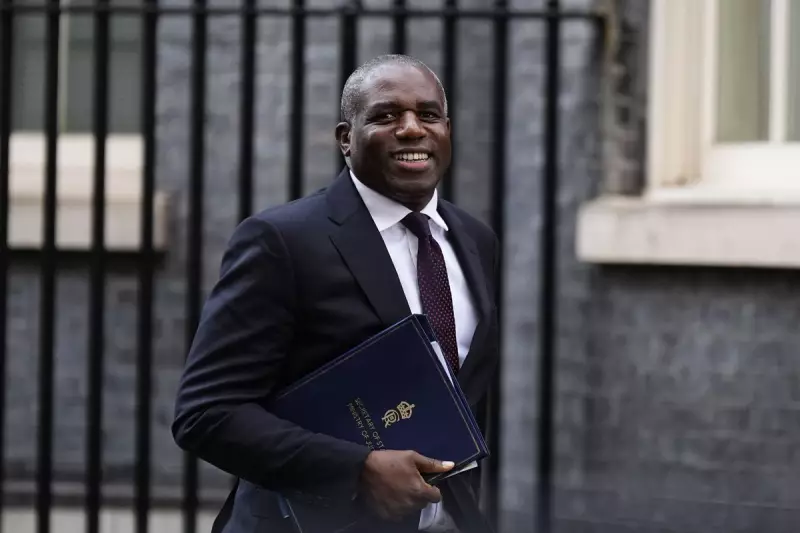
In a major overhaul of the justice system designed to tackle record delays, the Justice Secretary has announced plans to scrap jury trials for a range of less serious offences in England and Wales.
David Lammy told MPs on Tuesday that reforms were "desperately needed" as victims face "agonising delays", with the crown court backlog currently standing at a historic high of more than 78,000 cases. Projections suggest this figure could soar to 100,000 by 2028.
What the reforms will change
Under the new plans, the right to a jury trial will be reserved for the most serious crimes. These include "indictable-only" offences like murder and rape, and lesser "either-way" offences where a defendant is likely to receive a prison sentence of more than three years.

For defendants facing charges with a likely sentence of three years or less—such as owning a dangerous dog, making threats to kill, or house burglary—trials will be heard by a single judge in a newly created Crown Court Bench Division (CCBD).
Furthermore, defendants will lose the current right to choose whether their "either-way" case is heard in a magistrates' court or a crown court. Mr Lammy argued this change will prevent defendants from "gaming the system" and drawing out proceedings in the hope that victims give up.
Opposition and concerns over fairness
The proposal has immediately faced significant opposition from MPs and legal professionals, who argue it curtails fundamental rights with no clear evidence it will reduce the backlog.
The Law Society of England and Wales warned the plans "go too far in eroding our fundamental right to be judged by a jury of our own peers".
Brett Dixon, Vice-President of the Law Society, stated: "Allowing a single judge, operating in an under resourced system, to decide guilt in a serious and potentially life changing case is a dramatic departure from our shared values."
Shadow justice secretary Robert Jenrick went further, claiming the proposals marked the "beginning of the end of jury trials".
Increased powers for magistrates and the path ahead
As part of the package, magistrates will see their sentencing powers increased. They will soon be able to hand down custodial sentences of up to 18 months, raised from the current 12 months, with a potential future increase to 24 months. This is intended to allow magistrates' courts to deal with more cases.
The reforms are a direct response to recommendations made in a July review by former senior judge Sir Brian Leveson. In his report, Sir Brian found there was no constitutional right to a jury trial for these offences and argued reform was "merited" to improve efficiency and create financial savings.
He emphasised on Tuesday that there was "no silver bullet" and that more sitting days alone would not rescue the system. A second report focusing on court efficiency is due.
Ministry of Justice modelling suggests that, post-reform, around 75% of cases sent to crown court for trial will still be heard by a jury. Of the 3% of cases that are currently jury trials, the changes are expected to send 1% to magistrates' courts, 0.5% to the new judge-only CCBD, and leave 1.5% as jury trials.
The government will also introduce judge-only trials for complex fraud cases. Mr Lammy stressed that jury trials would remain "the cornerstone of the system for the most serious offences," but acknowledged the backlog "will take years to fix."