

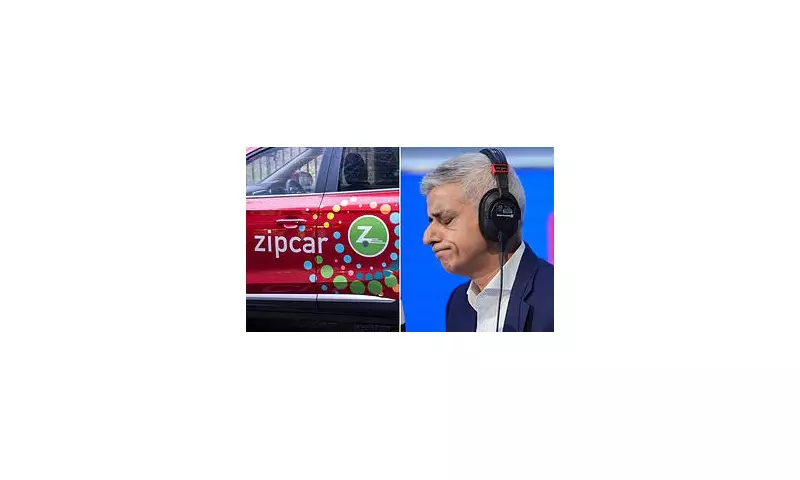
In a major blow to sustainable transport in the capital, the car-sharing club Zipcar has ceased all operations in the UK with immediate effect. The sudden closure, confirmed to members today, strips London of the vast majority of its car club vehicles and has ignited fierce criticism of Mayor Sadiq Khan's administration for failing to provide adequate support.
The Financial Strain Behind the Shutdown
Zipcar's UK arm, which launched in London in 2007 before expanding to Bristol, Cambridge, and Oxford, had been grappling with severe financial difficulties. The company had already suspended services at the end of 2023 while considering its future. Recent accounts revealed an operating loss of £4 million in 2024, as rental income and membership fees failed to cover soaring costs for insurance, vehicle maintenance, and council parking permits.
James Taylor, Zipcar's UK general manager, had publicly pleaded for help, specifically requesting an exemption from the expanded £18 London Congestion Charge. From the start of this year, the charge began to include electric vehicles, which formed a significant part of Zipcar's fleet. Mr Taylor warned that without assistance, the business would become "commercially unviable." Ultimately, only a partial discount for cars based within the Congestion Charge zone was granted.

Political Fallout and Calls for a Coherent Strategy
The closure has prompted a wave of criticism directed at London's Mayor. Supporters of car clubs argue they are vital for reducing private car ownership, congestion, and pollution. Richard Dilks, chief executive of the car-sharing advocacy group CoMoUK, called the departure a "major loss" for London, noting that every car club vehicle replaces an estimated 31 private cars.
The London Assembly's transport committee had previously warned City Hall. In April 2023, it published a report calling for a city-wide strategy to support car clubs, a plea that critics say went unheeded. Elly Baker, the committee's chair, stated there is "no sense of urgency from TfL on this issue" and warned of a "patchwork approach" that is failing the sector.
In response, a spokesperson for the Mayor said they recognise the value of car clubs and are engaging with providers and boroughs, with a major roundtable discussion planned for next month.
Real-World Impact and Competitors Circle
The practical consequences of Zipcar's exit are wide-ranging. Its 550,000 London members—part of a total UK membership of 650,000—have lost a key transport option for everything from shopping trips to moving house. Charities like food banks that used the service for meal distribution are also affected, and Croydon Council had a contract with Zipcar to provide staff vehicles.
With a giant void now in the market, competitors are moving quickly. Rival firm Co Wheels is exploring expansion in London, while Turo—a peer-to-peer service dubbed "Airbnb for cars"—has launched a £120,000 advertising campaign with the slogan "No Zipcar, no worries." However, Turo does not offer the short-term hourly rentals that were Zipcar's hallmark.
Rory Brimmer, Turo's managing director, suggested Zipcar's model of bearing all vehicle upkeep costs was "unsustainable." The fundamental fear now, expressed by industry experts and politicians alike, is that former users will simply buy private cars, adding hundreds of thousands of vehicles to London's already congested streets and undermining environmental goals.






