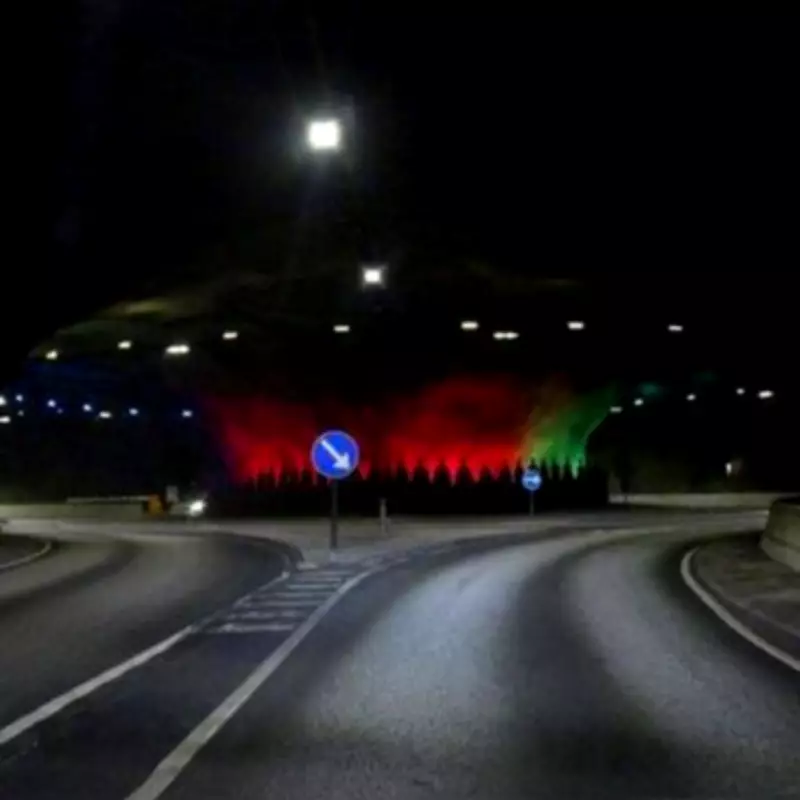
The remote Faroe Islands in the North Atlantic hold a remarkable engineering secret: the world's first and only underwater roundabout, concealed within the spectacular Eysturoy Tunnel. This unique subterranean traffic feature has transformed connectivity across the archipelago since its opening in December 2020, slashing journey times and captivating visitors with its artistic design.
A Subsea Engineering Marvel
Located approximately midway between Scotland and Iceland, the Faroe Islands are a self-governing territory within the Kingdom of Denmark. Their challenging North Atlantic location brings unpredictable weather that historically complicated travel between the seventeen inhabited islands. This geographical reality spurred the development of an extensive tunnel network, comprising seventeen land tunnels and four undersea passages, with the deepest sections plunging 187 meters beneath sea level.
The Eysturoy Tunnel represents the crown jewel of this infrastructure. Its underwater roundabout sits roughly at the tunnel's midpoint, creating a crucial junction that has revolutionised travel efficiency. According to local officials, the tunnel has reduced the journey from the capital Torshavn to the village of Runavik from seventy-four minutes to just sixteen minutes—an astonishing eighty percent decrease in travel time.

Safety and Aesthetics Beneath the Waves
While driving through an undersea tunnel in the North Atlantic might seem daunting, engineers have prioritised safety and visual appeal. Teitur Samuelsen, chief executive of Eystur-og Sandoyartunlar, the company operating the tunnels, emphasised that "the tunnels are designed by the world's leading engineers and geologists, so safety with regards to the Atlantic above is not an issue."
The roundabout itself has drawn widespread admiration for its striking visual presentation. Travel reports describe it as "magical" to navigate, with its colourful lighting effects evoking comparisons to the Northern Lights or bioluminescent jellyfish. This artistic approach extends throughout the tunnel network, with installations like glow-in-the-dark totems in the Sandoy Tunnel celebrating Faroese folklore characters.
Cultural Integration and Practical Benefits
Súsanna Sørensen, marketing manager of Visit Faroe Islands, highlighted how the tunnels have reshaped island identity: "Though we are 18 islands, we often joke that we defy the fact that we are islands (thanks to the tunnels)." This infrastructure has effectively created a connected archipelago where water barriers no longer dictate mobility patterns.
The decision to incorporate art into these engineering projects serves multiple purposes. As Samuelsen explained, "We have a lot of good art in the Faroes, and we'd like to support our artists. In addition, it breaks up the monotony in a long, dark tunnel, so it's good for driving safety." This fusion of practical transportation needs with cultural expression has created a unique travel experience that distinguishes the Faroe Islands from other destinations.
Beyond the Eysturoy Tunnel, the broader network continues to expand, with ongoing projects enhancing connectivity across the islands. This commitment to subsea infrastructure demonstrates how remote communities can overcome geographical challenges through innovative engineering while creating unexpected tourist attractions in the process.