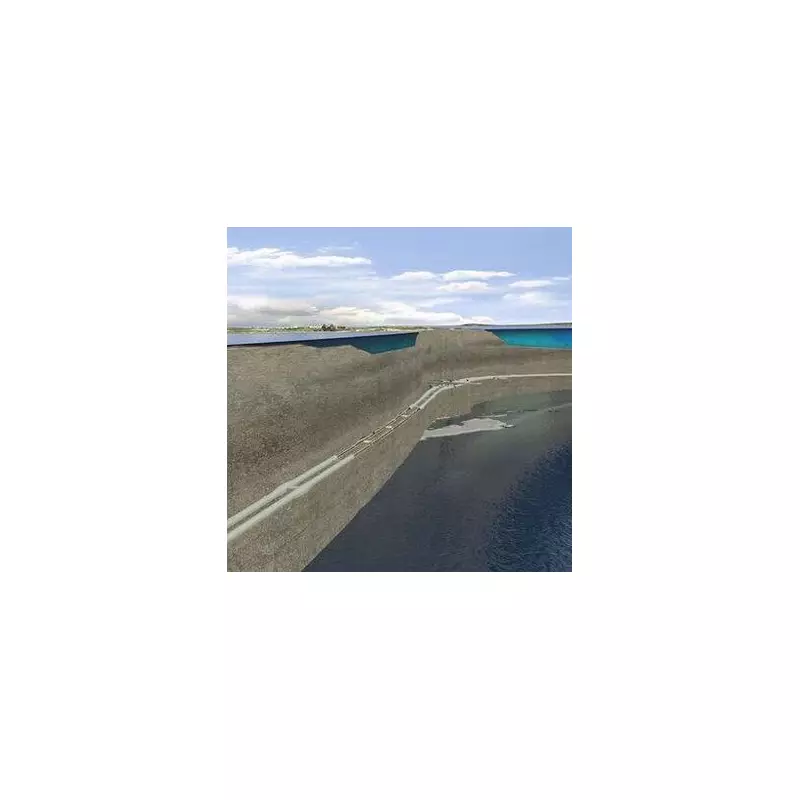
An unprecedented engineering project is taking shape deep beneath the North Sea, set to claim multiple world records upon its completion. Norway is constructing the Rogfast tunnel, which will become the world's longest underwater road tunnel at a staggering 27 kilometres (approximately 17 miles) in length.
A Colossal Feat of Engineering
Plunging to a depth of nearly 400 metres below sea level, the tunnel will connect Randaberg and Bokn, forming a critical link in the country's transport network. This ambitious structure will surpass the current record-holder, Norway's own Lærdal Tunnel, by a significant 2.5 kilometres.
The project, also known as the Boknafjord Tunnel, will not just be the longest but also the deepest four-lane road tunnel globally. In another first, it will feature the world's deepest underwater junction, a double roundabout that will provide a connection to the island of Kvitsøy.

Overcoming Challenges on the Path to 2033
The journey to build Rogfast has been complex. Initial work began in January 2018 but was halted in 2019 due to spiralling costs. After a comprehensive revision of plans, construction resumed in 2021, with the current target for opening set for 2033.
The extreme depth presents formidable technical hurdles. Engineers are contending with immense water pressure, reaching nearly 40 bars at the deepest point, and have already faced issues like saltwater leaks during construction.
Transforming Travel Along Norway's Coast
This record-breaking tunnel is a cornerstone of a major upgrade to the vast E39 coastal highway between Trondheim and Kristiansand. Currently, the journey between these two points is a 21-hour marathon involving multiple ferry crossings.
Once Rogfast is operational, it will dramatically cut travel time to around 11 hours and eliminate the need for ferries on this route. The broader E39 improvement scheme is slated for completion by 2050.
With an estimated cost of £472 million, the tunnel is expected to carry roughly 4,000 vehicles daily. To enhance the driver experience, an art installation featuring dynamic lighting will be installed inside to combat monotony, alleviate tunnel anxiety, and create a sense of orientation.
Design firm Norconsult emphasises the project's sustainability goals, focusing on energy saving, reduced material consumption, and harvesting renewable energy from wind, solar, waves, and geothermal sources.
The human effort behind this colossal undertaking was highlighted recently when content creator Vanita Ventures visited the site. She witnessed the dedication of workers operating far below the ocean's surface, noting the immense human endeavour required to build an infrastructure that drivers will traverse in mere minutes.