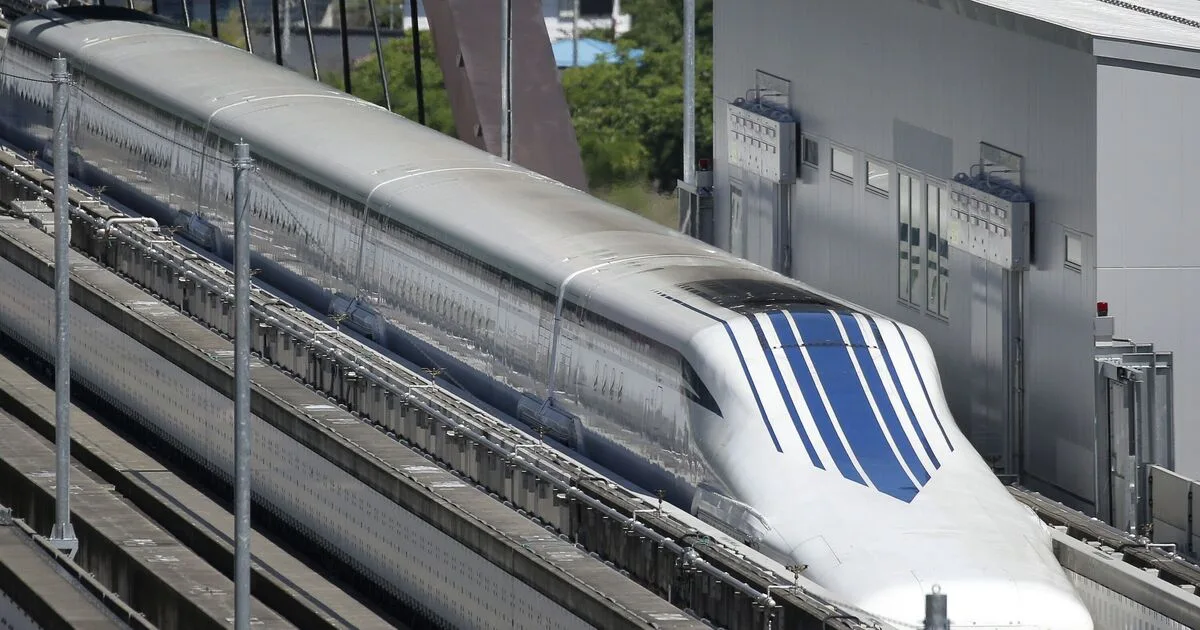
Japan's L0 Series maglev train, the fastest in the world with a top speed of 375mph, could theoretically reduce travel time between London and Edinburgh to just one hour. The electric train uses magnetic levitation technology to float above the rails, achieving tremendous speeds. Currently in testing, it is expected to cruise at around 311mph in commercial service, enabling a Tokyo to Osaka journey in about an hour.
If deployed in the UK, the L0 Series would also cut travel from London to Penzance to under an hour. The current London to Edinburgh journey takes nearly five hours. In April 2015, the train covered 2,525 miles in a single day, equivalent to a round trip from London to Sulina, Romania.
However, the project faces significant challenges. Delayed by eight years due to spiralling costs, the Chuo Shinkansen line between Tokyo and Nagoya now has a revised budget of £52 billion. About 85% of the route consists of tunnels, causing excavation difficulties. JR Central approved the revised budget in October, with a provisional target of 2035.
In contrast, the UK government has announced the return of Northern Powerhouse Rail (NPR), aiming to improve rail connections between northern cities like Leeds, York, Bradford, Sheffield, Liverpool, and Manchester. An initial £1.1 billion has been allocated for preparation and design, with construction expected to start in 2030. The scheme involves £45 billion in upgrades, including a new station in Bradford.