US Cities Reverse One-Way Streets to Two-Way: Safety and Community Revival
US Cities Revert One-Way Streets to Original Two-Way Design

Across the United States, a quiet revolution is reshaping city centres as midsize urban areas increasingly abandon one-way street systems in favour of returning to original two-way designs. This shift, driven by a desire to enhance safety and boost local economies, marks a significant U-turn in decades of transport planning.

The High-Speed Legacy of One-Way Streets

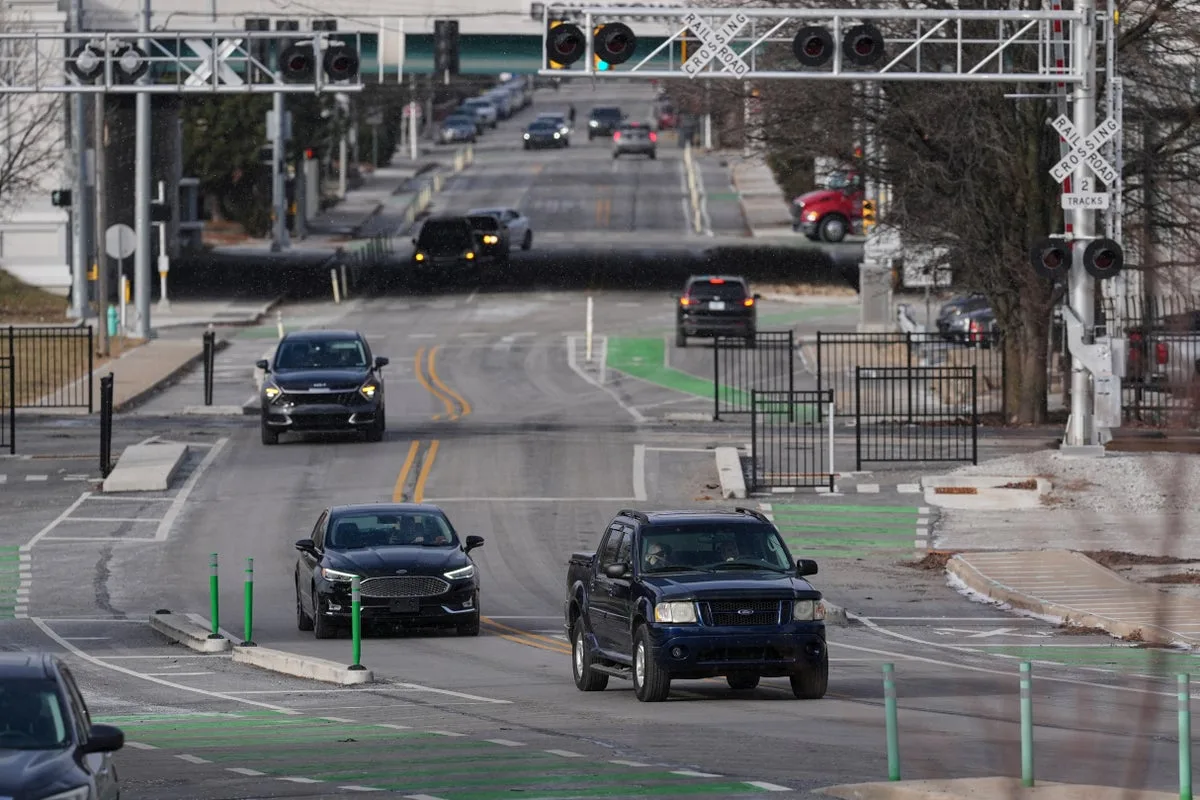
The trend is vividly illustrated in Indianapolis, where parallel one-way streets, Michigan and New York, were once notoriously known as a "racetrack" by residents. Originally converted to opposite one-way routes in the 1970s to manage traffic for a sprawling RCA electronics plant, the roads became magnets for excessive speeding after the factory's 1995 closure. Last year, city officials finally converted them back to two-way streets, a move hailed as transformative for the area.

"The opening and conversion of those streets has just been transformative for how people think about that corridor," said James Taylor, who operates a nearby community centre. This philosophy, often summarised by planners with the slogan "paint is cheap," is gaining traction nationwide. Officials view the re-conversion as a straightforward and cost-effective method to improve pedestrian safety and make downtown cores more attractive to visitors, shoppers, and potential residents.

Safety and Community: The Core Drivers for Change

Dave Amos, an assistant professor of city and regional planning at California Polytechnic State University, explains that few major American streets began life as one-way routes. The standard was two-way traffic until the mid-20th century, when suburban expansion prioritised swift car commutes over urban walkability. "One-way streets are designed for moving cars quickly and efficiently," Amos notes. "So when you have that as your goal, pedestrians and cyclists almost by design are secondary, which makes them more vulnerable."

However, the safety issues extend beyond just speed. Wade Walker, an engineer with Kittelson & Associates, points out a common misperception: that one-way streets are safer because pedestrians only need to look one way. The reality, he says, is more complex, especially where one-way and two-way streets intersect in a grid. At such junctions, the predictable sequence of vehicle movements is lost, creating up to 16 potential conflict patterns compared to simpler two-way intersections. "It's not the number of conflicts, it's the way those conflicts occur," Walker emphasises.

The social impact of one-way systems has also been profound, often dividing communities. In Louisville, Kentucky, a major redesign is underway in a predominantly Black western neighbourhood, where roads were altered in the 1970s to feed a new interstate bridge. This change devastated local businesses and severed the community's connection to downtown. "All those mom-and-pop shops and local businesses over time kind of faded because that connectivity got taken away," explained Michael King, the city's assistant director of transportation planning.

From Skepticism to Support: The Results Speak

Evidence from cities that have already made the switch is compelling. In Chattanooga, Tennessee, business vacancies soared after two-way streets were made one-way, and the University of Tennessee at Chattanooga became "landlocked" to protect students. Decades later, after a re-conversion, the campus expanded and business construction surged.

Skeptics are often converted by the results. In Lynchburg, Virginia, restaurant owner Rodney Taylor feared a return to two-way traffic on Main Street would block his deliveries. After the project finished in 2021, he admitted his fears were unfounded. "An important thing to do is to admit when you're wrong," he said. "And I was just flat-out wrong."

Similar sentiment emerged in Austin, Texas. Adam Greenfield, executive director of Safe Streets Austin, observed that once conversions in the urban core were complete, many residents wondered why the change hadn't happened 20 years earlier. "It just worked," Greenfield stated, who now advocates for removing all one-way streets in the city.

The contrast is sharp in Chicago, which recently made some two-way streets one-way in the busy West Loop restaurant district. The move, done without local consultation, sparked confusion and complaints, highlighting the importance of community engagement in such projects.

Back in Indianapolis, the work continues. With the Michigan and New York street projects complete, the city has ten more conversions planned. The total estimated cost is $60 million, with around $25 million coming from a 2023 federal grant. For James Taylor, while the full impact is still unfolding, the change is palpable. "I've been driving around that neighborhood for 30 years," he said. "It's all kind of familiar, but you're coming at it from a whole different perspective."




