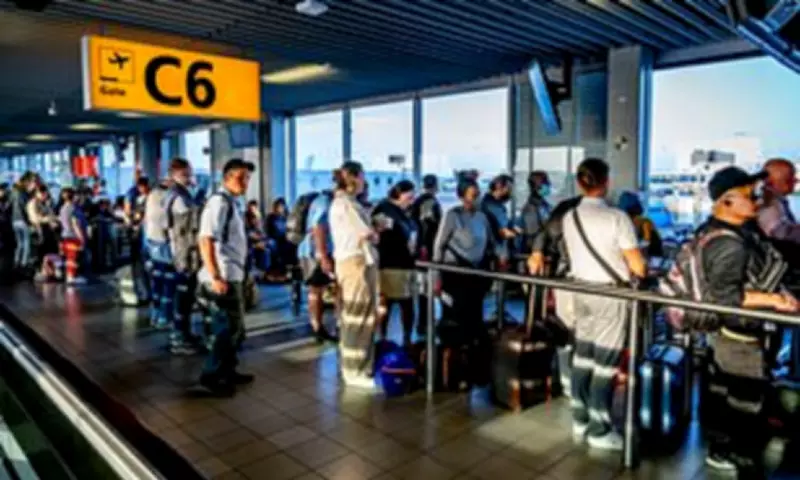
UK Travellers Face Major Delays at European Airports Due to New EU Digital Border System
Millions of British travellers setting off on European trips this spring are being warned to prepare for significant delays at border control across ten major airports, as the European Union's new digital Entry-Exit System (EES) becomes fully operational. The system, which began rolling out on 10 April, requires non-EU passengers to register biometric details including fingerprints and facial recognition images when entering the Schengen Area.
The additional checks are expected to substantially slow processing times at some of Europe's busiest airports, coinciding with a peak in travel demand. According to comprehensive data from the UK Civil Aviation Authority, more than 24.2 million passengers travelled between the UK and European destinations during April and May 2025 alone.
Top Ten Airports Bracing for EES-Related Congestion
Based on last year's passenger data, these airports are anticipated to experience the most severe impacts from the new system implementation:


- Amsterdam Airport Schiphol, Netherlands - As the busiest and potentially most affected hub, Schiphol handled nearly 1.48 million UK passengers during the two-month period, accounting for 6.1% of all UK travellers. More than 225,000 of these passengers travelled via London Heathrow Airport, highlighting the concentrated traffic through this single entry point. Recent disruptions have seen passengers reporting delays of up to two hours, with social media posts describing elderly travellers and parents with toddlers waiting in extensive lines with minimal passport gates operational.
- Palma de Mallorca Airport, Spain - Ranking second with over 1.27 million UK passengers processed, approximately one-tenth of whom travelled from Manchester Airport. Non-EU travellers have experienced delays reaching three hours at this popular destination, though consistency varies daily according to local travel agencies.
- Alicanté Airport, Spain - Processing more than 1.2 million passengers during the period, with around 5% arriving from the UK. Spain's police union has reportedly warned that the airport is being pushed to "breaking point" due to EES implementation combined with staffing shortages.
- Málaga Airport, Spain - Handling over 1.19 million passengers, with 4.9% from the UK. One British holidaymaker described chaotic scenes with anxious travellers jostling through passport control, missing flights and incurring substantial additional costs due to the disruptions.
- Barcelona-El Prat Airport, Spain - Welcoming nearly 879,000 UK travellers, with passengers reporting lengthy queues particularly during peak hours. One parent shared an account of standing in line with crying children for over three hours with minimal assistance from airport staff.
- Paris Charles de Gaulle Airport, France - This major international hub saw over 761,000 UK passengers and experienced particularly severe delays, with aviation analytics reporting 240-minute waits on 11 April. France's main airports faced four-hour immigration queues and repeated equipment failures during the initial rollout weekend.
- Adolfo Suárez Madrid-Barajas Airport, Spain - As Spain's first airport to implement EES in October 2025, it welcomed 550,478 UK passengers. While queues appear more controlled than at other Spanish hubs, passengers report varying experiences with the sensitive biometric registration machines.
- Frankfurt Airport, Germany - Processing 479,144 UK passengers, with fully implemented digital systems now causing queues of up to three hours as travellers are directed to biometric kiosks for fingerprint and facial scans before passport control.
- Copenhagen Airport, Denmark - Denmark's busiest hub handled 476,479 UK passengers, with travellers reporting significant delays and concerns about missing flights despite arriving three hours early, due to unpredictable queue times at passport control.
- Geneva Airport, Switzerland - Rounding out the top ten with over 439,000 UK travellers, this non-EU Schengen member has implemented the system and experienced delays of up to four hours during peak periods, though recent reports suggest some improvement in processing times.
System Implementation Challenges and Passenger Impact
The Entry-Exit System represents a significant change in border management for the 29 Schengen area countries, requiring non-EU travellers to undergo biometric registration that was previously unnecessary for UK citizens. Industry experts have described the initial rollout as "organised chaos," with airports struggling to manage the additional processing time required for each passenger.
Olivier Jankovec of Airports Council International has called for "the ability to fully suspend EES registration whenever there are excessive waiting times at border control that are just unmanageable." The European Commission has acknowledged problems with IT systems and cybersecurity, while many airports have reported difficulties with biometric recording equipment.
British travellers are advised to allow significantly extra time when travelling through these European airports this spring and summer, particularly during peak travel periods, as the new system continues to be implemented across the continent.