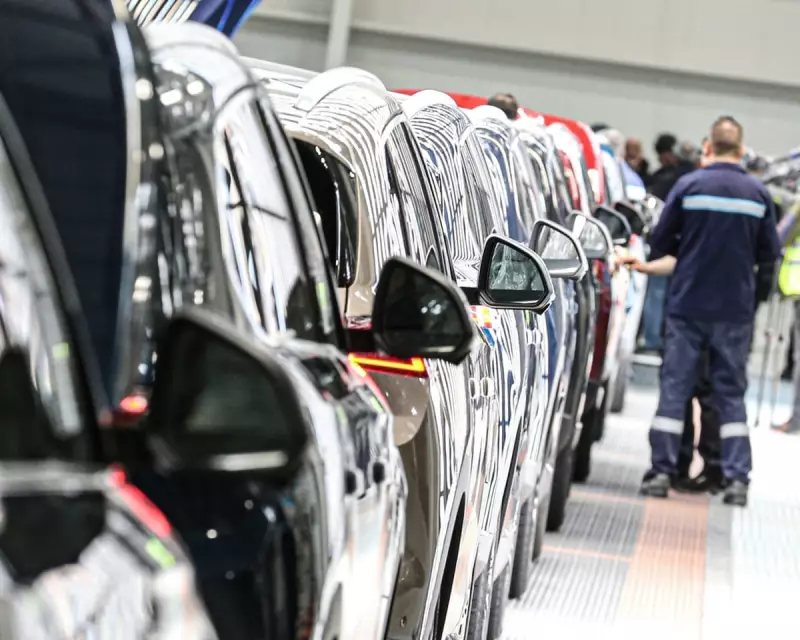
Turkey's Electric Vehicle Revolution: From Obscurity to European Leader
When Berke Astarcıoğlu purchased his BMW i3 in 2016, he joined an exclusive club of just 44 battery electric vehicle (BEV) buyers in a nation of 80 million people. Fast forward to today, and his subsequent Tesla purchase in 2023 reflects a transformed landscape where electric cars have moved from complete oddities to mainstream transportation choices.
Market Transformation at Breakneck Speed
The latest registration data reveals a remarkable shift in Turkey's automotive sector. BEVs constituted 16.7% of new car sales in 2025, placing Turkey just behind the European Union's average of 17.4%. This represents a dramatic acceleration from the mere 7% market share recorded just two years earlier in 2023.
"A premium product brings happiness precisely because not everyone can access it," observed Astarcıoğlu, an Istanbul-based mechatronic engineer who developed a charging station location app. "Now my Tesla has become an ordinary car here."

While adoption rates remain below those of leading European nations like the Netherlands or Nordic countries, where BEVs command 35% to 96% of new car sales, Turkey has surged ahead of nearly every southern and eastern European market. The country now boasts Europe's fourth largest electric vehicle market, trailing only Germany, the United Kingdom, and France.
Global Trend Among Emerging Economies
Turkey's electric vehicle boom forms part of a broader international pattern where developing markets from Uruguay to Vietnam are abandoning fossil fuel-powered automobiles at unexpectedly rapid rates. This data emerges as Turkey prepares to host the upcoming United Nations climate summit, occurring just one month after the European Union softened its ambitious 2035 ban on new combustion engine vehicles.
Industry analysts attribute Turkey's exceptional growth primarily to the country's distinctive special consumption tax structure, which has rendered electric vehicles only marginally more expensive than comparable petrol-powered alternatives. Remarkably, sales maintained their momentum even after the government increased taxes on electric cars in August.
"In practical terms, Turkish consumers aren't purchasing electric vehicles primarily for environmental reasons," explained Ufuk Alparslan, an analyst at climate thinktank Ember. "The fundamental motivation remains purely economical, driven by lower running costs."
Domestic Manufacturer Driving Change
Although the Turkish government lacks a comprehensive electric vehicle strategy, it has actively promoted domestic manufacturer Togg, which surpassed Tesla as the nation's leading EV seller in 2024. During a recent Bloomberg HT interview, Togg's board chair Fuat Tosyalı revealed ambitious expansion plans, targeting production increases from 40,000 vehicles in 2025 to 60,000 in 2026.
"Togg's market entry, supported by tax advantages and zero-interest credit from state-owned banks, has significantly normalised electric vehicle adoption," noted Berkan Bayram, founder of the Turkish Electric and Hybrid Vehicles Association. "The brand has genuinely captured the hearts of Turkish buyers."
International automakers facing import duties have also benefited from Turkey's Togg-friendly taxation system. Manufacturers including Tesla have adjusted motor power specifications to qualify for favourable tax brackets, while Chinese giant BYD competes for market share with plans to establish a $1 billion manufacturing facility in Turkey.
Geopolitical and Economic Implications
The transition toward electric mobility presents significant geopolitical advantages for nations lacking domestic oil production. According to a report by InstitutDE, a Turkish diplomatic thinktank based in Brussels, Turkey's automotive fleet is projected to quadruple in size by 2053, potentially sending oil import demand soaring.
The study determined that while imports will inevitably increase across all scenarios examined, insufficient electrification would leave Turkey dangerously exposed to external shocks, price volatility, and geopolitical risks associated with fossil fuel dependency.

Fragile Foundations and Future Challenges
Despite the impressive sales figures, analysts caution that Turkey's electric vehicle boom may not signal a permanent structural shift away from fossil fuel automobiles. "The existing tax incentives remain extremely fragile and subject to easy modification," warned Baki Kaya, an economist and former diplomat who co-authored the InstitutDE report.
"This growth doesn't stem from strategic policy decisions," Kaya elaborated. "Consequently, I maintain personal skepticism regarding its long-term sustainability."
Further analysis from Ember reveals that the overall tax burden on electric vehicles remains substantial, with total taxation reaching 50% for vehicles in the lowest bracket and escalating to 86% in higher categories. Without policy adjustments, inflation and exchange rate fluctuations could rapidly diminish the pool of affordable electric vehicles.
"Although electric cars have gained significant traction in Turkey, substantial untapped potential exists to reduce energy imports through renewable energy integration and expanded electric vehicle adoption," Alparslan concluded. "Tax policies maintaining affordable electric vehicle pricing could substantially accelerate this positive momentum."