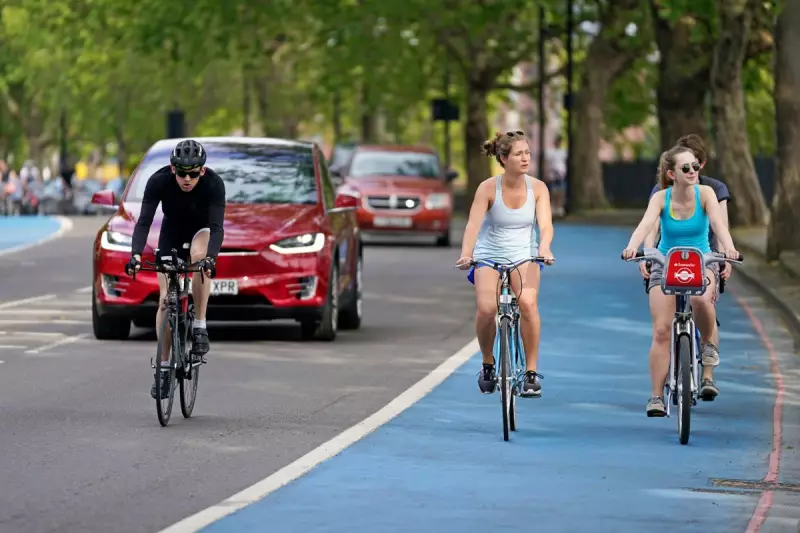
Across the United Kingdom, local councils are rolling out new cycle lanes and traffic restrictions in a bid to tackle congestion, clean up air quality, and encourage healthier, active travel. Despite these clear goals, such measures frequently ignite fierce public rows, creating an impression of widespread unpopularity.
The Gap Between Perception and Reality
From London to Oxford, schemes have faced vocal opposition. Kensington and Chelsea Council famously removed trial cycle lanes from Kensington High Street in 2020, while in Oxford, residents have demanded low traffic neighbourhoods (LTNs) be opened to through traffic during emergencies. Common complaints centre on cycle lanes consuming precious road space and LTNs simply shifting motor traffic and pollution onto boundary roads.
However, research led by experts at Cardiff University suggests this visible backlash is not the full story. An analysis of over 36,000 UK-based tweets about cycle lanes and LTNs between 2018 and 2022 found that, overall, sentiment was more positive than negative. The study recorded 14,370 positive posts, compared to 10,465 negative ones, with 12,142 being neutral.

Professor Wouter Poortinga, Dimitrios Xenias, and Professor Dimitris Potoglou noted a spike in negative reactions in summer 2020, coinciding with the government's emergency active travel fund launch. Yet, positive opinions consistently outnumbered the criticism.
Design and Consultation: The Real Flashpoints
The research indicates that public frustration is less about the principle of active travel and more about how schemes are executed. The social media analysis revealed that criticism overwhelmingly focused on poor design and a perceived lack of consultation, rather than an outright rejection of cycling infrastructure. Both cyclists and drivers shared these grievances.
This finding was reinforced by a separate study where over 500 people were shown images of different street layouts. The results were clear: segregated cycle lanes, physically separated from traffic, were popular with both regular cyclists and drivers. Merely painted lanes were far less favoured, and having no cycle lane at all was the least popular option for both groups.
Where the space for cycling came from also mattered significantly. Participants strongly preferred designs that took space from the carriageway rather than from footpaths. However, one consistent red line emerged: car parking. Even regular cyclists were hesitant to support layouts that involved removing parking spaces, highlighting a major sensitivity point for local communities.
Identity, Freedom, and 'Motonormativity'
So why does a minority oppose these changes so vehemently? Part of the answer lies in identity. The study found that those who strongly identified as "drivers" were more wary of ceding road space, while "cyclists" were more supportive. Yet, the sharpest divide wasn't between these two groups.
The strongest opposition came from a smaller cohort who view new infrastructure as an infringement on their personal freedom to travel as they wish. This group consistently preferred the status quo over any option that reallocated space to cyclists. Researchers suggest this mindset may be rooted in "motonormativity" – a deep-seated cultural assumption that roads are primarily for cars and that drivers' needs should be paramount.
Positive social media conversations often highlighted community benefits and safer streets. Negative debates, in contrast, were dominated by accusations of councils ignoring local voices and implementing schemes in a confusing or top-down manner.
Key Lessons for Policymakers
The research offers several crucial takeaways for local authorities. First, visible opposition does not represent majority opinion. Most people, including drivers, support well-designed infrastructure that involves modest changes, though parking remains a delicate issue.
Second, the most vocal resistance often stems from a perceived threat to the freedom to drive. While these concerns must be acknowledged, they should be reframed around the reality that limited urban space must be shared equitably among all road users.

Finally, and perhaps most importantly, the 'how' is as critical as the 'what'. Successful implementation hinges on early and meaningful community engagement. When residents feel consulted and heard, schemes are more likely to be welcomed as a local improvement rather than rejected as an imposition. The path to safer, greener streets depends on listening to everyone, not just the loudest voices in the debate.