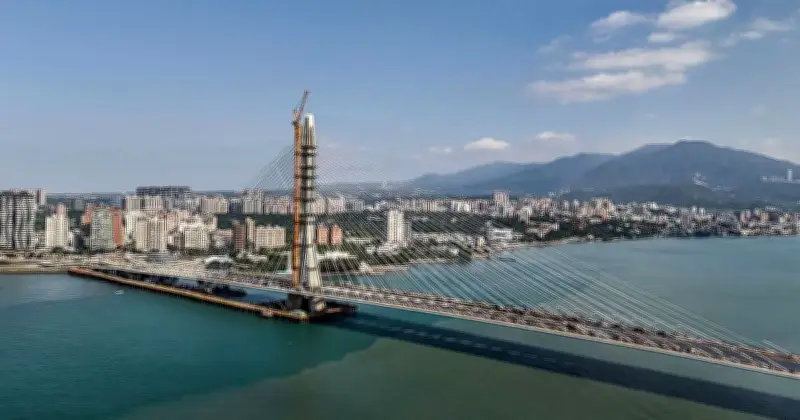
The Danjiang Bridge in Taiwan, an engineering marvel costing approximately £295 million, has officially opened. Recognized as one of the world's longest bridges, it features a unique asymmetric single-mast design and is built to withstand frequent earthquakes.
Bridge Specifications and Design
Spanning around 3,018 feet over the Tamsui River estuary, the Danjiang Bridge is longer than the height of Dubai's Burj Khalifa. Its single-tower asymmetric cable-stayed design minimizes visual impact on the landscape while creating a new skyline focal point. The bridge combines engineering efficiency with architectural aesthetics, as noted on its official website.
Earthquake Resilience
Taiwan sits at the junction of the Eurasian Plate and the Philippine Sea Plate, experiencing frequent seismic activity. The bridge was designed and inspected to the highest standards for seismic and wind resistance, hydrological analysis, and corrosion durability, ensuring it serves as a lifeline during major disasters.
Transportation and Economic Impact
The bridge upgrades northern Taiwan's transport network, easing traffic on local roads. It connects the eastern side of the river with key western routes, including Highway 15, the West Coast Expressway, and the Bali-Xindian Expressway. This project is already hailed as a major transportation achievement and a new urban symbol for Taiwan.
Cultural Celebration
The opening was marked by the Danjiang Bridge Together Arts Festival, featuring walking events, parades, concerts, and immersive programs, encouraging public use of the bridge as a shared cultural space.
Cost and Recognition
Estimated at NT$12.49 billion (about £295 million), the bridge was designed by Zaha Hadid Architects. It stands as a testament to modern engineering and architectural innovation.