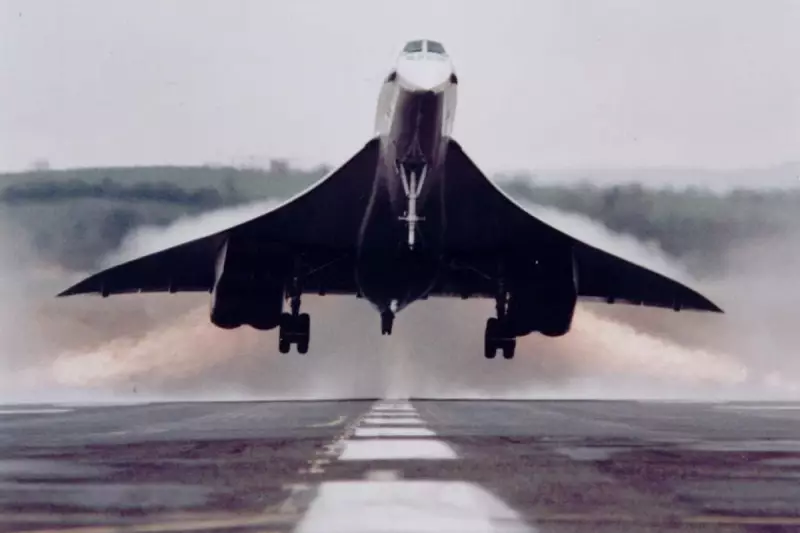
Fifty years after Concorde first carried paying passengers, a fierce debate is raging over whether supersonic travel should make a comeback. The pioneering British Airways flight from London Heathrow to Bahrain on 21 January 1976 heralded a 27-year era of ultra-fast travel, which ended when fleets were grounded in 2003. Now, a new contender, Boom Supersonic, plans to pick up the mantle with its Overture jet, but faces significant environmental opposition.
The Environmental Case Against Speed
Anna Hughes, director of the campaign group Flight Free UK, presents a stark counter-argument to the renewed quest for velocity. While acknowledging the excitement Concorde generated in the 1960s and 70s, she insists the world has fundamentally changed. "We’re now aware of what that type of travel does. Knowing that, we can choose not to do it," she told The Independent's travel podcast. Her solution is a cultural shift, not a technological one: "Zoom, not Boom."
Hughes advocates for replacing in-person meetings with virtual connections, slashing emissions and costs simultaneously. She challenges the very necessity of frequent flying, pointing to the vast energy required to break the sound barrier. "When we’re looking at energy use and carbon emissions that need to come down, we really have to question whether supersonic flight should be a priority," she argues.

Boom's Counter: Efficiency and Sustainable Fuel
Blake Scholl, founder and CEO of Boom Supersonic, concedes that flying faster consumes more energy but pins his hopes on advanced design and alternative fuels. He states Overture will be optimised for efficiency and capable of running on 100 per cent sustainable aviation fuel (SAF). The aircraft aims to carry up to 80 passengers at Mach 1.7—nearly twice the speed of sound but slower than Concorde's top speed.
Scholl also addresses the historic issues of noise and sonic booms. He claims modern technology will allow Overture to be "no louder than subsonic aircraft during takeoff and landing." Furthermore, he says the company has developed a technique to bend the sonic boom upwards in the atmosphere, preventing it from reaching the ground during supersonic flight over land—a restriction that severely limited Concorde's routes.
The Sustainable Fuel Stumbling Block
The promise of SAF forms a core part of Boom's environmental defence, but critics highlight major practical hurdles. Hughes remains deeply sceptical, noting that SAF accounts for less than 1 per cent of current aviation fuel use, far short of earlier targets. "Something is clearly blocking uptake: most likely, cost," she says, pointing to its high production price compared to conventional kerosene.
Critically, experts confirm that burning SAF in an engine releases the same amount of CO2 as regular jet fuel. The potential greenhouse gas savings occur over the fuel's lifecycle, such as preventing methane from waste in landfill or the CO2 absorbed by plants used as feedstock. Hughes warns against over-reliance on future tech fixes: "A lot of the industry narrative suggests we don’t need to worry because technology will solve everything. So far, that hasn’t happened."
The standoff encapsulates a broader tension in modern transport. Scholl urges passengers to "demand better – faster, more comfortable, more human travel," framing speed as progress. Hughes, however, sees it as a relic, concluding with a simple, uncompromising prescription: "Fundamentally, what we need to do is fly less." As the aviation industry grapples with its climate impact, the dream of supersonic travel faces a turbulent journey back to our skies.