Spanish Train Drivers Call Three-Day Strike After Deadly Railway Crashes
Spain's largest train drivers' union has announced a three-day nationwide strike, demanding urgent measures to enhance safety for rail workers and passengers. This industrial action comes in response to two catastrophic railway accidents this week, which resulted in at least 44 fatalities, including two drivers.
Details of the Tragic Accidents
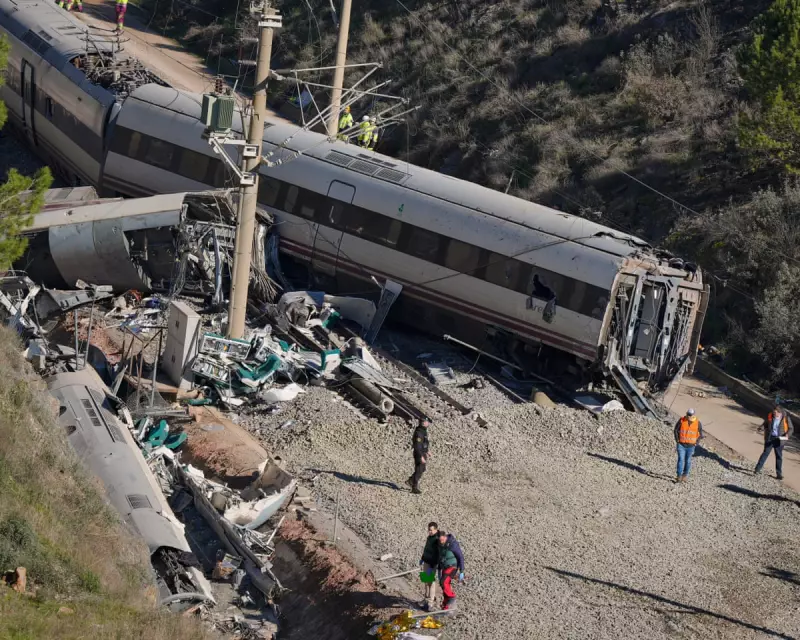
The first incident occurred on Sunday near the town of Adamuz in the Córdoba province of Andalucía. A collision between two trains led to the deaths of at least 43 people, with dozens more sustaining injuries. Just two days later, a separate accident near Gelida in Catalonia saw a train derail due to the collapse of a retaining wall, killing one driver and injuring 37 individuals.
In a third, less severe event on Thursday, a commuter train in the Murcia region collided with a crane, causing minor injuries. Authorities attributed this to the unauthorized presence of the crane on the tracks, noting that the train remained upright and did not derail.

Union Demands and Industrial Action
The Spanish railway drivers' union, Semaf, has called for strikes scheduled from 9 to 11 February. They describe this move as "the only legal avenue left for workers to demand the restoration of safety standards on the railway system". The union emphasizes that numerous reports highlighting poor track conditions have been ignored for months or even years, contributing to the recent tragedies.
Semaf stated, "The serious accidents in Adamuz and Gelida, both of which resulted in people losing their lives, represent a turning point in demanding that all necessary actions be taken to guarantee the safety of railway operations." Additionally, a stoppage by drivers has already disrupted Catalonia's regional rail services, affecting approximately 400,000 travellers.
Government Response and Investigation
Spain's transport minister, Óscar Puente, has expressed understanding of the drivers' concerns but hopes to avert the strikes. He stressed that the accidents in Adamuz and Gelida are "completely unrelated", with the latter likely caused by heavy rainfall. Puente described the week as "very difficult" and called for calm amid the investigations.
Investigators are examining the Adamuz crash site, where a high-speed train derailed and collided with an oncoming train. Media reports indicate a focus on a 30cm crack in the track, with Puente noting marks found on train wheels but cautioning against premature conclusions. He said, "At this point, nothing can be ruled out."
Political Fallout and Public Reaction
The accidents have sparked political controversy, with the far-right Vox party linking the tragedies to broader issues of corruption and declining rail safety. Vox leader Santiago Abascal claimed, "Corruption destroys confidence in our institutions. And corruption kills." In contrast, the conservative People's party has called for greater transparency from the government.
Government spokesperson Elma Saiz condemned such remarks as "despicable" and "anti-democratic", urging respect for the victims and their families during this mourning period.