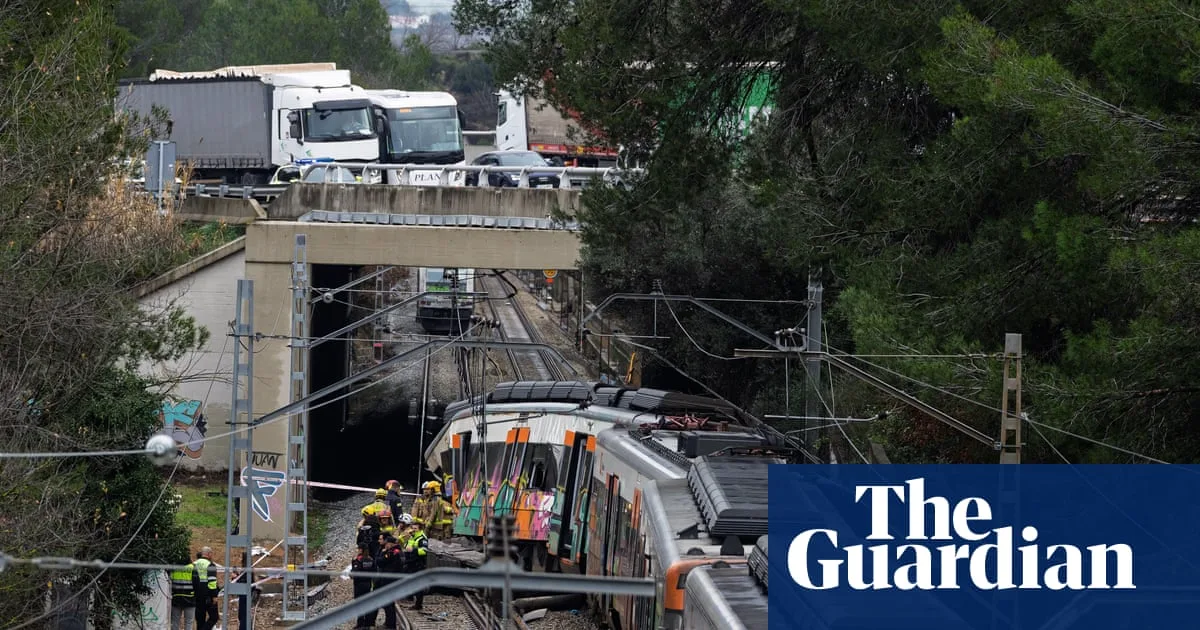
Spain's rail network is facing intense scrutiny after a second fatal accident in three days. On Tuesday evening, a commuter train derailed near Gelida in Catalonia after a retaining wall collapsed onto the track, killing a 27-year-old trainee driver and injuring 41 people, five critically. The wall is believed to have collapsed due to unusually heavy rainfall in the region.
The incident comes just days after at least 43 people died and 152 were injured in a collision between two high-speed trains near Córdoba in southern Spain. While the cause of that crash remains unclear, the train's black box recorder revealed that the driver of the high-speed Iryo train was unaware another train had collided with his. He called the control centre a minute after the crash, reporting a 'snag' with the power system.
In response to the accidents, Spain's largest train drivers' union, Semaf, has called for an indefinite strike, demanding criminal liability for those responsible for safety and urgent new measures to address what it calls the 'constant deterioration of the rail network'. The union's statement on Wednesday said it could not accept the current state of affairs.
Transport Minister Óscar Puente has stressed that the two accidents are 'completely unrelated', but opposition parties have seized the opportunity to criticise the government. Alberto Núñez Feijóo, leader of the right-wing Popular Party, demanded an 'immediate clarification' of the state of the railways, while a spokesperson for the far-right Vox party claimed Spaniards are now 'afraid to get on a train'.
Despite these incidents, EU statistics indicate that Spain's rail network remains one of Europe's safest. In 2024, 16 passengers died in rail accidents across Europe, including one in Spain, compared with 20,000 road deaths. Nonetheless, the recent crashes have focused attention on both the high-speed AVE network and the underfunded regional services.