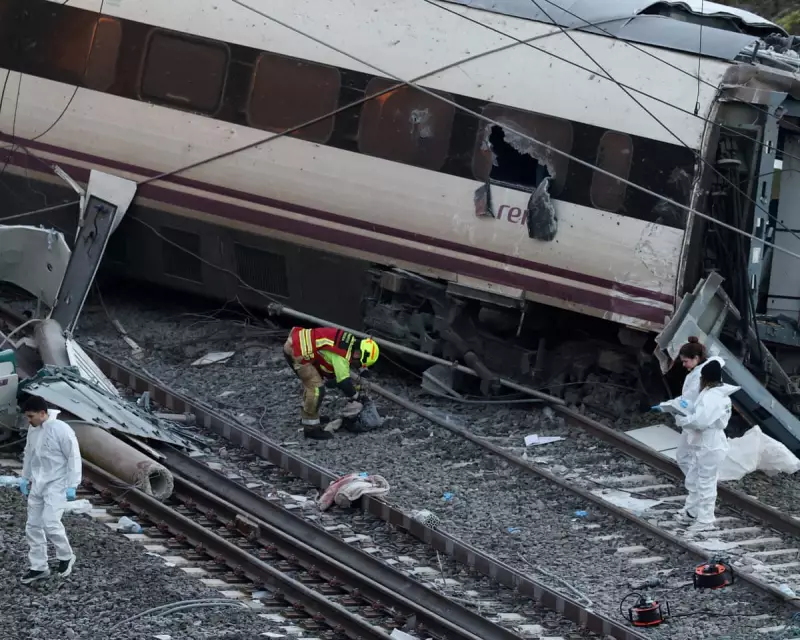
A preliminary report into the catastrophic train collision in southern Spain, which claimed 45 lives and left dozens injured, indicates that a pre-existing fracture in the rail may have triggered the disaster. The incident occurred near Adamuz in Andalusia on Sunday, involving a high-speed Iryo train derailing and colliding with an oncoming Renfe-operated train.
Key Findings from the Investigation
The Rail Accidents Investigation Commission (CIAF) released its initial findings on Friday, highlighting significant evidence from the wreckage. Nicks were discovered on the right-hand-side wheels of three front carriages of the Iryo train, which experts say align with an impact against the top of the rail.
How the Fracture Could Have Led to Derailment
According to the report, "These nicks in the wheels and the observed deformation in the rail are consistent with the rail being fractured: with the rail’s continuity interrupted, the section before the break would initially bear the full weight of the wheel, causing that part of the rail to sag slightly." This scenario suggests that a step formed momentarily between the fractured sections, striking the wheel rim and potentially causing the derailment.

Based on current data, the CIAF hypothesises that the rail fracture likely occurred before the Iryo train passed over it, preceding the derailment. However, the commission emphasised that this theory is provisional and will undergo further rigorous testing and analysis as the investigation continues.
Broader Context and Reactions
This tragedy follows another recent rail incident in Catalonia, where a train derailed due to a collapsed retaining wall, resulting in one fatality and 37 injuries. In response to these events, Semaf, Spain's largest train drivers' union, has announced a three-day strike scheduled for February. The union asserts that this industrial action is necessary to demand enhanced safety measures for both railworkers and passengers, citing a need to restore safety standards across the railway network.
Politically, the accident has sparked criticism from opposition parties. Alberto Núñez Feijóo, leader of the conservative People's party, condemned the socialist-led coalition government, stating, "The state of the railways is a reflection of the state of the nation." He further accused the government of a chaotic response and lack of transparency in handling the crisis.
As investigations proceed, authorities are focused on determining the exact cause of the rail fracture and implementing measures to prevent future tragedies, amidst growing calls for systemic improvements in Spain's rail infrastructure.