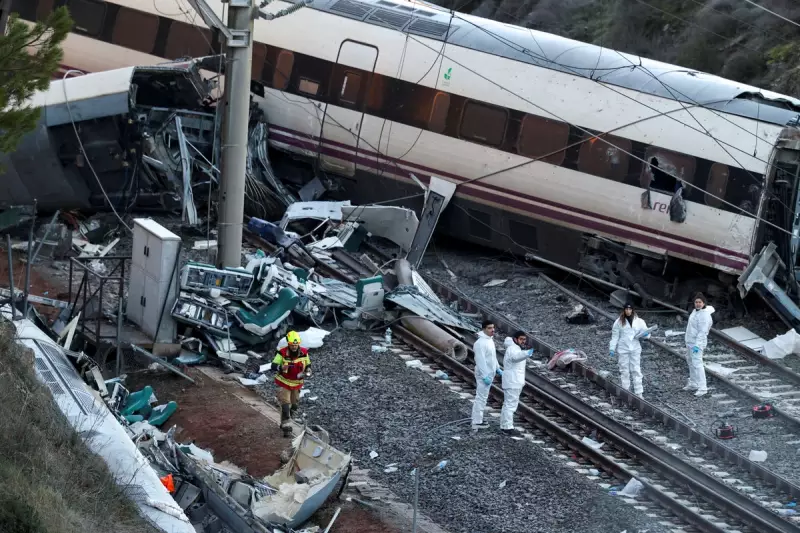
A devastating train collision in southern Spain, which killed at least 39 people, occurred after the country's rail infrastructure manager was explicitly warned about "severe wear and tear" on the tracks involved.
Warnings Ignored Before Catastrophe
The SEMAF train drivers' union had written to the state-owned operator ADIF in August of last year, cautioning about dangerous potholes, bumps, and imbalances in overhead power lines on the high-speed network. The union stated these defects were causing frequent breakdowns and damaging trains.
Their letter specifically highlighted damage on the very track where two trains collided on Sunday evening near Adamuz, in the Cordoba province. The union revealed that drivers had raised their concerns "daily" but claimed no corrective action was taken. They had urgently recommended imposing a temporary speed limit of 250kph (155mph) on the compromised sections until repairs were made.

The Collision and Its Aftermath
The fatal incident involved two trains. An Iryo Freccia 1000 service, operated by a private consortium and travelling north from Málaga to Madrid, derailed first. Preliminary analysis by engineering experts suggests a potential "failure of the undercarriage" on the rear units of this train.
Approximately 20 seconds later, a southbound Alvia train operated by Spain's public railway company Renfe, en route from Madrid to Huelva, collided with the derailed carriages. It was this second impact that caused the majority of the casualties, pushing the Alvia train off the tracks into an embankment. The 27-year-old driver of the Alvia train was among those who died.
The crash left more than 120 people injured, with 48 still hospitalised and 12 in intensive care as of Monday.
Investigation and Historical Problems
Spanish Prime Minister Pedro Sánchez promised a "thorough and absolutely transparent" investigation. Transport Minister Óscar Puente described the accident as "tremendously strange," noting that had the oncoming train not been present, the initial derailment might have caused no fatalities.
Renfe's chief, Alvaro Fernández Heredia, ruled out human error, explaining the 20-second interval was too short to activate automatic braking systems. He indicated the cause was likely a failure in the rolling stock or infrastructure.
This tragedy has cast a harsh light on Spain's vast high-speed network, the largest in Europe. ADIF's own social media records show at least 10 instances of infrastructure problems—from signalling failures to power line issues—causing delays on the Madrid-Andalusia line since 2022. The network has also suffered from power outages and widespread theft of copper cables, particularly in remote rural areas it crosses.
In a statement, Transport Minister Puente said the specific track had been fully renovated in May 2025, after the union's warning, at a cost of 700 million euros, and that the derailed Iryo train was less than four years old and last inspected on 15 January. The official investigation is expected to take up to a month to determine the precise cause.