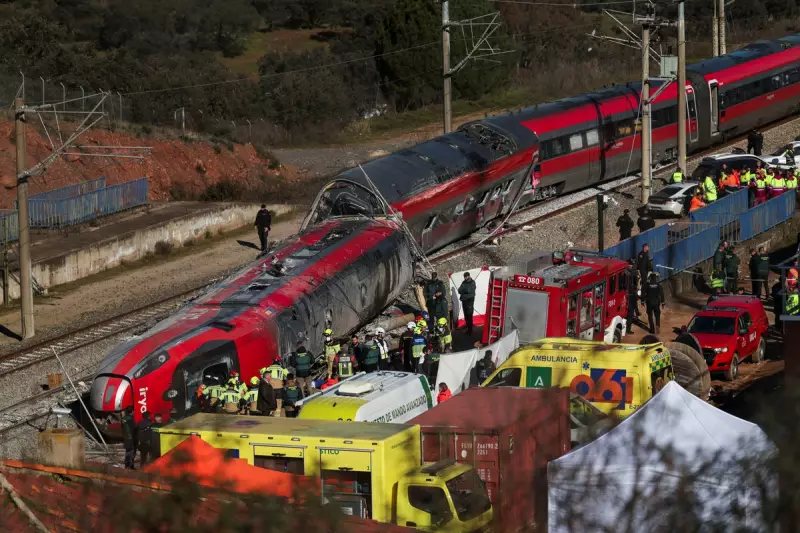
A catastrophic high-speed train collision in southern Spain, which claimed at least 40 lives, is now believed to have been caused by a broken joint in the railway track, investigators have revealed.
Faulty Rail Joint Identified as Probable Cause
Preliminary findings from the crash site near Adamuz, Cordoba, point to a critical failure in a section of track. A source briefed on the investigation told Reuters that technicians identified severe wear on a fishplate – the joint connecting two sections of rail.
The fault, which had likely been present for some time, created a dangerous gap between the rails that widened under the pressure of passing trains. On the evening of Sunday, 19 January 2026, this flaw proved fatal.

The Madrid-bound Iryo service, travelling from Malaga at 110 km/h, derailed on a straight stretch of track. Just twenty seconds later, it was struck head-on by a second train travelling in the opposite direction towards Huelva at approximately 200 km/h.
Warnings Ignored and a Desperate Search for Loved Ones
In a damning revelation, it has emerged that the train drivers' union, SEMAF, wrote to rail infrastructure manager ADIF in August 2025. The union warned of "severe wear and tear" on the high-speed network, citing potholes, bumps, and power line issues it claimed were causing frequent breakdowns. These concerns appear to have been overlooked.
As emergency services worked to recover bodies from the tangled wreckage—a process hampered by the need for heavy lifting equipment—desperate families searched for missing relatives.
Alvaro Gallardo took to social media to plead for information about his father, Andrés Gallardo Vaz, who was travelling to Huelva. "My father is my life," he told The Independent, breaking down as he described visiting hospitals without success.
Aftermath and Scrutiny of Spain's Vast Rail Network
The crash, one of Europe's deadliest in 80 years, has sent shockwaves through Spain and raised urgent questions about the maintenance of its extensive high-speed network. Spanning 3,622 km, it is the largest in Europe and second only to China's globally.
Transport Minister Óscar Puente stated the specific track section had been completely renovated in May 2025 at a cost of €700 million. The involved Iryo train, a service operated by a private consortium including Italy's state railway, was last inspected on 15 January with no anomalies reported.
Survivors recounted scenes of horror. Ana Garcia Aranda described the moment her train tipped over: "Everything went dark, and all I heard was screams." Another passenger, Rocio, hospitalised in Cordoba, spoke of "total chaos" and being thrown through the air.
The high-speed line between Madrid and Andalusia is not expected to reopen until 2 February, as the official investigation, promised to be transparent by Spain's Prime Minister, continues to establish the precise sequence of failures.