Spain's High-Speed Rail Tragedy: Ageing Infrastructure and Safety System Gaps Under Scrutiny
A catastrophic collision on Spain's high-speed railway network has claimed at least forty lives and left dozens injured, casting a harsh spotlight on the urgent need for comprehensive upgrades to the country's ageing rail infrastructure. The tragic incident occurred on the evening of Sunday, January 18th, 2026, near Adamuz station in Córdoba province, Andalusia, and has sparked serious concerns about safety protocols and system interoperability.
The Collision: A Detailed Account of the Adamuz Disaster
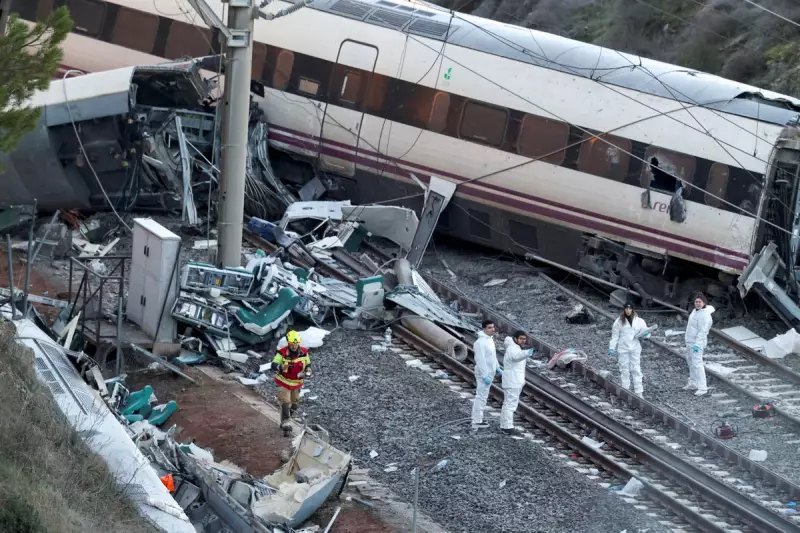
At precisely 19:45, a modern Iryo high-speed train service 6189, travelling from Málaga to Madrid, attempted to change tracks at the switch leading into Adamuz station. According to preliminary reports, the train had properly registered for the track change, but the last three carriages appear to have jumped over the diverted switch mechanism. This violent derailment caused the carriages to collide with an oncoming Renfe Alvia 2384 service travelling from Madrid to Huelva in the opposite direction.
The collision was described as particularly severe, though investigators have yet to determine the combined speed of both trains at the moment of impact. Emergency crews worked through the night at the crash site, with rescue operations continuing alongside the official investigation into what has become one of Spain's most serious railway accidents in recent decades.

Rail Liberalisation and Its Consequences for Safety Standards
The Spanish passenger rail market underwent significant liberalisation in May 2021, opening the door to new competitors. However, the Andalusia-Madrid corridor remained exclusively operated by state-owned Renfe until early 2023 due to concerns about outdated blocking and safety systems on these tracks. Following pressure from new operators including OUIGO (owned by French state company SNCF) and Iryo (owned by Trenitalia with Spanish partners AirNostrum and Globalia), the route was eventually opened to competition.
This liberalisation increased service frequency and expanded consumer choice, but it also placed additional strain on infrastructure that was already showing signs of age. The Madrid-Andalusia high-speed line, inaugurated in 1992, represents Spain's oldest high-speed railway corridor. Despite various improvements over the years, its safety systems have been identified as requiring urgent renovation to meet contemporary standards.
Signalling Systems: A Patchwork of Technologies Across Europe
Across the European Union's extensive railway network spanning nearly 227,000 kilometres, more than twenty-five different, non-interoperable train protection and signalling systems operate simultaneously. These include the German LZB (Linienzugbeeinflussung), French Crocodile, Italian BACC, and Spanish Asra systems, each controlling and enabling train movements according to different protocols.
The Andalusia-Madrid corridor continues to operate using the German LZB signalling system installed for the original high-speed line. While historically efficient, this technology has been surpassed by the European Rail Traffic Management System (ERTMS), which is already installed on Spain's newest railway lines. The ERTMS specifications originate from European Union Council Directive 96/48/EC, with the ambitious goal of completely replacing national systems across the EU by 2050.
In Spain, the new ERTMS system currently coexists with the older LZB system, requiring modern trains to employ technical workarounds known as Specific Transmission Modules (STMs) to "read" the legacy signalling. This technological patchwork creates potential vulnerabilities in safety communication between infrastructure and rolling stock.
Investigating the Causes: Infrastructure Failure Emerges as Likely Factor
While the official investigation continues, preliminary analysis suggests the accident is unlikely to stem from train faults. Both trains involved were modern, relatively new units with minimal wear and tear. The Iryo 6189 train had undergone its last technical inspection just four days before the collision, covering critical components including wheel flanges, stress fractures, and braking systems.

The infrastructure at the accident site is reportedly new, suggesting the track geometry—including curves, straight sections, slopes, and ramps—should have been in optimal condition. This has led investigators to focus on the possibility that the switch mechanism itself may have malfunctioned.
One working hypothesis suggests the switch mechanism initially functioned correctly in response to signals from the LZB reading STM system, but then moved prematurely to the "straight" position. This could have caused the right wheel of the Iryo train to collide with the switch, jumping to the adjacent track due to centrifugal force and speed, directly into the path of the oncoming Renfe service.
Alternative theories include the possibility of an object on the track, though this would typically cause derailment from the front rather than affecting only the rear carriages as occurred in this incident.
A Deteriorating Network: From Emblem of Modernity to System Under Strain
Spain's high-speed railways, once celebrated as emblems of reliability, modernity, and forward-thinking infrastructure, have shown gradual signs of deterioration in recent years. Delays have transformed from rare, brief occurrences to frequent, lengthy disruptions, prompting Renfe to withdraw its commitment to punctuality guarantees and ticket refunds for late services.
Ongoing incidents affecting infrastructure managed by state-owned company ADIF—including problems with overhead lines, braking systems, and couplings—have further eroded public confidence. Notable examples include recurring issues in the tunnel connecting Madrid's Atocha and Chamartín stations, which have caused significant service disruptions.
Political instability has compounded these technical challenges, preventing the development of a unified, agreed-upon plan for network viability, modernisation, and structural improvement. Such a plan would be essential to providing safe, reliable transport capable of meeting growing demand for rail services as an alternative to air travel for distances up to 800-1,000 kilometres.
The Human Cost and Broader Implications
The Adamuz tragedy has resulted in at least forty confirmed fatalities and dozens of injuries, creating what observers describe as a "starkly poor impression" of the Spanish railway system. Beyond the immediate human cost, the accident raises serious questions about the safety of a transport system increasingly used by business travellers and tourists alike.
Rail experts and industry analysts are calling for political and technical leaders to take responsibility for addressing systemic vulnerabilities, regardless of ideological differences or survival strategies. The incident highlights the critical importance of maintaining and upgrading essential national infrastructure, particularly as rail travel gains popularity for environmental and practical reasons.
As Spain mourns the victims of this preventable tragedy, the broader European rail community watches closely, recognising that similar vulnerabilities may exist in other national networks still operating with outdated safety systems. The push for full ERTMS implementation across the continent's core rail corridors by 2030 now carries renewed urgency, with the Adamuz disaster serving as a tragic reminder of what can happen when infrastructure modernisation falls behind operational demands.