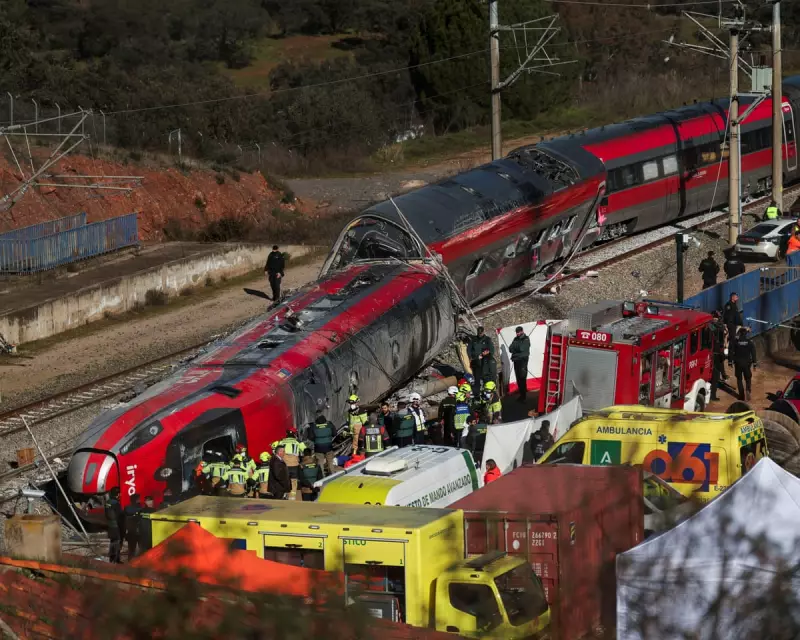
A quiet evening in the Andalusian countryside was shattered by Spain's worst rail disaster in more than a decade, as two trains collided near the town of Adamuz, leaving a scene of devastation and a community in shock.
A Night of Deep Pain and Community Response
Just after 2.45pm on Monday, the scale of the clear-up operation became clear as a large crane lorry arrived at the forested crash site in eastern Andalucía. The grim task of removing wreckage began, a day after the catastrophic collision that occurred on Sunday night.
The accident involved a high-speed Iryo service travelling from Málaga to Madrid and a Renfe train on route from Madrid to Huelva. The confirmed death toll stands at least 39, with a further 12 people critically injured. Spanish Prime Minister Pedro Sánchez described it as "a night of deep pain for our country."

For the 4,000 inhabitants of nearby Adamuz, in Córdoba province, the immediate aftermath was defined by a rush to help. The town's municipal events hall was swiftly converted into an emergency response centre. Locals descended with blankets, food, water, and medical supplies, piling donations onto trestle tables to aid the injured passengers who were ferried there.
"We all pitched in and rallied round," said José María Mendoza, 75, a lifelong resident. "It was a bad, bad, bad night. But everyone did what they could." Another local, Carme, sent her 17-year-old son to the hall with blankets and a dressing gown after hearing sirens and seeing ambulances race through the town.
Horrific Scenes at the Crash Site
Emergency personnel who attended the scene between groves of olive and oak trees conveyed the horror of the crash. Francisco Carmona, Córdoba's firefighting chief, gave a stark account to Onda Cero radio, stating, "There were moments when we had to remove the dead to get to the living."
Rafael Moreno, the Mayor of Adamuz, said the images would stay with him forever. "People asking and begging for help. Those leaving the wreckage," he recounted, describing the profound impact on the first responders and locals who rushed to the tracks.
As Guardia Civil officers and investigators worked by the twisted carriages, the scale of the tragedy began to sink in for the small community. Builder Benjamín Peñas, 50, who helped ferry supplies until 1.30am, noted the shock among survivors. "Some of the people I saw were too deep in shock to be able to take in what had happened," he said.
Investigation and Identification Process Begins
As the initial emergency response wound down, with the municipal hall gradually emptying, the focus turned to understanding the cause of the crash and identifying the victims.
The Guardia Civil has established five offices in key cities – Córdoba, Málaga, Sevilla, Huelva, and Madrid – where relatives of those missing can seek information and provide DNA samples to aid the identification process.
The community of Adamuz, while grappling with the trauma of the event, reflects on its collective action during the crisis. "It is terrible to see your town make news around the world because of something like this," said Peñas, echoing a sentiment of sombre pride in the face of tragedy. The town's swift and compassionate response stands as a poignant chapter in the story of a national disaster.