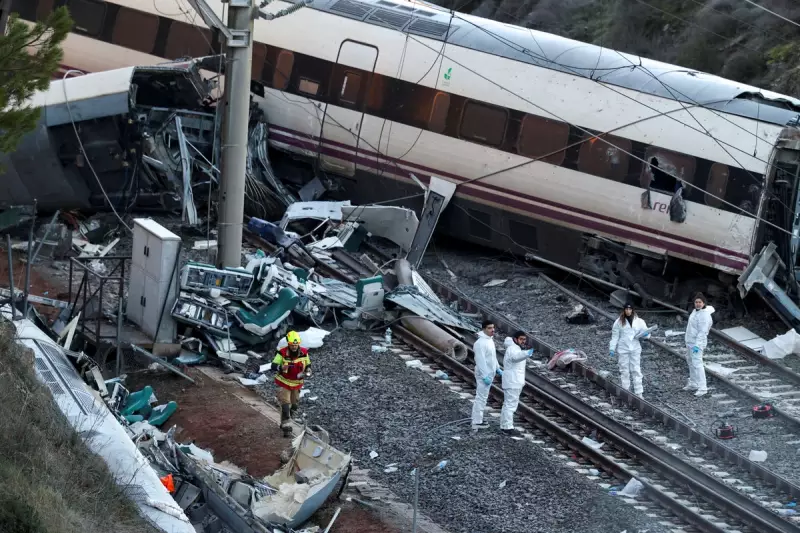
Spanish authorities are investigating a catastrophic train collision that killed at least 40 people near Cordoba, after revelations that the state rail infrastructure manager had been warned months earlier about "severe wear and tear" on the tracks.
Warnings Ignored Before Fatal Derailment
The deadly incident occurred on Sunday evening near Adamuz in the province of Cordoba, when a northbound Iryo Freccia 1000 train derailed and was struck by an oncoming southbound Alvia service. The collision left more than 120 people injured, with 48 still hospitalised and 12 in intensive care.
The SEMAF train drivers' union had written to the state-owned infrastructure manager ADIF in August 2025, cautioning about potholes, bumps, and imbalances in overhead power lines on the high-speed network. The union stated these defects were causing frequent breakdowns and damaging trains.

Their letter specifically highlighted damage on the very track where Sunday's collision later occurred. Drivers had reportedly raised concerns "daily" but saw no action taken. The union had urged ADIF to impose a temporary speed limit of 250kph on damaged sections until repairs were made.
Broken Rail Joint Identified as Key Focus
A source briefed on the initial investigation told reporters that technicians had identified a broken joint, known as a fishplate, between sections of rail. The wear on this component suggested the fault had developed over a significant period.
The faulty joint created a gap between rail sections that widened as trains passed over it. Investigators believe this defect is crucial to understanding the precise cause of the derailment, though a final determination may take up to a month, according to Transport Minister Óscar Puente.
Minister Puente noted the Iryo train involved was less than four years old and the track itself had undergone a complete €700m renovation in May 2025 – after the union's warning. The train had last been inspected on 15 January 2026.
Network Vulnerabilities and Aftermath
ADIF's social media records show the infrastructure at Adamuz had caused delays on the Madrid-Andalusia high-speed line ten times since 2022, due to issues ranging from signalling failures to power line problems. The network has also been vulnerable to copper cable theft as it traverses sparsely populated countryside.
Most casualties are believed to have been on the Alvia train, operated by Spain's public railway company Renfe, which was pushed into an embankment after colliding with the derailed Iryo carriages. The 27-year-old driver of the Alvia train was among those killed.
Renfe chief Alvaro Fernández Heredia ruled out human error, noting a mere 20-second interval between the first derailment and the collision – too brief to activate automatic braking systems. He indicated the cause must lie with rolling stock or infrastructure failure.
Spanish Prime Minister Pedro Sanchez has promised a "thorough and absolutely transparent" investigation into the disaster. Spain's high-speed network, at 3,622km, is the largest in Europe and second globally only to China.