Signaller Was 'Entirely Compliant' With Rules Before Fatal Derailment, Stonehaven Inquiry Told
Network Rail Scotland's route director has testified that a signaller was following all established procedures when instructing a train driver to proceed at normal speed just minutes before a catastrophic derailment near Stonehaven that claimed three lives.
Ross Moran, giving evidence at the fatal accident inquiry at Aberdeen Sheriff Court on Thursday, stated unequivocally that the signaller involved in the August 2020 incident was "entirely compliant" with the rulebook in place at the time.
The Tragic Events of August 12, 2020
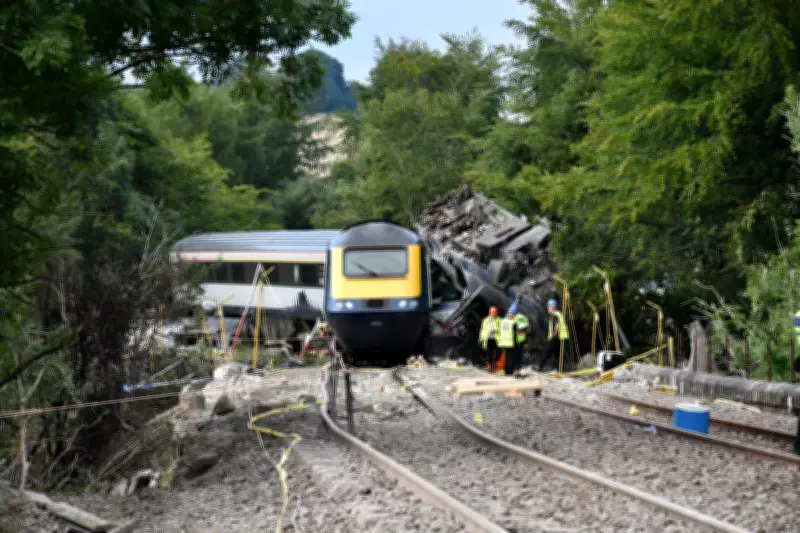
The inquiry heard detailed accounts of the circumstances surrounding the derailment of train 1T08 at Carmont, Aberdeenshire. The service, travelling from Aberdeen to Glasgow, struck a substantial accumulation of gravel that had been washed onto the tracks by exceptionally heavy rainfall before colliding with a bridge parapet.

Among the nine people aboard the train, three lost their lives: driver Brett McCullough, 45; conductor Donald Dinnie, 58; and passenger Christopher Stuchbury, 62. The incident occurred during what has been described as once-in-a-century rainfall levels across eastern Scotland.
Communication Under Extreme Pressure
Evidence revealed that on the morning of the accident, multiple weather-related incidents were affecting railway lines across the region. Mr Moran described waking between 5am and 6am to his phone buzzing with alerts about "multiple incidents on the network" due to the torrential downpour.
"There were multiple incidents on the day affecting multiple lines and routes, so communication channels were under a good deal of pressure," Mr Moran told the inquiry. "It was possibly the busiest day I think I can ever recall in respect of incidents requiring to be managed."
The Critical Exchange Before Derailment
The inquiry heard that the train had just passed what would become the crash site when the driver received instructions to stop and return to Stonehaven due to a reported landslip ahead. When the driver specifically asked about any speed restrictions, the signaller responded that it was "fine" to proceed at the normal line speed of 75mph.
Just minutes later, the train derailed while travelling at approximately 73mph. Despite the extreme weather conditions that day—which had already caused additional landslips and three flooding incidents within miles of the signal box—the signaller's instructions were deemed compliant with existing protocols.
Rulebook as 'Safety Gospel'
Mr Moran, who was serving as head of operations delivery at the time of the tragedy, emphasised the absolute nature of Network Rail's rulebook during his testimony. "The rulebook is the safety gospel as to how the network operates, and it's predicated entirely on operating the network as safely as possible," he stated.
He added that while staff could theoretically request permission to deviate from procedures if they deemed it necessary, in his approximately two decades of railway experience, he could not "personally recollect any scenario... where the rulebook has not been followed."
Substantial Safety Reforms Implemented
Paul Ashton, former head of operations, principles and standards at Network Rail, provided evidence about significant changes implemented since the Carmont tragedy. These reforms include:
- Enhanced monitoring and response protocols for extreme weather events
- A revised decision-making model for operational staff
- A new clause added to the rulebook allowing deviations when following standard procedures might compromise safety
Mr Ashton explained that the new clause "allows us to do things other than what's prescribed in the rulebook, mainly if there's a gap, or if applying the rule makes it less safe."
Missed Opportunities for Prevention
Earlier in the inquiry, Simon French, former chief inspector of rail accidents at the Rail Accident Investigation Branch, presented a sobering assessment. He testified that had Network Rail properly implemented recommendations from previous extreme weather incidents, the Carmont tragedy might have been avoided.

"Despite an awareness of the risk, Network Rail had not completed the implementation of additional control measures following previous events involving extreme weather and the management of operating incidents," Mr French stated.
He added that "better delivery of change in response to safety learning would have resulted in actions that would have prevented, or mitigated, the consequences of the accident at Carmont."
Legal Consequences and Ongoing Commitment
Network Rail faced significant legal repercussions for the incident, pleading guilty to health and safety failings and receiving a £6.7 million fine in 2023. A company spokesperson reiterated their commitment to supporting the inquiry's work and implementing RAIB's recommendations.
"We've made significant changes to how we manage the risk of severe weather since the accident and our work to make our network more resilient will continue," the spokesperson affirmed.
The fatal accident inquiry before Sheriff Lesley Johnson continues as investigators seek to establish the full circumstances surrounding one of Britain's most tragic railway incidents in recent years.