Ministers Pressured to Release Withheld Smart Motorway Safety Reports
Road safety campaigners and leading motoring organisations are intensifying their calls for the government to immediately release a series of withheld safety assessments on Britain's smart motorway network. These evaluations, some of which date as far back as 2022, are believed to contain critical data on the performance and safety of these controversial roads.
What Are Smart Motorways?
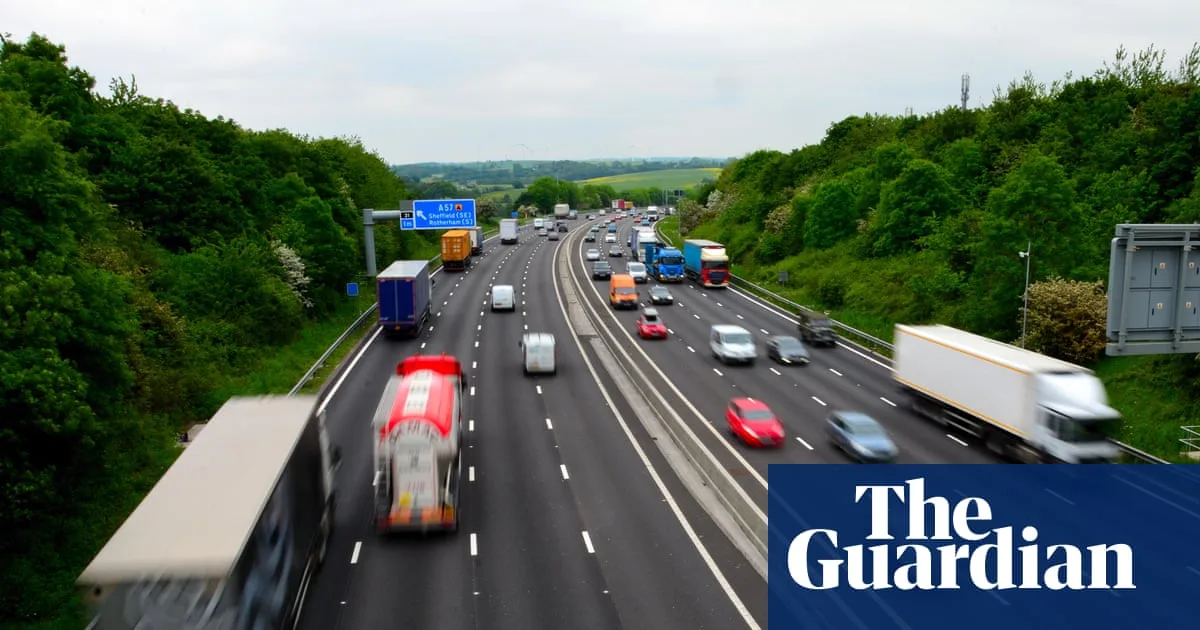
Smart motorways are designed to increase road capacity by converting the traditional hard shoulder into a live traffic lane. This system relies on a network of occasional emergency laybys and electronic overhead signs to dynamically close lanes in the event of an incident or breakdown. The concept was introduced to alleviate congestion on some of the nation's busiest routes.
Campaigners Suspect Suppression of Critical Findings
Campaign groups, including the prominent Smart Motorways Kill campaign, believe the reports from National Highways—known as Post-Opening Project Evaluations (Popes)—have been deliberately suppressed. They argue this is because the findings likely cast significant further doubt on both the safety credentials and the economic benefits of the smart motorway system.
Claire Mercer, who founded the campaign after her husband Jason was killed on the M1 in 2019, has been a vocal critic. "The longer it takes, you think either they are that uninterested, or there really is something going on," she stated. "If the reports showed good news, they'd release them."
Government Stance and Delayed Publication
The Department for Transport has stated that the Pope reports will be published imminently and maintains they do not undermine the broad case for smart motorways, which it describes as statistically the safest roads in the country. Officials have defended the delay as necessary to "fully assure" the complex findings within the documents.
However, correspondence obtained by transport blogger Chris Ames suggests there may be concerns over how the results are presented. Ames was informed that 14 reports were slated for release before Christmas last year, "subject to the DfT agreeing the communications handling plan." The continuing delay has led Ames to comment that the contents "must be really, really bad."
Evidence from the Last Published Report
The most recently published smart motorway Pope report, released in 2021, examined a converted section of the M1 between junctions 10 and 13. Its findings were troubling:
- Journey times had actually slowed in the first five years of operation.
- The number of accidents causing severe injury had increased.
- A forecasted economic boost of £1 billion had turned into a £200 million deficit.
Nine further Pope reports on different smart motorways were due for completion in 2022. National Highways has confirmed it provided these to the DfT, describing them as "multiple detailed evaluations of scheme performance."
Calls for Action and Restoration of the Hard Shoulder
Motoring organisations like the AA are joining campaigners in demanding transparency and action. Jack Cousens, Head of Roads Policy at the AA, said: "These safety reports on so-called 'smart' motorways have been withheld for far too long, and we urgently need to see them published... They need to show the outcomes of these schemes regardless of their failures or successes."
There is a strong consensus among these groups and the driving public for the government to restore the permanent hard shoulder. Cousens emphasised the peril of live lane breakdowns: "While the hard shoulder is a dangerous place, it is not as dangerous as breaking down in a live lane, being unsure if the technology has spotted you."
Safety Improvements and Ongoing Scrutiny
Following a government stocktake in 2020, a moratorium was placed on new smart motorway projects, though conversion works already in progress continued. Since then, a series of safety measures have been implemented across the network, including:
- Enhanced vehicle detection technology.
- The addition of 150 extra emergency refuges on key motorways like the M1, M25, and M4.
- Improved signage informing drivers of distances to the next safe stopping point.
- Upgrades to enforcement cameras to better detect vehicles illegally using lanes closed by a red 'X' signal.
A National Highways spokesperson reiterated that "safety is our number one priority" and that their latest analysis shows smart motorways remain the safest roads overall. The DfT echoed this, stating it continues to monitor performance and has "significantly invested in safety features to give users peace of mind."
Despite these assurances, the pressure for full transparency through the immediate release of all withheld Pope reports continues to mount, as campaigners and families affected by tragedies seek conclusive answers on the true cost and safety of Britain's smart motorways.